EIGHT MONTHS into the Iran war the oil-market riddle(谜题;难解之谜) keeps deepening. Since early September exports from the Middle East have climbed. They exceeded 17m barrels per day (b/d) in the week to October 23rd, just 4m b/d below 2025 levels, reckons Vortexa, a data firm. Yet in the same period the price of Brent futures, the international benchmark for crude, has jumped by a fifth, to $115 a barrel, nearing its April peak (see chart).(然而同期,国际原油基准布伦特期货价格却跳涨五分之一,达到每桶115美元,逼近4月峰值。)
伊朗战争进入第八个月,石油市场的谜题却愈发深奥。自9月初以来,中东出口持续攀升。数据公司Vortexa估计,截至10月23日当周,出口量突破每日1700万桶,仅比2025年水平低400万桶/日。然而同期,国际原油基准布伦特期货价格却跳涨五分之一,达到每桶115美元,逼近4月峰值(见图表)。
Three factors explain why oil is so pricey(昂贵的), starting with a change in China’s appetite for(对……的需求/欲望) crude. In March its government, worried about supplies, banned exports of refined products(成品油). Refiners drew on stocks and consumers used less fuel. The result was a near-halving(几乎减半) of crude imports between February and June, by 6m b/d. That was a big reason why the largest oil-supply shock in history did not push prices higher.(这正是史上最大石油供应冲击未能推高油价的重要原因。)
三个因素解释了油价为何如此昂贵,首先是中国对原油需求的变化。3月,中国政府因担忧供应而禁止成品油出口。炼油厂动用库存,消费者减少燃料使用。结果是2月至6月间原油进口几乎减半,减少了600万桶/日。这正是史上最大石油供应冲击未能推高油价的重要原因。
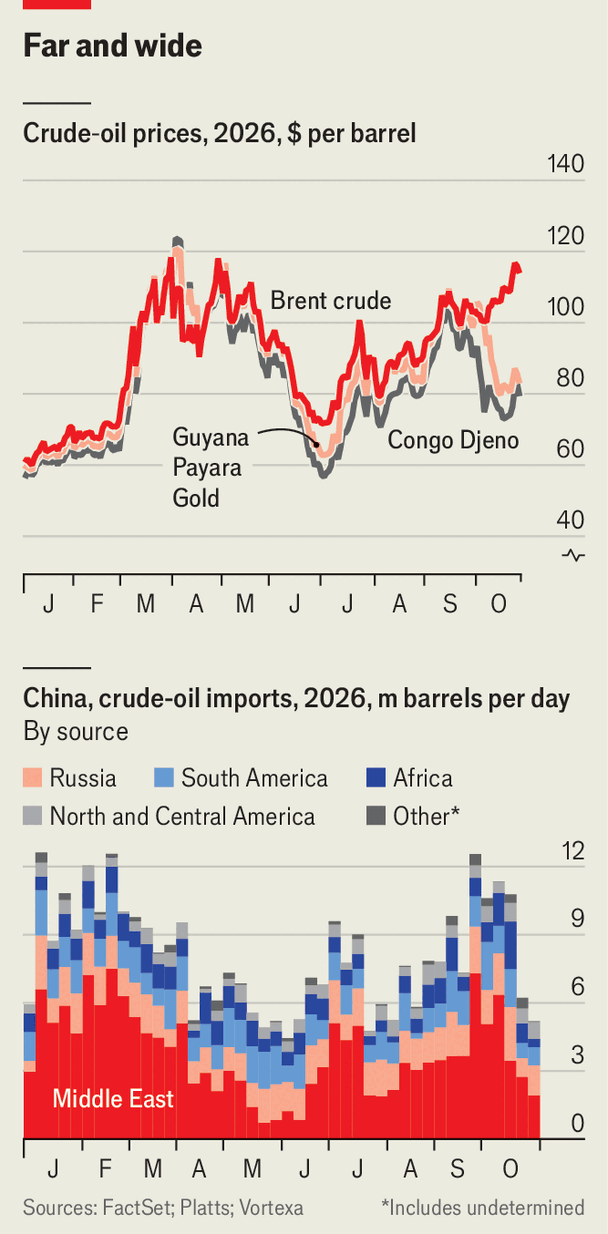
In June a detente((紧张关系的)缓和) between Iran and America caused prices to drop. Chinese refiners lobbied to lift the export ban: with Gulf exports still blocked and Russian refineries pummel(连续猛击;重创)led by Ukraine, refiners’ margins elsewhere set records(创下纪录). From July China resumed exports and imports rebounded. In the three weeks to October 16th they were more than 3m b/d above June’s level—enough to absorb some of the jump in Middle East exports, notes Neil Crosby of FGE NexantECA, a consultancy.(咨询公司FGE NexantECA的尼尔·克罗斯比指出,截至10月16日的三周内,进口量比6月水平高出300多万桶/日——足以吸收中东出口的部分增量。)
6月,伊朗与美国关系缓和,油价应声下跌。中国炼油厂游说解除出口禁令:由于海湾出口仍受阻、俄罗斯炼油厂遭乌克兰打击,其他地区炼油利润率创下纪录。7月起中国恢复出口,进口也反弹。咨询公司FGE NexantECA的尼尔·克罗斯比指出,截至10月16日的三周内,进口量比6月水平高出300多万桶/日——足以吸收中东出口的部分增量。