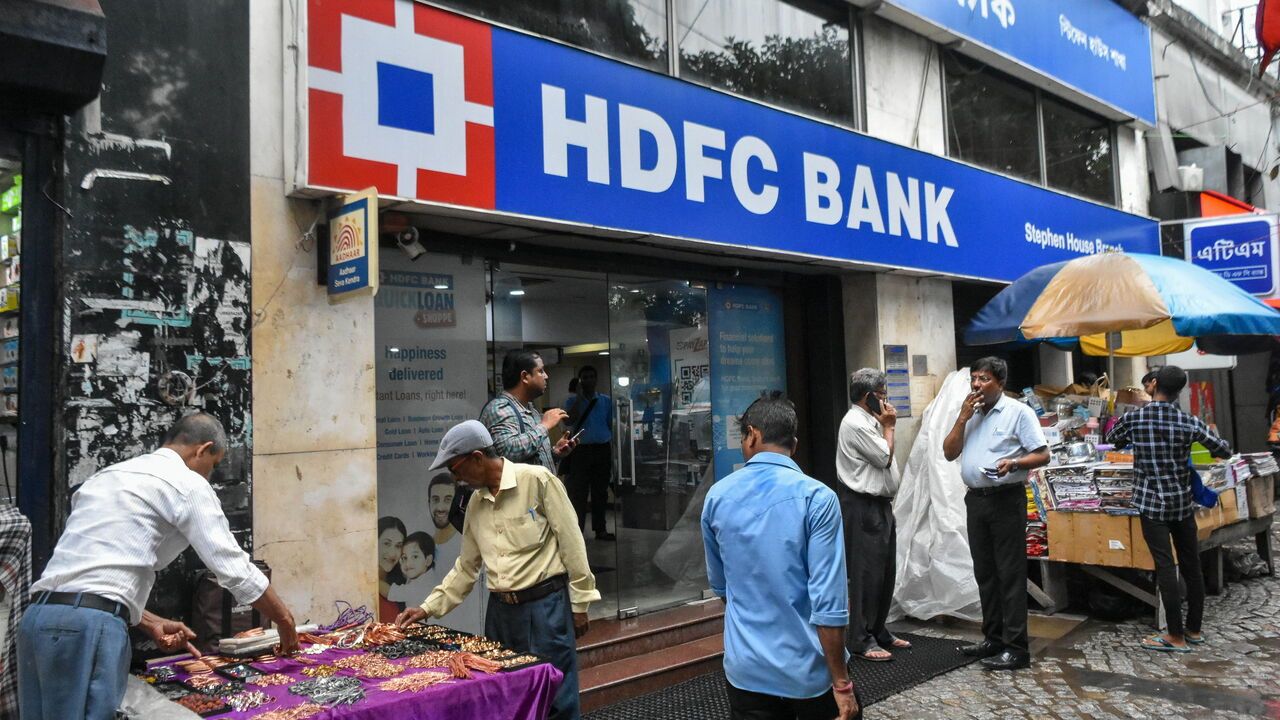
HDFC Bank started on a shoestring(以极少的资金). In its first makeshift(临时凑合的) office, in a textile mill in Mumbai in 1995, rats gnawed(啃咬) at computer cables taped to the floor. Paper clips were meticulously(一丝不苟地) accounted for. Staff held meetings under a peepal tree(菩提树,印度文化中的圣树). Even as the bank grew, they were asked to bring in their own tea mugs.
HDFC银行起步时资金拮据。1995年,它在孟买一家纺织厂里设立了第一个临时办公室,老鼠啃咬着用胶带固定在地板上的电脑线缆。回形针的使用被严格记录。员工们在菩提树下开会。即便银行后来发展壮大,员工仍被要求自带茶杯。
Such prudence(审慎,精明) paid off(得到回报,奏效). HDFC Bank soon became a formidable(令人敬畏的,强大的) institution, known for efficiency, conservative lending, tight control of bad loans and steady profits. It is now India’s biggest private lender. But when Anup Bagchi, its new chief executive, took charge(上任,接管) on October 27th, he inherited(继承,接手) a difficult legacy.
这种审慎得到了回报。HDFC银行很快成为一家令人敬畏的机构,以高效、审慎放贷、严格控制不良贷款和稳定盈利著称。它如今是印度最大的私营银行。但当新任首席执行官阿努普·巴格奇于10月27日上任时,他继承的却是一份棘手的遗产。
In 2023 a $40bn merger(合并) with Housing Development Finance Corporation (HDFC), a related housing-finance giant, created one of the world’s largest banks. The logic was compelling(令人信服的). HDFC Bank’s cheap current- and savings-account deposits could help fund HDFC’s vast mortgage book(抵押贷款组合), which had relied on dearer(更昂贵的) bonds, bank loans and longer-term deposits. The enlarged bank could also cross-sell(交叉销售) home loans, cards and insurance to a bigger customer base.
2023年,HDFC银行与关联的住房金融巨头——住房开发金融公司(HDFC)完成400亿美元合并,缔造了全球最大的银行之一。其逻辑颇具说服力:HDFC银行廉价的活期和储蓄账户存款,可以为HDFC庞大的抵押贷款组合提供资金,而后者此前依赖成本更高的债券、银行贷款和较长期存款。合并后的银行还可以向更庞大的客户群交叉销售住房贷款、信用卡和保险产品。