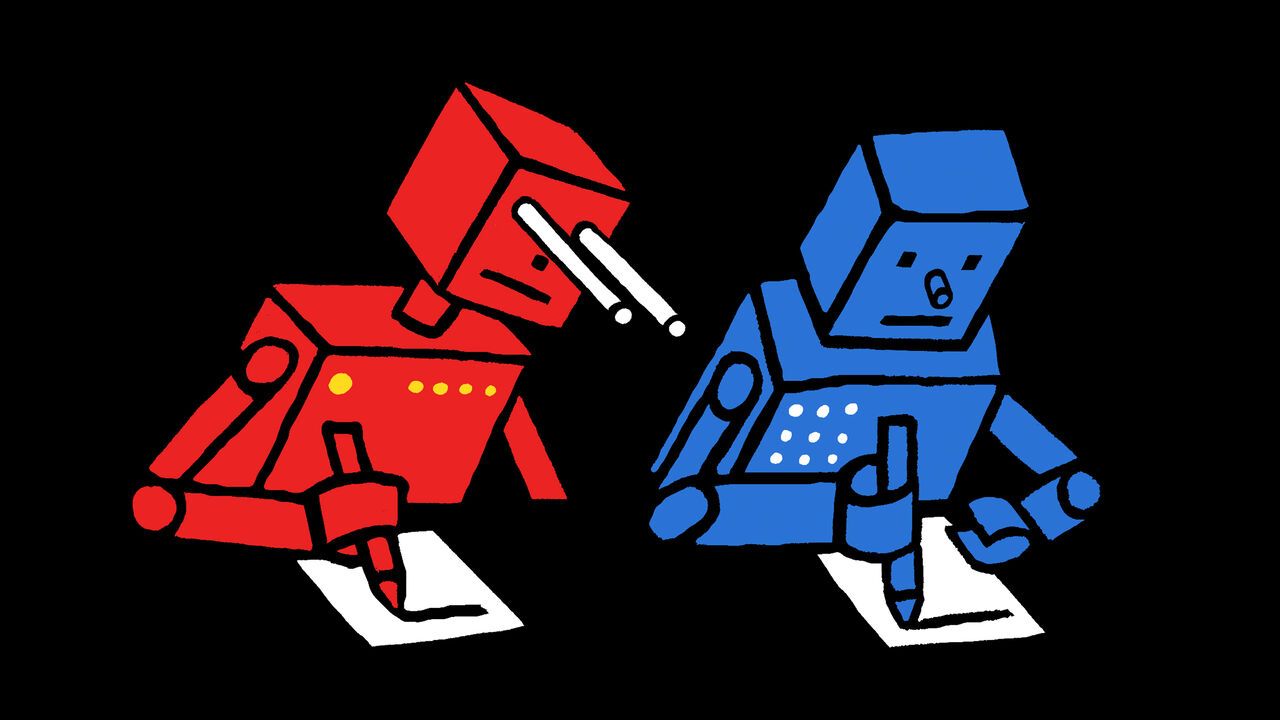
Anthropic and OpenAI have lately taken up an old tradition in corporate America: bemoaning(抱怨,哀叹) the Chinese copycat. For decades firms moved assembly lines to China only to find me-too merchants rising next door.(几十年来,企业将生产线迁至中国,却发现隔壁冒出了跟风商家。) Now America’s leading artificial-intelligence labs say the same thing is happening to their models, and want the federal government to stop it.
Anthropic和OpenAI最近拾起了美国企业界的一项老传统:抱怨中国的模仿者。几十年来,企业将生产线迁至中国,却发现隔壁冒出了“我也一样”的商家。如今,美国领先的人工智能实验室声称同样的事情正发生在它们的模型上,并希望联邦政府出面制止。
In the race to superintelligence China remains hot on America’s heels(紧追美国之后). Experts say that Chinese AI labs produce models three to six months behind the American frontier(前沿,边界). They do so, despite having fewer chips and less cash, largely because of distillation: a process by which inferior models learn to imitate the output of cleverer ones.(尽管芯片更少、资金更少,它们能做到这一点,很大程度上靠的是蒸馏:一种让较弱模型学习模仿更聪明模型输出的过程。) Yet American legislators should resist calls to ban this type of copycat innovation. Distillation benefits consumers, reduces the chance of catastrophe—and, counterintuitively(反直觉地), locks in(锁定,巩固) America’s technological lead.
在通往超级智能的竞赛中,中国仍紧咬美国不放。专家称,中国人工智能实验室生产的模型比美国前沿水平落后三到六个月。尽管芯片更少、资金更少,它们能做到这一点,很大程度上靠的是蒸馏:一种让较弱模型学习模仿更聪明模型输出的过程。然而,美国立法者应当抵制禁止这类模仿式创新的呼声。蒸馏有益于消费者,降低灾难发生的概率——而且,反直觉的是,它还锁定了美国的技术领先地位。
Anthropic and OpenAI forbid the technique in their terms of service. Both have griped(抱怨,发牢骚) to the American government that Chinese rivals are stealing their intellectual property(知识产权); Anthropic wants penalties. One solution, proposed in a bill before the Senate, would be to put sanctions on distillers, stopping them from offering models in America and maybe elsewhere.(参议院一项法案提出的一个解决方案是对蒸馏者实施制裁,阻止它们在美国乃至其他地方提供模型。)
Anthropic和OpenAI在服务条款中禁止了这项技术。两家公司都向美国政府抱怨中国竞争对手窃取它们的知识产权;Anthropic希望实施惩罚。参议院一项法案提出的一个解决方案是对蒸馏者实施制裁,阻止它们在美国乃至其他地方提供模型。