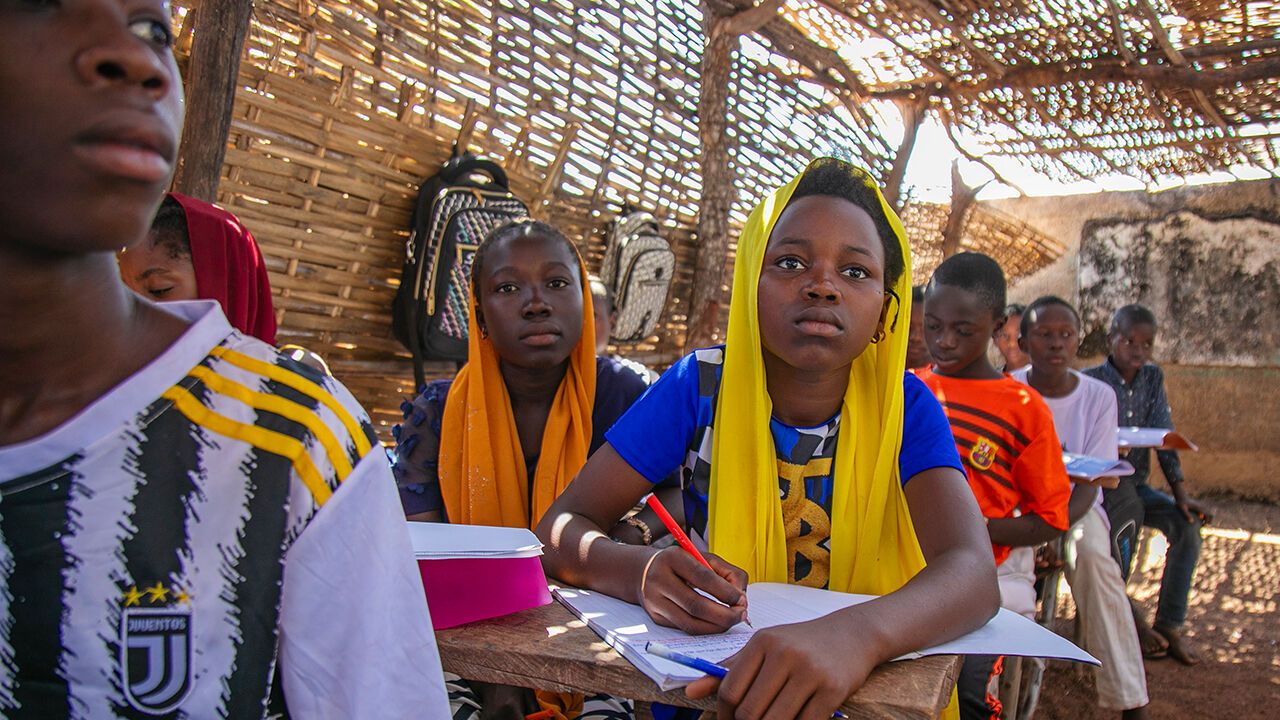
When Senegal’s government wanted to find out in which languages to teach children, it sent officials into schools to listen to them playing. In school playgrounds across the country, the surveyors(调查人员) found children speaking in Wolof and Pulaar(沃洛夫语和富拉语), joking in Safi, and throwing in(偶尔插入) the occasional French word.
塞内加尔政府想了解应该用哪些语言教孩子,于是派官员进入学校,听孩子们玩耍时说什么。在全国各地的学校操场上,调查人员发现孩子们讲沃洛夫语和富拉语,用萨菲语开玩笑,偶尔还蹦出几个法语词。
The mapping exercise(摸底调查) is part of an initiative to foster(促进,培养) teaching in Senegalese languages that began in 2021. Most schools in Senegal teach in French, the country’s only official language. But most children do not understand or speak it well. By starting to teach young children in local languages before transitioning to(过渡到) others, Senegal hopes that they will learn more.
这项语言摸底调查是2021年启动的一项倡议的一部分,该倡议旨在促进用塞内加尔本国语言教学。塞内加尔大多数学校用法语授课,法语是该国唯一的官方语言。但大多数孩子法语说得不好,也听不懂。塞内加尔希望,先教幼儿本地语言,再过渡到其他语言,这样他们能学到更多。
At the moment, many children who attend French-speaking schools can barely(几乎不) understand their lessons. In Dakar, the capital, an estimated 55% of children do not speak French. In rural areas such as Fatick, in the south of the country, that share rises to 87%. The situation mirrors the rest of the continent(与非洲大陆其他地区如出一辙). Most African schools teach in international languages, but only 10-15% of Africans are thought to be fluent in one.(大多数非洲学校用国际语言授课,但据信只有10%到15%的非洲人能流利使用一种国际语言。)
目前,许多在法语学校就读的孩子几乎听不懂课。在首都达喀尔,估计有55%的儿童不会说法语。在南部法蒂克等农村地区,这一比例升至87%。这一情况与非洲大陆其他地区如出一辙。大多数非洲学校用国际语言授课,但据信只有10%到15%的非洲人能流利使用一种国际语言。