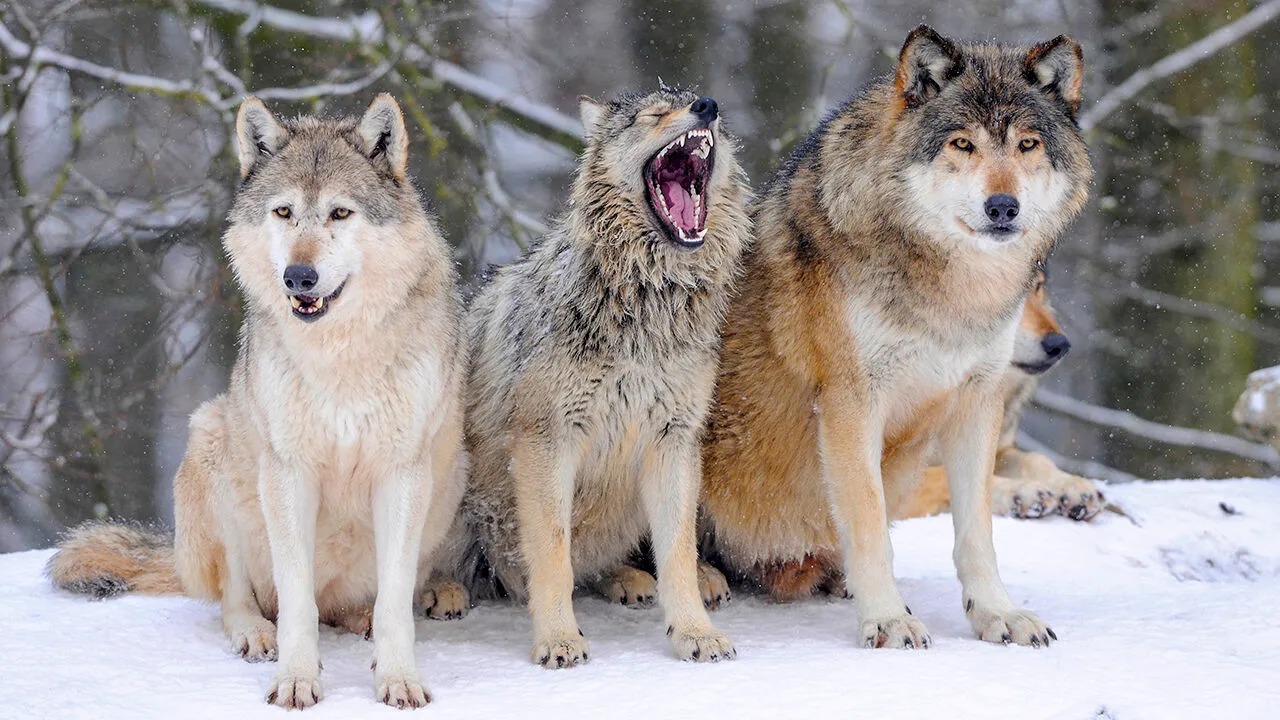
YAWNING IS CONTAGIOUS. And not only among humans. The mimicry(模仿) has been seen in chimpanzees, elephants, pigs, wolves and even, allegedly(据称), parrots. Its purpose, however, remains unclear. Many suspect it is a form of behavioural mirroring(行为镜像) that helps animals strengthen social bonds(社会联系) and enhance group cohesion(群体凝聚力). In chimpanzees, for example, contagious(传染性的) yawning is more common among individuals who know one another.
打哈欠具有传染性。而且不仅限于人类之间。这种模仿行为已在黑猩猩、大象、猪、狼身上观察到,甚至据称鹦鹉也会。然而,其目的仍不清楚。许多人怀疑这是一种行为镜像形式,有助于动物加强社会联系、增强群体凝聚力。例如,在黑猩猩中,传染性打哈欠在彼此认识的个体之间更为常见。
Dogs yawn too. But, though these wolf-descended canids(犬科动物) often do so after their owners, yawning after other dogs is rare. It therefore looks likely that, as part of the evolutionary process which created Man’s Best Friend, the bond-forming role of yawning has been transferred from one species to another.(因此,看起来很可能的情况是,在造就“人类最好的朋友”的演化过程中,打哈欠的建立联系功能已从一个物种转移到了另一个物种。) Federica Amici of the Max Planck Institute for Evolutionary Anthropology(马克斯·普朗克进化人类学研究所) in Leipzig, and Paolo Ciucci of La Sapienza University in Rome, teamed up to investigate by comparing the yawning behaviour of purebred(纯种的) wolves with that of wolf crossbreeds(杂交后代) carrying dog DNA.
狗也会打哈欠。但是,尽管这些由狼演化而来的犬科动物常常在主人打哈欠后跟着打,它们因其他狗打哈欠而跟着打的情况却很少见。因此,看起来很可能的情况是,在造就“人类最好的朋友”的演化过程中,打哈欠的建立联系功能已从一个物种转移到了另一个物种。莱比锡马克斯·普朗克进化人类学研究所的费代里卡·阿米奇和罗马萨皮恩扎大学的保罗·丘奇合作,通过比较纯种狼与携带狗DNA的狼杂交后代的打哈欠行为来展开研究。
Domestication is probably central to the story. Researchers suspect that over the course of 30,000-40,000 years living with (and being bred by) people, dogs have developed traits which made them more aware of human behaviours.(研究人员怀疑,在与人类共同生活(并被人类驯养)的三四万年里,狗发展出了一些特性,使它们更关注人类的行为。) Along the way, this process seems to have diminished(削弱) their awareness of their own kind too. But that raises the question of what happens when dog genes migrate into wolves.
驯化可能是故事的核心。研究人员怀疑,在与人类共同生活(并被人类驯养)的三四万年里,狗发展出了一些特性,使它们更关注人类的行为。在此过程中,这一过程似乎也削弱了它们对同类的关注。但这引出了一个问题:当狗的基因迁移到狼身上时会发生什么?
Yawn apart
哈欠的隔阂