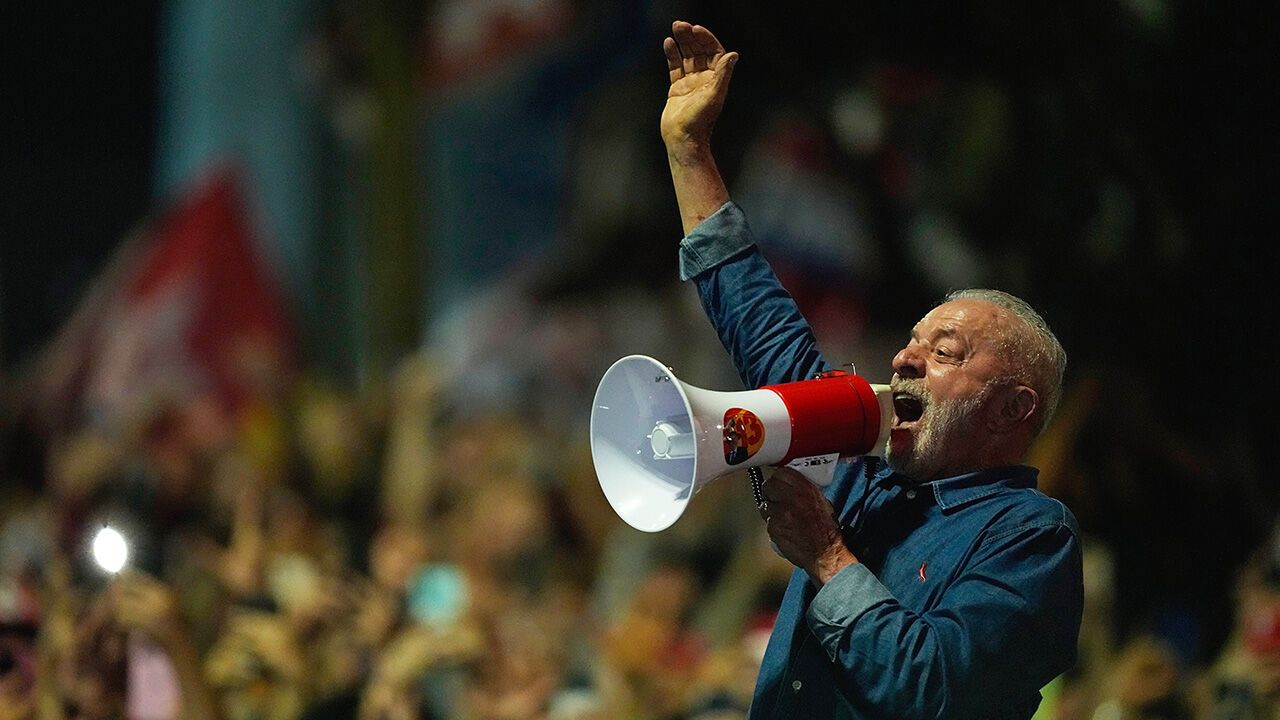
EVEN BY BRAZIL’S standards, it was a week of extraordinary drama. On October 25th Luiz Inácio Lula da Silva, who most pundit(权威人士、专家评论员)s thought was dead and buried(彻底失败、毫无希望) after the first round of voting, won Brazil’s presidential election. That stunning comeback vault(一跃进入、使跃升)s Lula, as the 81-year-old left-winger is known, into an exclusive club(门槛极高的专属圈子) of presidents who have won four democratic elections. Two days later his defeated rival, Flávio Bolsonaro—the son of Jair, a hard-right(极右翼的) former president who is under house arrest(被软禁在家) for attempting a coup(政变)—fled Brazil after a Supreme Court judge investigating allegations of corruption ordered him to hand in(上交、交出) his passports. He has taken his family to the United States.
即便以巴西的标准衡量,这也是极富戏剧性的一周。10月25日,路易斯·伊纳西奥·卢拉·达席尔瓦赢得了巴西总统选举——首轮投票后,多数权威人士还认为他已彻底出局。这场惊人的逆转使卢拉——这位81岁左翼人士的惯用名——跻身一个专属俱乐部:四度赢得民主选举的总统之列。两天后,他落败的对手弗拉维奥·博索纳罗逃离巴西。弗拉维奥是极右翼前总统雅伊尔·博索纳罗之子,后者因企图发动政变而遭软禁。此前,一名调查腐败指控的最高法院法官下令弗拉维奥上交护照。他已携家人前往美国。
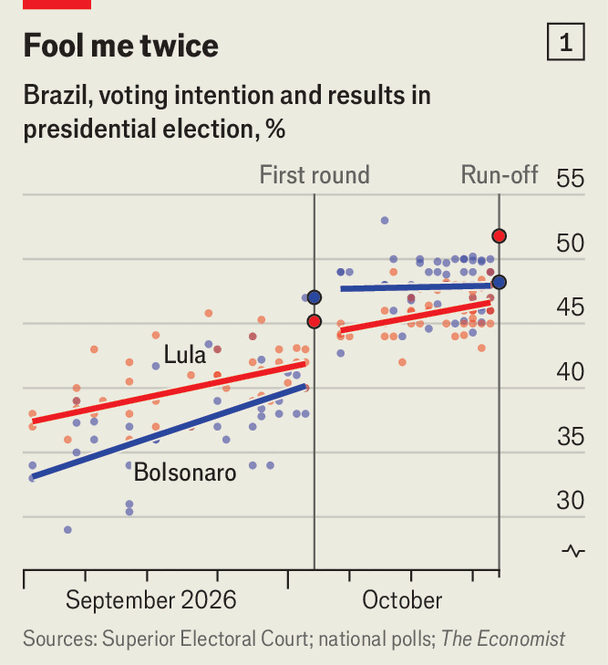
No presidential candidate since the return of democracy in 1985 had lost the first round of voting and won the run-off(决选、第二轮投票). Lula trail(落后于)ed Flávio by 2m votes in the first ballot(选票;投票) on October 4th. The candidates who were knocked out(被淘汰出局) at that stage, who between them had received 8% of votes, also chose to back Flávio. Yet in less than three weeks Lula gained an extra 10m votes, many of them from people who had failed to turn out(出席投票;到场) or spoiled their ballots(投了废票) in the first round (see chart 1).
自1985年恢复民主以来,还没有哪位总统候选人能在首轮投票失利后赢得决选。在10月4日的首轮投票中,卢拉落后弗拉维奥200万票。首轮出局的候选人共获得8%的选票,他们也选择支持弗拉维奥。然而不到三周,卢拉就多得了1000万票,其中许多来自首轮未投票或投废票的人(见图表1)。
Three things explain the turnaround(逆转、好转). The first is a change in tactics(策略、战术). Ahead of the first round, Lula ran a disorganised and old-fashioned campaign. He wore a Panama hat(巴拿马草帽) to hide scars from a recent operation; that merely reminded voters of his age. His team barely spent anything on social media. Instead they handed out lots of stickers with his face on them. But between the two rounds Lula discovered both his mojo(活力、魅力) and the internet. He lost the hat and he began posting selfie videos on Instagram. His campaign got a huge boost from André Janones, a congressman(国会议员) from Minas Gerais, a bellwether state(米纳斯吉拉斯州——巴西选举风向标), who set up a WhatsApp channel called “Lula’s Army” which attracted over 10m members in two weeks. Mr Janones gave the members of this group “missions”, such as reposting an image of Lula on social media, which helped his messages go viral(病毒式传播) in the final stretch(最后阶段) of the campaign.
有三件事解释了这一逆转。首先是策略转变。首轮投票前,卢拉的竞选活动组织混乱、方式老套。他戴一顶巴拿马帽遮掩近期手术的疤痕,这反而让选民想起他的年龄。他的团队几乎没在社交媒体上花钱,而是发放大量印有他头像的贴纸。但在两轮投票之间,卢拉既找回了活力,也发现了互联网。他摘掉帽子,开始在Instagram上发布自拍视频。他的竞选活动还得到米纳斯吉拉斯州众议员安德烈·雅诺内斯的巨大助力。米纳斯吉拉斯是风向标州,雅诺内斯建立了一个名为“卢拉军团”的WhatsApp频道,两周内吸引超过1000万成员。他给群成员布置“任务”,比如在社交媒体上转发卢拉的图片,这帮助卢拉的信息在竞选最后阶段病毒式传播。
Don’t go out with a bang
别轰轰烈烈地退场