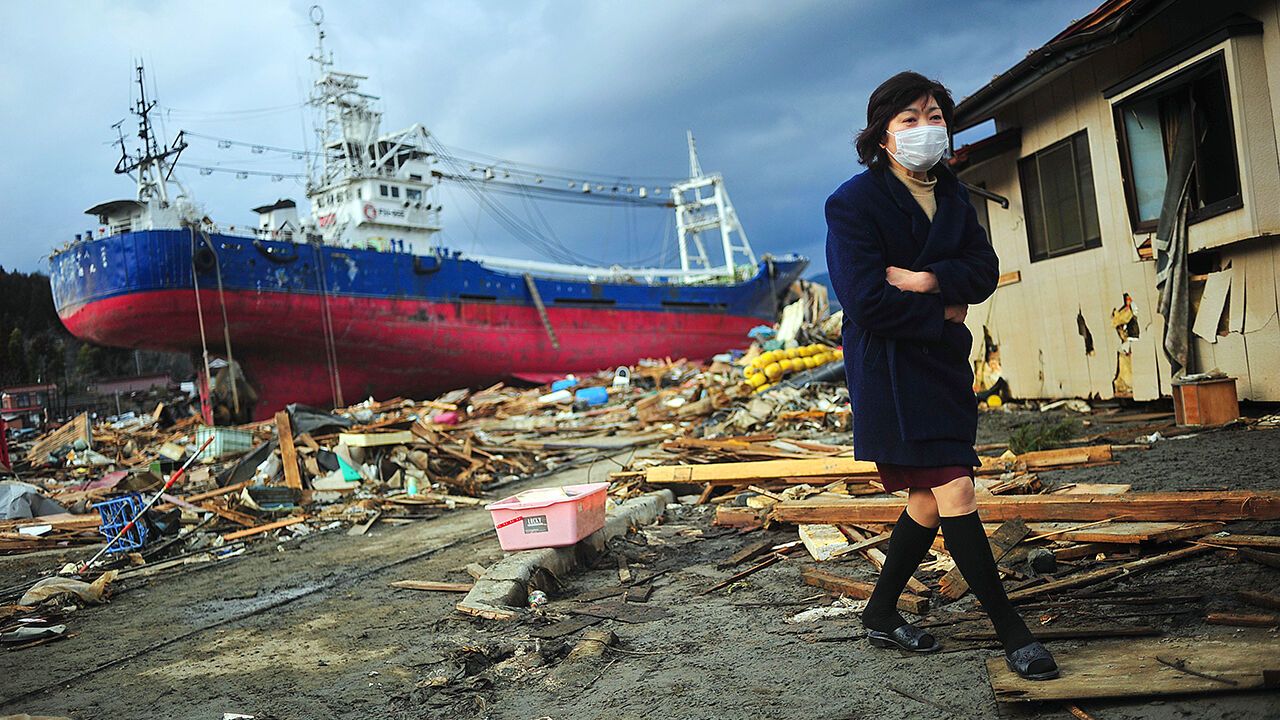
AMONG THE countries most prone(易于遭受的) to natural disasters, Japan has a habit of spawning new bureaucracies(催生新的官僚机构). Yet, despite in recent years launching agencies for digital technology and for children and families, its governments have consistently batted away(一再搁置、拒绝) a more obvious idea: to set up a disaster agency. That changed on November 2nd. At the new body’s launch, Hosono Goshi, its freshly appointed minister, stood before a backdrop(背景板) with a colourful logo resembling the character for “prevent” in bosai, or disaster prevention. He vowed to make Japan “the world’s most disaster-prepared nation”, ready for calamities(灾难) “on the scale of a national crisis”.
在世界上最易遭受自然灾害的国家中,日本素有设立新官僚机构的习惯。然而,尽管近年来先后设立了数字技术厅和儿童家庭厅,历届政府却一再搁置一个更显而易见的想法:设立防灾厅。这一局面在11月2日改变。在新机构启动仪式上,新任防灾大臣细野豪志站在印有彩色标志的背景板前,该标志形似“防灾”一词中“防”字的字形。他誓言要让日本成为“世界上防灾准备最充分的国家”,能够应对“国家级危机规模”的灾难。
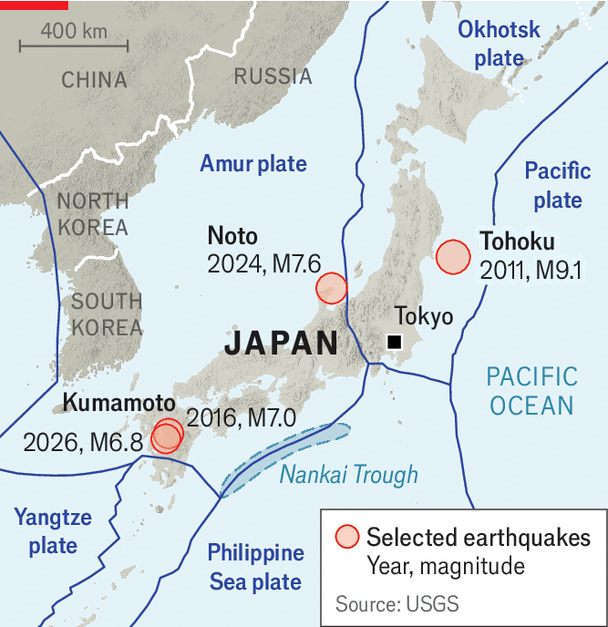
Sitting at the junction(交界处) of four tectonic plates(构造板块) (see map), Japan suffers around a fifth of the world’s earthquakes of magnitude(震级) 6 or greater. The earthquake and tsunami in 2011 in Tohoku in the north-east of the main island of Honshu, which triggered a nuclear meltdown, are strong memories.(2011年本州岛东北部东北地区的地震和海啸引发核 meltdown,至今令人记忆犹新。) In 2024 the Noto peninsula was devastated(严重破坏) by a magnitude 7.6 earthquake, and another powerful one struck Kumamoto this summer. Torrential(倾盆的、猛烈的) rains and floods, intensified by climate change, pose a growing threat, too.
日本位于四大板块交界处(见图),全球约五分之一震级6级及以上的地震发生在日本。2011年本州岛东北部发生的东北地震和海啸引发核 meltdown,至今令人记忆犹新。2024年能登半岛遭7.6级地震重创,今年夏天熊本又发生一次强震。气候变化加剧的暴雨和洪水也构成日益严重的威胁。
Yet even these calamities may be dwarfed(使相形见绌) by what lies ahead, says Kawata Yoshiaki, a disaster-management expert at Kansai University who advised the government about the agency. Seismologists(地震学家) warn of two catastrophic(灾难性的) earthquakes; their statistical model suggests a 70% chance of a magnitude 7 or higher quake directly hitting(直接袭击) the Tokyo metropolitan(大都市的) area in the next 30 years. Over the same period another feared megaquake(特大地震) along the Nankai Trough(南海海槽,日本太平洋沿岸的巨型地震带) off Japan’s Pacific coast has a 60-90% probability. In the worst case(在最坏情况下), such a quake could kill nearly 300,000 people, force 12.3m to evacuate(疏散、撤离) and cause ¥292trn ($1.8trn) in economic losses, equivalent(相当于) to more than 40% of Japan’s annual GDP. Mr Kawata expects long blackouts and broken supply chains(供应链中断) that would leave vast numbers short of food.
然而,关西大学灾害管理专家川田义明说,与未来的灾难相比,这些灾难可能相形见绌。他曾在防灾厅设立问题上为政府提供咨询。地震学家警告说,日本可能发生两场灾难性地震;统计模型显示,未来30年东京都市圈发生7级或以上直下型地震的概率为70%。同一时期,日本太平洋沿岸南海海槽可能发生的另一场令人恐惧的特大地震概率为60%至90%。最坏情况下,这类地震可能造成近30万人死亡,迫使1230万人疏散,并造成292万亿日元(1.8万亿美元)经济损失,相当于日本年GDP的40%以上。川田预计,长时间停电和供应链中断将使大量民众面临食物短缺。