Newborn. By Clémentine Goldszal. Translated by Natasha Lehrer. Pushkin Press(英国独立出版社); 272 pages; £18.99
《新生儿》,克莱芒蒂娜·戈尔德萨尔著,娜塔莎·莱勒译。普希金出版社;272页;18.99英镑。
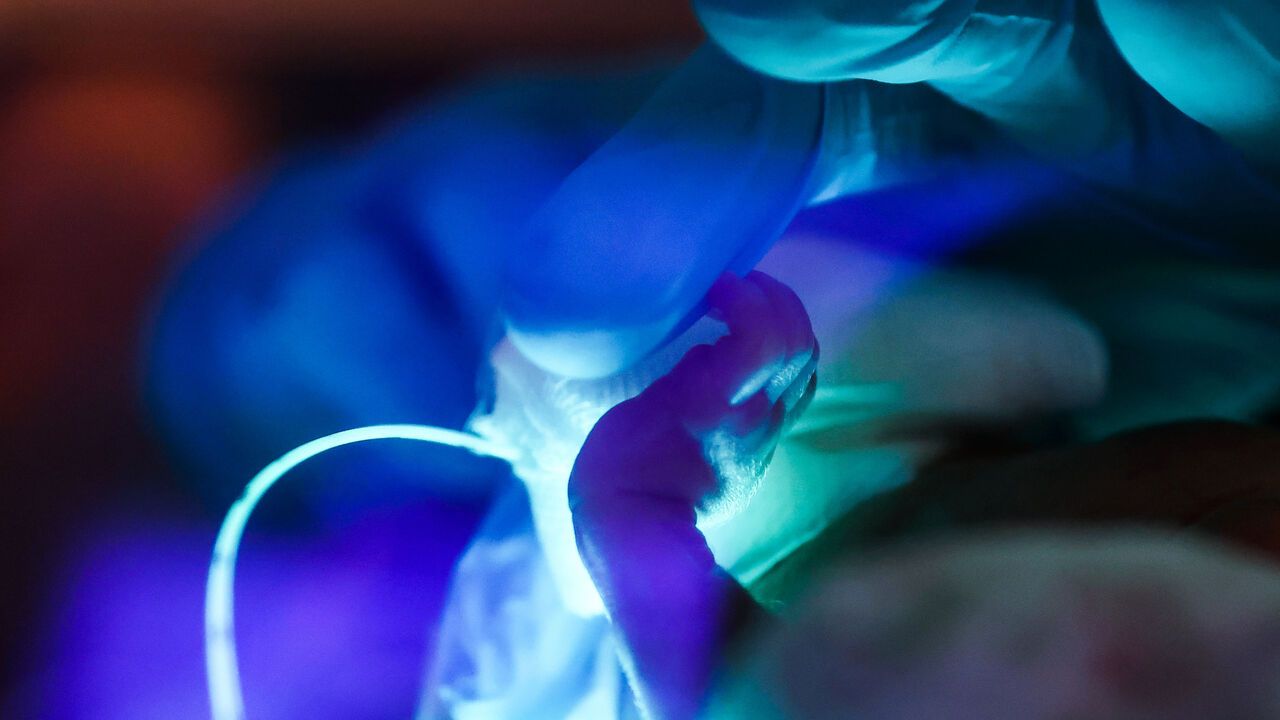
The naked creature in the incubator(保温箱) measures perhaps 50 centimetres and weighs some 900 grams. It scowls(皱眉) and twitches(抽动) but cannot smile. Its skin is almost transparent, and its veins close to invisible; it will take a doctor several minutes first to find one and then to draw a few drops of blood.(它的皮肤几乎透明,血管近乎看不见;医生要花好几分钟才能找到一根血管,然后抽出几滴血。) It is probably intubated(插管) to help breathing; another tube trickles(滴流) milk directly to the stomach. If you put tape on this fragile being, you will tear its skin. But if you leave it, it will cry.
保温箱里那个赤裸的小生命大约50厘米长,重约900克。它皱着眉、抽动着,却不会笑。皮肤几乎透明,血管近乎看不见;医生要花好几分钟才能找到一根血管,然后抽出几滴血。它很可能插着管帮助呼吸;另一根管子把奶直接滴入胃里。如果你在这个脆弱的生命身上贴胶布,会撕破它的皮肤。但如果你不管它,它就会哭。
Clémentine Goldszal, a French journalist, is consumed(被深深攫住) by this image and by a single imperative(迫切使命): to find out what birth is like for newborns, and how they experience the multiple medical interventions(干预) that may, in a worst case, immediately follow. She would interview them if she could. But of course there is no communication. When her own son Lucien was born, what she took as sweet kittenish sounds turned out to be signs of acute respiratory distress.(她自己的儿子吕西安出生时,她以为那是小猫般可爱的声音,结果却是急性呼吸窘迫的征兆。) An apparently lively baby may, in fact, be having convulsions(抽搐).
法国记者克莱芒蒂娜·戈尔德萨尔被这幅画面深深攫住,也被一个迫切的使命所驱动:弄清楚出生对新生儿来说是什么感觉,以及他们如何经历那些可能紧随其后的多重医疗干预——最坏的情况下,这些干预会接踵而至。如果可能,她真想采访他们。但当然,沟通是不可能的。她自己的儿子吕西安出生时,她以为那是小猫般可爱的声音,结果却是急性呼吸窘迫的征兆。一个看起来活泼的婴儿,实际上可能正在抽搐。