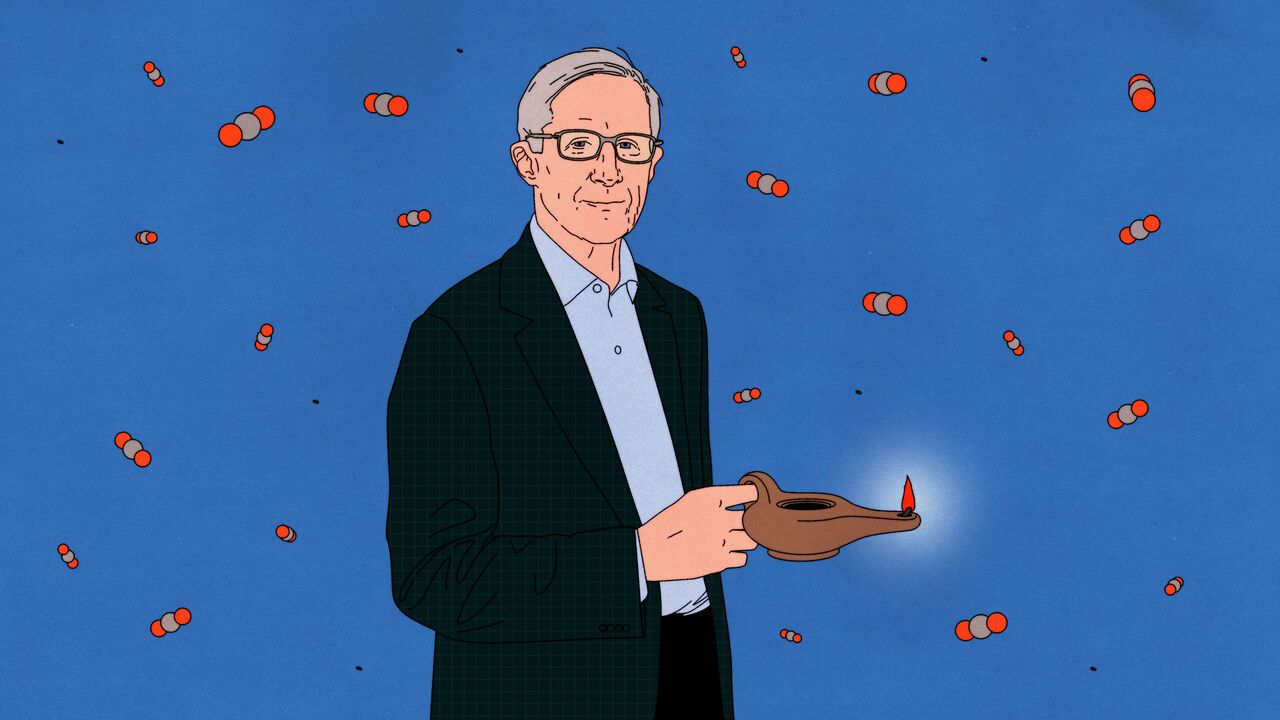
WILLIAM NORDHAUS had faith in(对……有信心) the tools of his profession. For decades he helped run Yale University’s economics department, where he arrived in 1967, aged 26, and stayed until he died on October 30th. He edited “Economics”, a textbook still used by American undergraduates. And he was convinced that economic methods could be useful to other disciplines, leaving wonkish(书呆子气的;过于专业枯燥的) topics behind in pursuit of debates that consume(使……着迷;占据(注意力))d policymakers: the climate, technology and taxes.
威廉·诺德豪斯对自己专业的工具充满信心。几十年来,他协助管理耶鲁大学经济系——1967年,26岁的他来到那里,一直待到2026年10月30日去世。他主编了《经济学》教科书,该书至今仍被美国本科生使用。他坚信经济学方法对其他学科也有用,于是放下那些枯燥的专业话题,转而投身于政策制定者关注的辩论:气候、技术和税收。
His faith made him unflinching(坚定的;不退缩的)—and unafraid of a fight. No other economist of his generation worked across such a breadth of(广泛的……范围) controversial topics. He pioneered carbon prices (which helped earn him a Nobel prize in 2018), pleasing America’s progressives and irk(使恼怒;使烦恼)ing its conservatives. He also defended billionaires, with the opposite effect(产生了相反的效果). As a result, he became a rare economist to win the respect of the left and right alike(同样地;两者都).
他的信念让他坚定不移——也不惧争斗。同代经济学家中,没有人像他那样涉猎如此多争议性议题。他开创了碳定价(这帮助他赢得了2018年诺贝尔奖),令美国进步派欢欣,却惹恼了保守派。他也为亿万富翁辩护,效果恰恰相反。结果,他成为罕见的同时赢得左右两派尊重的经济学家。
Economics relies on the price system. Mr Nordhaus spent his life calculating prices that are missing. His doctoral thesis examined such failures in the knowledge economy, and suggested the optimal patent life for inventions that minimises underinvestment in copyable ideas and maximises social welfare.(他的博士论文考察了知识经济中的此类失灵,并提出了发明的最优专利期限,以最小化对可复制创意的投资不足,并最大化社会福利。) In the 1970s he decided that building theoretical models of technological change was “too hard” (and left the task to Paul Romer(保罗·罗默,内生增长理论奠基人), with whom he shared the Nobel). So he turned to climate change instead.
经济学依赖价格体系。诺德豪斯毕生都在计算那些缺失的价格。他的博士论文考察了知识经济中的此类失灵,并提出了发明的最优专利期限,以最小化对可复制创意的投资不足,并最大化社会福利。20世纪70年代,他认定构建技术变革的理论模型“太难”(于是把这项任务留给了保罗·罗默,后者与他共享诺贝尔奖)。于是他转而研究气候变化。
The good kind of two-handed economist
那种好的“两手经济学家”