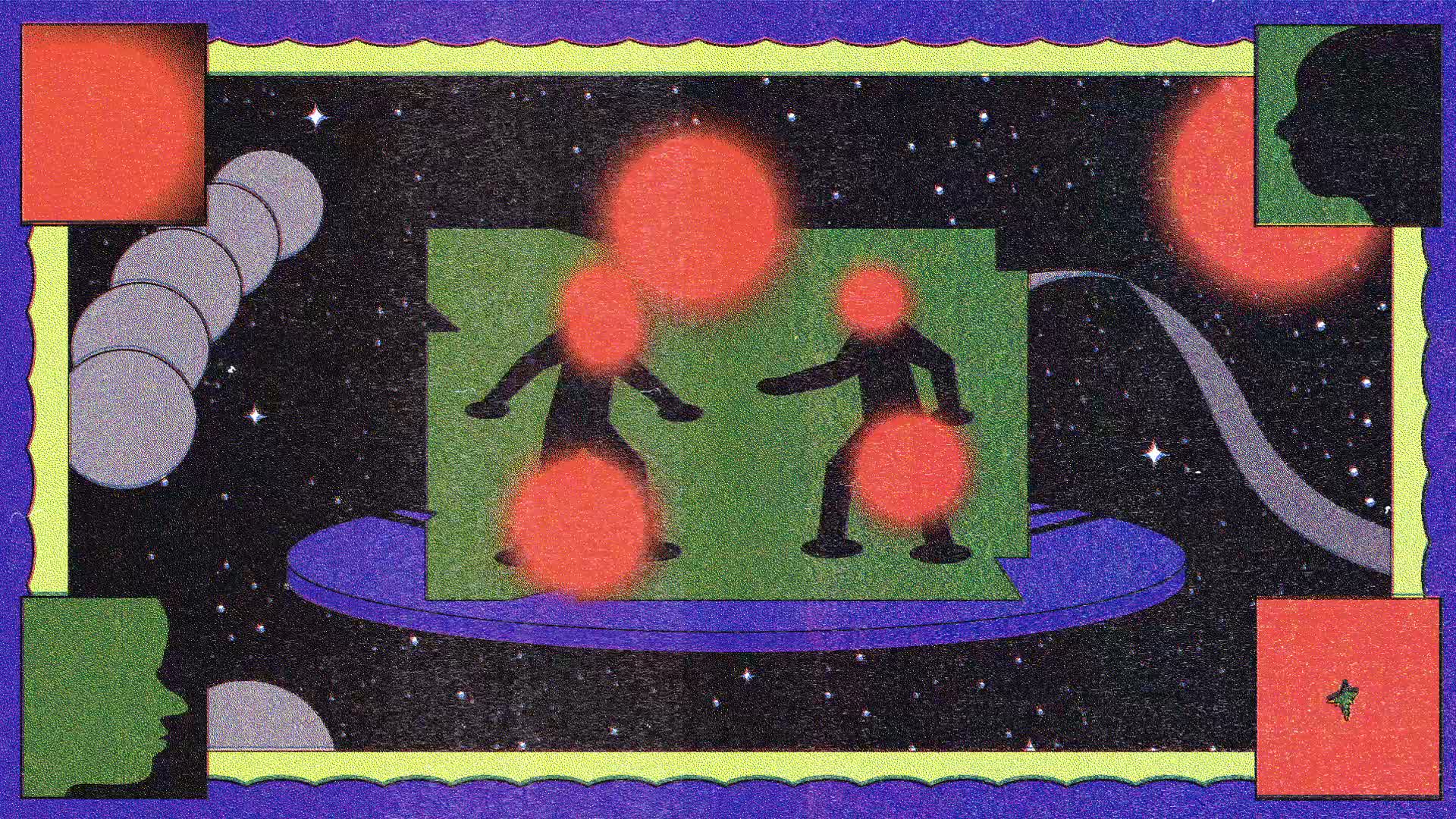
WHEN THE James Webb Space Telescope (JWST), a high-resolution camera orbiting the Sun, began sending images back to Earth in 2022, astronomers were greeted with something strange. Alongside the eclectic cast of cosmic characters they had been expecting—stars, galaxies, nebulae and the like—were a handful of small, red-tinted points of light, or, as the technical jargon has it, “little red dots”.(除了他们预期看到的那些五花八门的宇宙角色——恒星、星系、星云之类——还有少数几个小小的、带红色调的光点,或者用专业术语来说,“小红点”。) Astronomers had no idea what they were.
当詹姆斯·韦布空间望远镜(JWST)——一台绕太阳运行的高分辨率相机——于2022年开始向地球传回图像时,天文学家们遇到了怪事。除了他们预料中的那些五花八门的宇宙角色——恒星、星系、星云之类——还有少数几个小小的、带红色调的光点,或者用专业术语来说,“小红点”。天文学家完全不知道它们是什么。
In looking for answers they have turned to the most mysterious objects in the universe—black holes. For some astronomers, the dots are black holes caught in unprecedentedly(前所未有地) violent growth spurts(生长突增期). For others, they are bizarre(奇特的), star-like objects with black holes at their centre. Getting it right matters(搞清楚这一点很重要): these dots could reveal the origins of the supermassive(超大质量的) black holes that sit at the centre of galaxies, and explain how they got so big so quickly. The debate is fierce, says Dale Kocevski, an astronomer at Colby College, in Maine. “I’ve never quite seen anything like this.”
为了寻找答案,他们求助于宇宙中最神秘的天体——黑洞。在一些天文学家看来,这些小红点是黑洞正处于前所未有的猛烈生长期。在另一些人看来,它们是奇特、类似恒星的天体,中心有黑洞。搞清楚这一点很重要:这些小红点可能揭示位于星系中心的超大质量黑洞的起源,并解释它们如何如此迅速地变得如此巨大。争论很激烈,缅因州科尔比学院的天文学家戴尔·科切夫斯基说。“我从未见过这样的情况。”
What is known is that the little red dots are, unsurprisingly, little—typically with a width less than 0.5% of the Milky Way’s—and red, emitting bright light that is rich in longer, redder wavelengths.(已知的是,这些小红点果然很小——宽度通常不到银河系的0.5%——而且很红,发出富含较长、较红波长的亮光。) They are also old. The universe’s first little red dots were born in the cosmic dawn(宇宙黎明) 13.4bn years ago, when the universe was around 500m years old—not long after the first galaxies appeared. Since the dots were first discovered more than 500 of them have been reported, and the number continues to rise. “In every single image you’re taking, you’re seeing one of these objects stare right back at you,” says Rohan Naidu, an astronomer at the University of Hawaii who was part of the team that coined the term.(“你拍的每一张图像里,都能看到其中一个天体直勾勾地盯着你,”夏威夷大学的天文学家罗汉·奈杜说,他是创造这个术语的团队成员之一。) “So they have to be important.”
已知的是,这些小红点果然很小——宽度通常不到银河系的0.5%——而且很红,发出富含较长、较红波长的亮光。它们也很古老。宇宙中最早的小红点诞生于134亿年前的宇宙黎明时期,当时宇宙大约5亿岁——距离第一批星系出现不久。自小红点首次被发现以来,已有超过500个被报告,而且数量还在增加。“你拍的每一张图像里,都能看到其中一个天体直勾勾地盯着你,”夏威夷大学的天文学家罗汉·奈杜说,他是创造这个术语的团队成员之一。“所以它们一定很重要。”