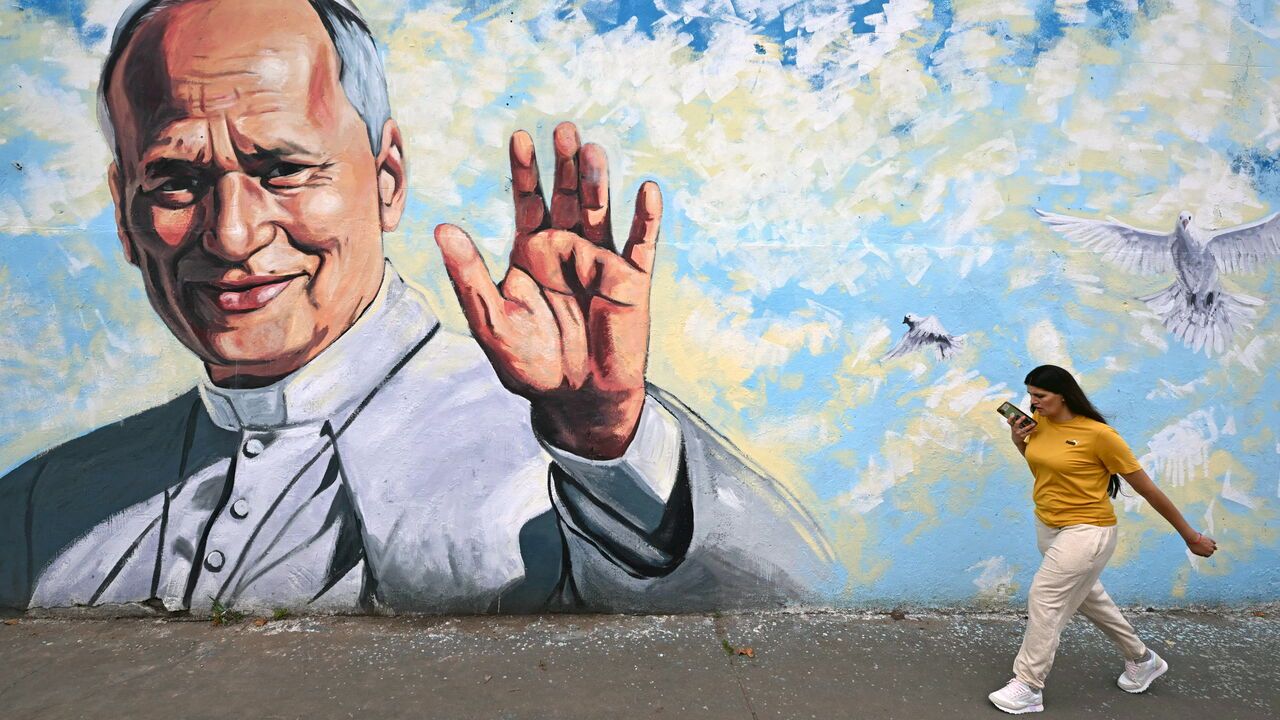
Pope Leo’s tour of South America, beginning on November 6th, is a marathon(马拉松;持久艰巨的任务). Over 12 days he is traveling some 31,000km, visiting Uruguay, Argentina and Peru and giving around 40 speeches. In some ways it is a homecoming(回乡;返校节): the pontiff(教皇,教宗) spent two decades as a missionary in Peru. The roadshow(巡回演出;巡游活动), coming three weeks after the pope underwent surgery for lung cancer, will draw big crowds. A bigger question is whether it can help win back(赢回,重新获得) Latin America’s waning(逐渐减弱的,衰退的) faithful. The region’s educated young, in particular, are gradually going off organised religion.
教皇利奥的南美之行于11月6日启程,堪称一场马拉松。在12天里,他要跋涉约3.1万公里,访问乌拉圭、阿根廷和秘鲁,发表约40场演讲。从某些方面说,这是一次回乡之旅:这位教皇曾在秘鲁担任传教士长达二十年。这场巡游距离教皇接受肺癌手术仅三周,必将吸引大批民众。更大的问题在于,它能否帮助赢回拉丁美洲日渐流失的信众。尤其是该地区受过教育的年轻人,正逐渐远离组织化宗教。
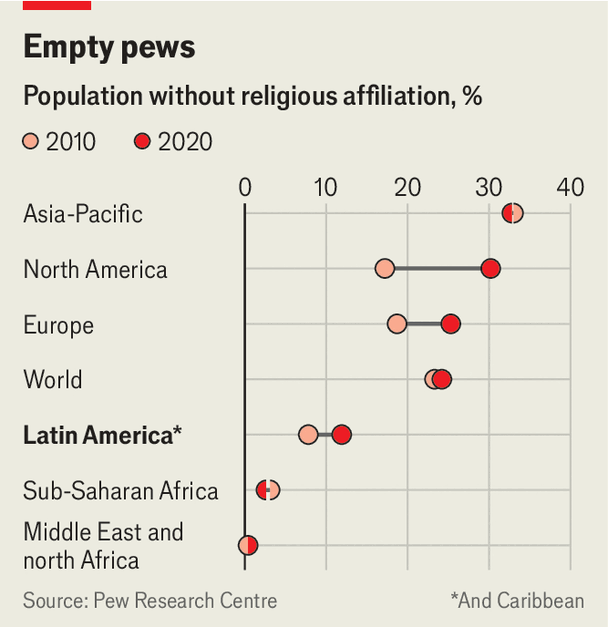
In the decade to 2020 the share of people around the world who say they do not identify with(认同,与……有归属感) any organised religion—call them the “nones(无宗教归属者)”—grew by a percentage point, to 24%. This shift may appear small, but behind it lies much change.(这一变化看似微小,背后却蕴含巨大变迁。) Every religion other than Islam stagnate(停滞,不发展)d or shrank over that period, when taking population growth into account. The share of people who say they have no religious affiliation(归属,隶属关系) declined slightly in Asia and barely budge((使)改变;挪动)d in Africa or the Middle East. But it soar(猛增,飙升)ed in Europe and the Americas. And of the three countries where the share of “nones” grew the most, two (Chile and Uruguay) are in Latin America.
截至2020年的十年间,全球自称不归属任何组织化宗教的人——不妨称之为“无宗教归属者”——比例上升了一个百分点,达到24%。这一变化看似微小,背后却蕴含巨大变迁。若将人口增长计算在内,除伊斯兰教外,所有宗教在此期间都停滞或萎缩。在亚洲,自称无宗教信仰者的比例略有下降;在非洲和中东则几乎未变。但在欧洲和美洲,这一比例大幅攀升。而在“无宗教归属者”比例增长最多的三个国家中,有两个(智利和乌拉圭)位于拉丁美洲。
To see what this looks like on the ground(在实地,在基层), trek(长途跋涉) to Uruguay—the country in which Pope Leo is beginning his grand tour. Its constitution has long enforced an exceptionally strict division between church and state. Easter week, known as “Holy Week” in the rest of Latin America, is called “Tourism Week”. Christmas is dub(把……称为,给……起绰号)bed “Family Day.” Not by chance, Uruguay legalised marijuana, gay marriage and abortion much earlier than its peer(同辈,同类国家)s.
要了解实际情况,不妨去乌拉圭看看——教皇利奥的盛大巡访正是从这个国家开始。乌拉圭宪法长期以来严格实行教会与国家之间的分离。在拉丁美洲其他地区被称为“圣周”的复活节周,在这里被称为“旅游周”。圣诞节则被戏称为“家庭日”。乌拉圭比同类国家更早地将大麻、同性婚姻和堕胎合法化,这并非偶然。
Old habits die hard
旧习难改