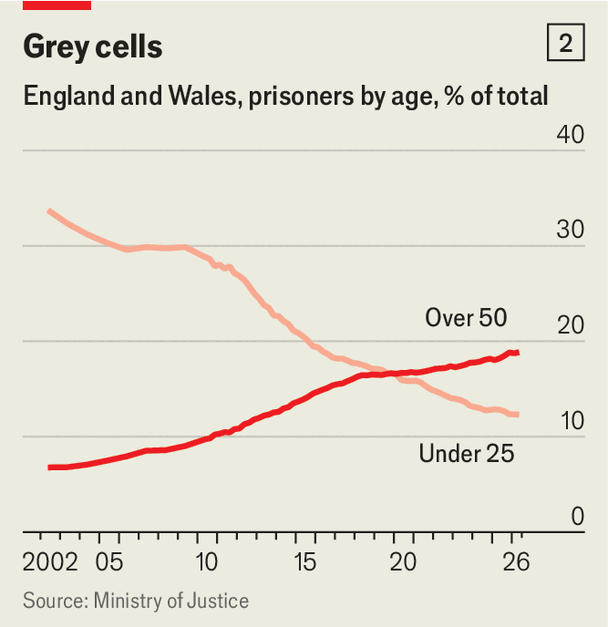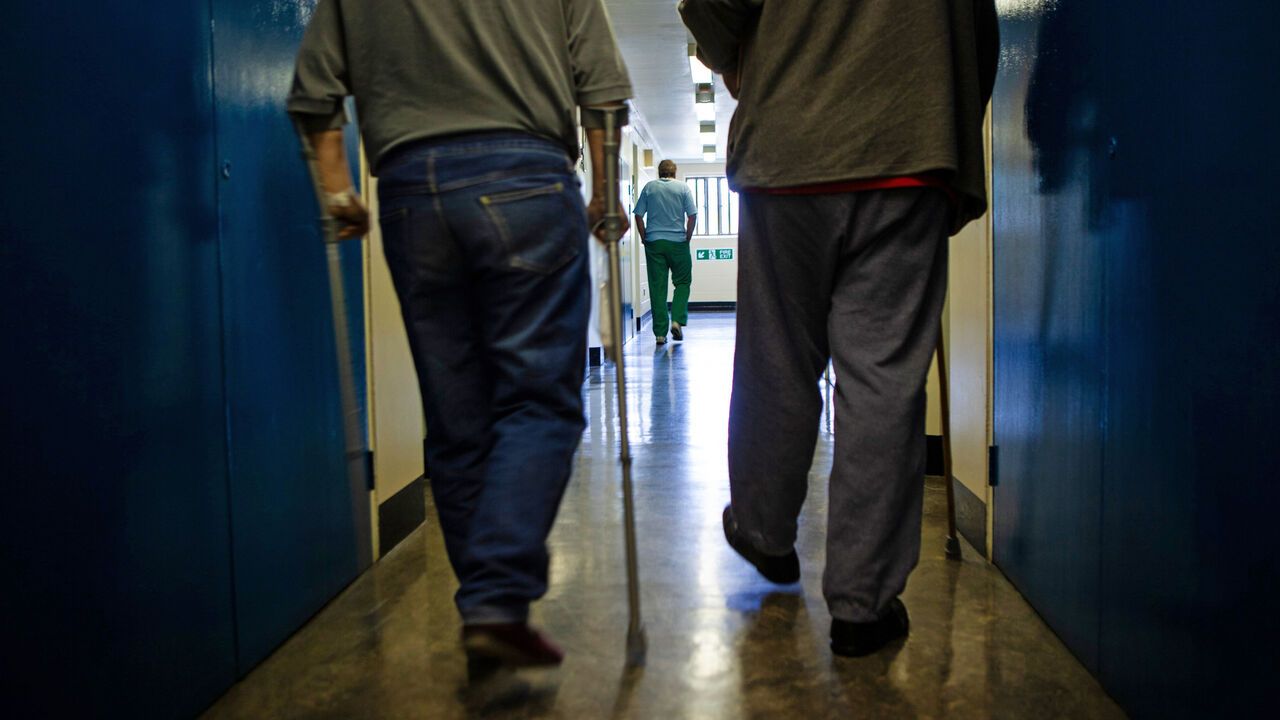
“Feculent and noxious(有毒的、有害的)”, said John Howard of England’s prisons in 1777. Convicts, the reformer wrote, were “pining(憔悴、衰弱) under diseases” and “expiring(断气、死亡) on the floors”. Conditions have improved since. And yet in 2017 Annabella, a 45-year-old diabetic, died after having spent 21 hours lying unresponsive on her cell floor.(然而2017年,45岁的糖尿病患者安娜贝拉在牢房地板上毫无反应地躺了21个小时后死去。)
1777年,约翰·霍华德如此形容英格兰的监狱:“污秽不堪、毒气弥漫”。这位改革者写道,囚犯们“在疾病中憔悴”, “在地板上咽气”。此后条件有所改善。然而2017年,45岁的糖尿病患者安娜贝拉在牢房地板上毫无反应地躺了21个小时后死去。
There has scarcely been a worse time(几乎从未有过更糟的时候) to be a British prisoner since detailed records began in the early 2000s. Rates of violence, self-harm(自残) and drug use are at or near record highs(处于或接近历史最高水平). With prisons running at 98% capacity, it is not unusual for prisoners to spend over 22 hours a day locked in a cell no bigger than a garden shed.(监狱容量使用率达98%,囚犯每天被锁在不超过花园棚屋大小的牢房里超过22小时,这并不罕见。)
自2000年代初有详细记录以来,英国囚犯的处境几乎从未如此糟糕。暴力、自残和吸毒率处于或接近历史最高水平。监狱容量使用率达98%,囚犯每天被锁在不超过花园棚屋大小的牢房里超过22小时,这并不罕见。
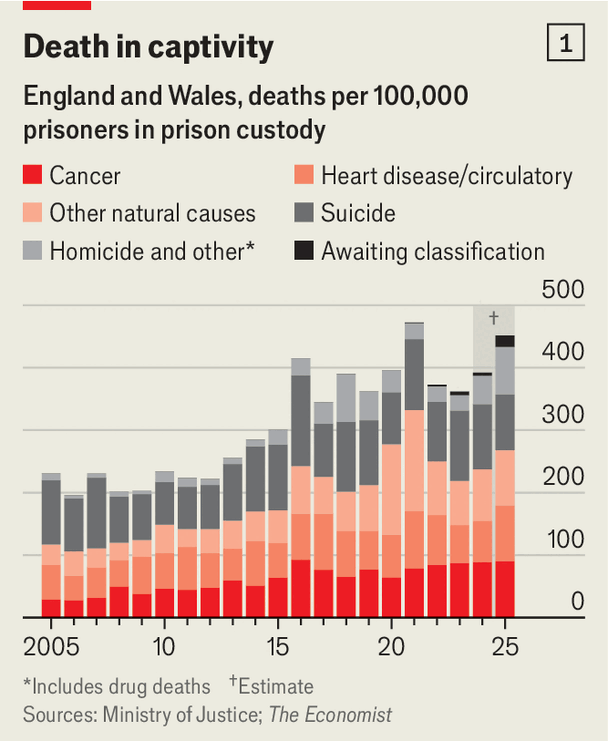
More than ever(比以往任何时候都更), they are dying there. Between 1992 and 2012 prisons in England and Wales recorded an average of 2.2 deaths a year for every 1,000 inmates(囚犯). Last year there were 4.5 per 1,000—more than in any other outside the covid-19 pandemic.(去年这一数字为每1000人4.5人——除新冠疫情期间外,高于任何其他时期。)
他们比以往任何时候都更可能死在狱中。1992年至2012年间,英格兰和威尔士的监狱平均每年每1000名囚犯中有2.2人死亡。去年这一数字为每1000人4.5人——除新冠疫情期间外,高于任何其他时期。