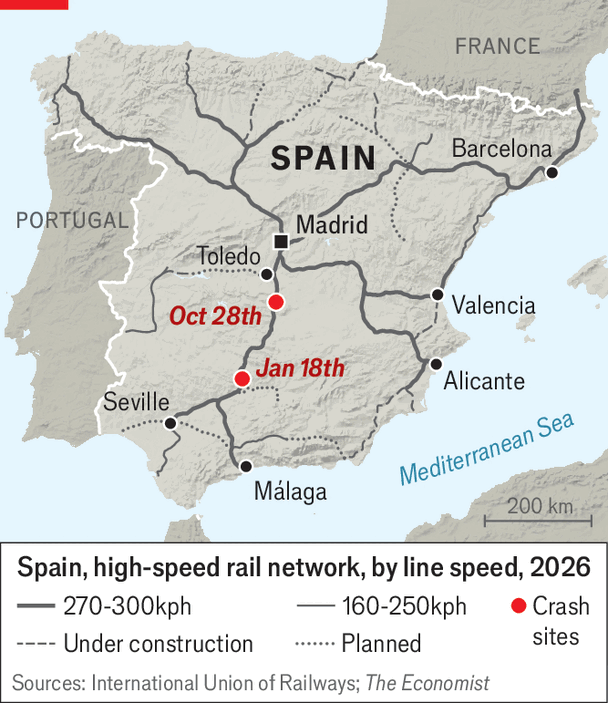
WHEN SPAIN’S first high-speed train from Madrid to Seville was inaugurated(正式开通) in 1992, it was much more than just(远不止是) a railway line. It was a symbol of the country’s emergence as a modern democracy. In the years since, high-speed lines have covered much of the country, becoming a source of national pride.
1992年,西班牙首条从马德里到塞维利亚的高铁通车时,它远不止是一条铁路线。它象征着这个国家作为现代民主国家的崛起。此后数年,高铁线路覆盖了全国大部分地区,成为民族自豪感的源泉。
Yet now, ahead of a general election on November 29th, the rail network has become a source of anguish(极度痛苦). Two crashes on the same line to Seville, first in January and then in October, killed a total of 115 people (see map). “Psychologically, for a lot of people it’s a symbol of what’s gone wrong in Spain” in recent years, says Luis Garicano, a Spanish economist at the London School of Economics. That includes relentless political polarisation under Pedro Sánchez (pictured), the Socialist prime minister, the taint of corruption surrounding his party and an ever-worsening housing crisis.(这包括桑切斯治下无休止的政治极化、其政党的腐败污点以及日益恶化的住房危机。)
然而如今,在11月29日大选前夕,铁路网络却成了痛苦之源。同一条通往塞维利亚的线路先后于1月和10月发生两起事故,共造成115人死亡(见图)。伦敦政治经济学院西班牙经济学家路易斯·加里卡诺表示:“从心理层面看,对许多人而言,这象征着近年来西班牙出了什么问题。”这些问题包括社会党首相佩德罗·桑切斯(见图)治下无休止的政治极化、围绕其政党的腐败污点,以及日益恶化的住房危机。
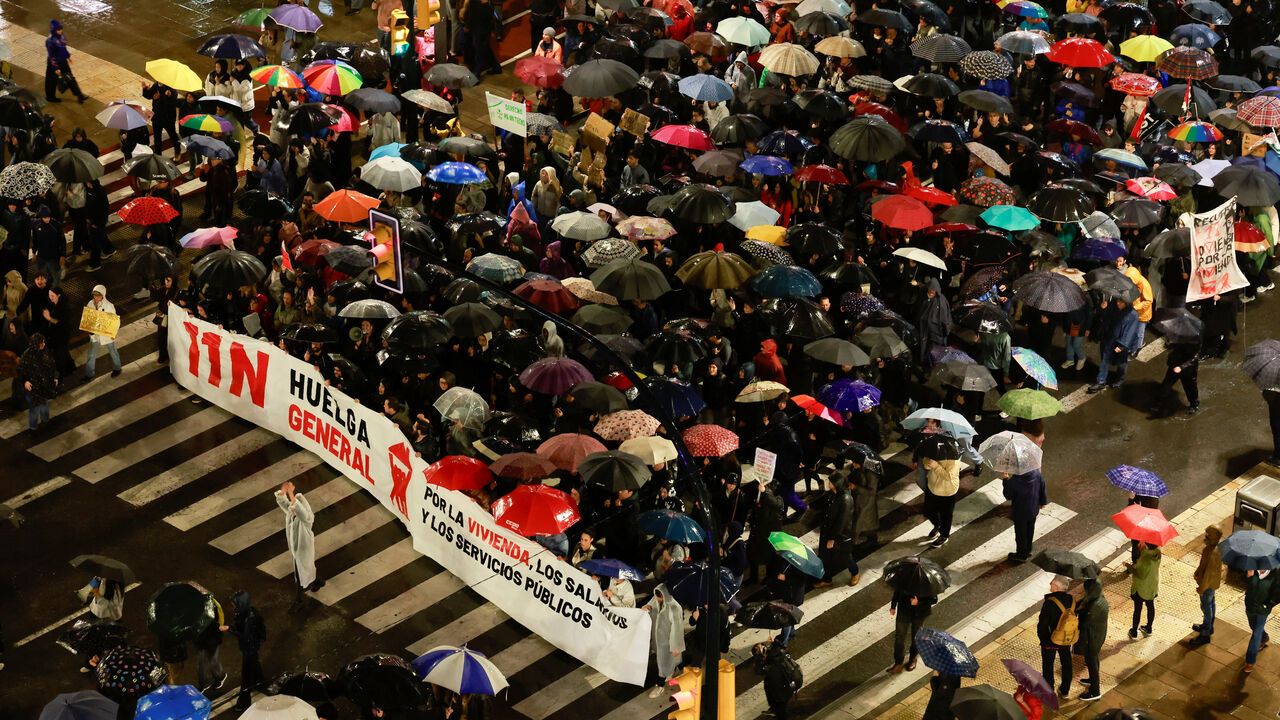
The timing of the second accident could not have been worse for Mr Sánchez, whose Socialist Party is trailing in the polls behind the centre-right People’s Party.(第二起事故的时机对桑切斯来说再糟糕不过,他领导的社会党在民调中落后于中右翼人民党。) It and the populist-right Vox party(西班牙右翼民粹政党) are projected(预计) to win about 200 seats between them(合计) in the 350-seat parliament, against around 105 for the Socialists. In what looked like an effort to help Mr Sánchez, the main labour unions led a general strike on November 11th, the first since 2012, to protest about evictions(驱逐,收回房屋), rising rents and the high cost of living.
第二起事故的时机对桑切斯来说再糟糕不过,他领导的社会党在民调中落后于中右翼人民党。人民党和右翼民粹主义政党Vox预计将在350个席位的议会中合计赢得约200席,而社会党仅约105席。11月11日,主要工会领导了自2012年以来首次全国大罢工,抗议驱逐、租金上涨和高昂生活成本,此举看似意在帮助桑切斯。