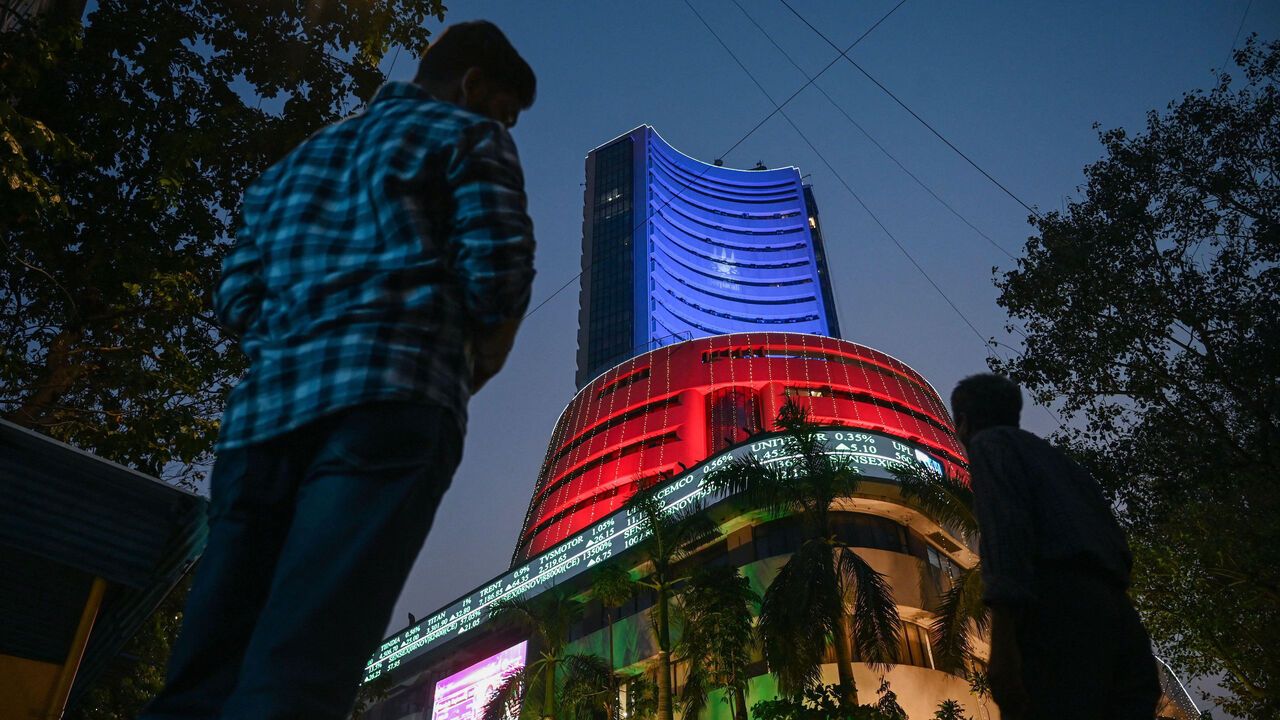
MOST OF THE world’s traders were still enjoying a weekend break on Sunday November 8th after a rough few days in the markets—except those in Mumbai, India’s financial capital. Its two big bourses(交易所) opened for a 70-minute special session to mark Diwali(印度排灯节), the festival of lights, and to welcome Lakshmi, the goddess of wealth. Trades made during this so-called Muhurat session(穆胡拉特交易时段) are meant to be particularly auspicious(吉利的). Investors are supposed to make long-term purchases: buying gold and silver is common as are conviction bets(坚定押注) for the sake of the grandchildren.
11月8日周日,在经历了几天市场动荡之后,全球大多数交易员仍在享受周末假期——但印度金融之都孟买的交易员除外。该市两大交易所特别开市70分钟,以庆祝排灯节(又称灯节),并迎接财富女神拉克希米。在这个所谓的“穆胡拉特”时段进行的交易被认为格外吉祥。投资者理应进行长期买入:购买金银很常见,为子孙后代下注的坚定投资也同样普遍。
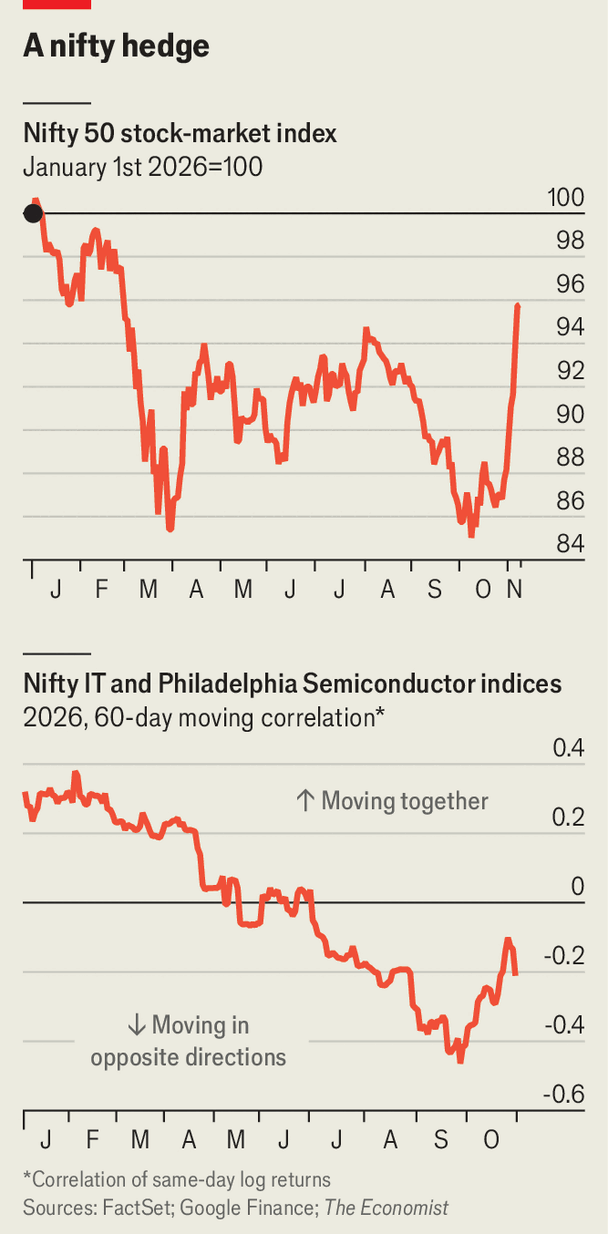
Investors in India had plenty of reason to be optimistic. The Nifty 50, a benchmark(基准), has risen by more than a tenth over the past month, becoming the best-performing stock-market index in Asia. In the week running up to Diwali, it stood out in a sea of red as investors elsewhere feared that an AI bubble had finally burst.(在排灯节前一周,当其他地区投资者担心AI泡沫终于破裂时,该指数在一片下跌中脱颖而出。) The index rose by 2.4% on November 5th as the NASDAQ fell by 5.5%. The rally(反弹) even extended to the rupee, which on November 6th reached its highest level since April.
印度投资者有充分理由感到乐观。基准指数Nifty 50在过去一个月上涨超过十分之一,成为亚洲表现最佳的股市指数。在排灯节前一周,当其他地区投资者担心AI泡沫终于破裂时,该指数在一片下跌中脱颖而出。11月5日,该指数上涨2.4%,而纳斯达克指数下跌5.5%。这波涨势甚至蔓延至卢比,卢比在11月6日触及4月以来的最高水平。
Indian equities have largely sat out(置身事外) the AI boom. Investors saw the country as a victim of disruption(颠覆) rather than a disruptor itself. In February 2026 the market plunged after the launch of Claude Code, an AI tool. A viral note from Citrini Research, a firm of analysts, added to the gloom, concocting(编造) a scenario in which India seeks an IMF bail-out(国际货币基金组织救助) in 2028 as its coding industry falters(衰退). India earns about 10% of its GDP from services exports. (Predictions of doom are still far from being borne out(得到证实): employment in IT has grown and total Indian services exports are up by 8.7% so far this fiscal year.)
印度股市基本上没有参与AI热潮。投资者将印度视为颠覆的受害者,而非颠覆者本身。2026年2月,AI工具Claude Code发布后,市场暴跌。分析公司Citrini Research的一份病毒式传播的报告加剧了悲观情绪,该报告虚构了一个场景:随着编码行业衰退,印度在2028年寻求IMF救助。印度约10%的GDP来自服务出口。(末日预测远未成真:IT行业就业有所增长,本财年至今印度服务出口总额增长了8.7%。)