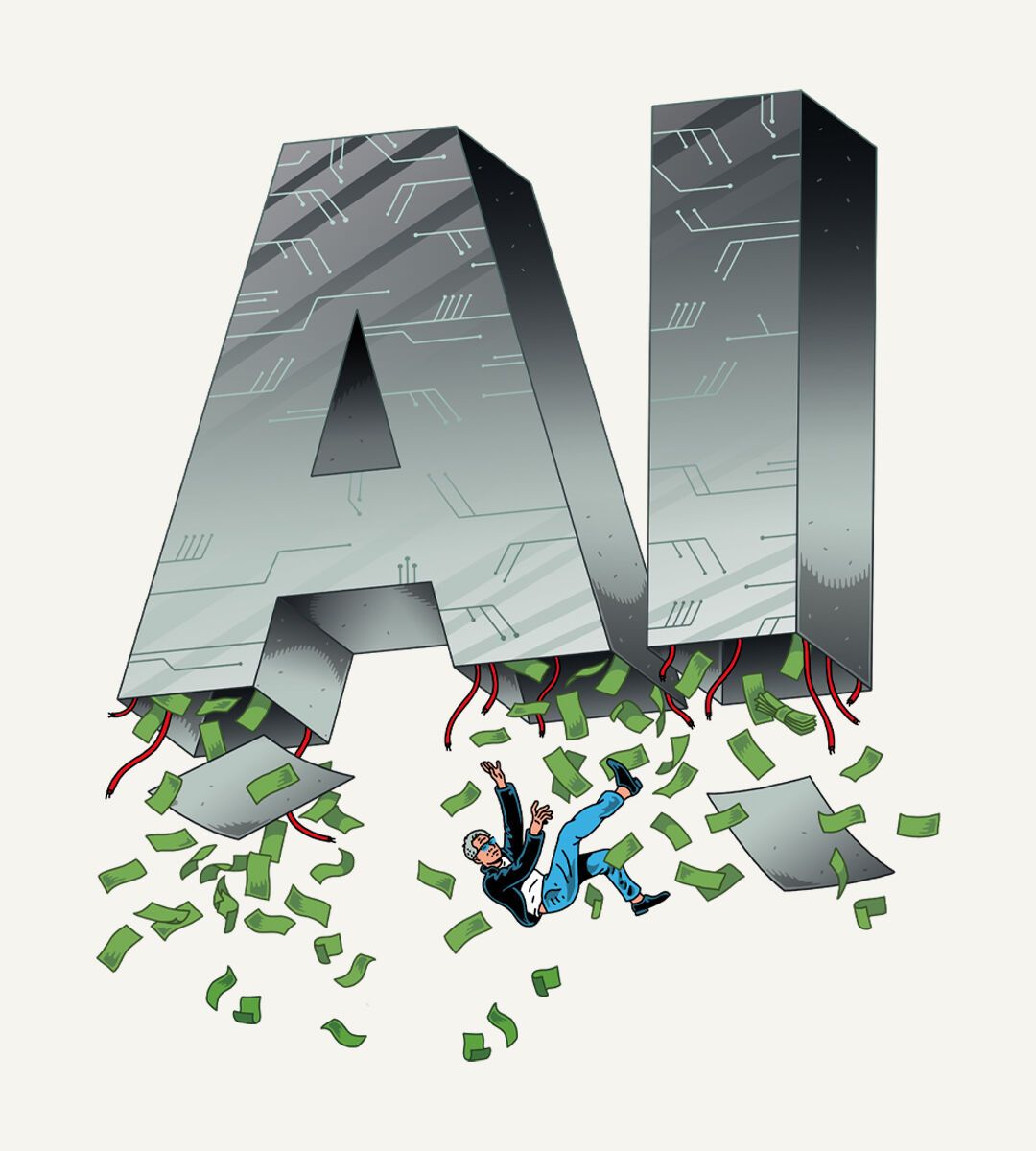
Could the news be much more dramatic? Artificial-intelligence models keep growing more powerful, faster than almost anyone predicted. Next week Anthropic, a frontier(前沿的) model-maker, is expected to list its shares in what could be the biggest-ever IPO of an AI firm. Yet in some ways the AI boom is looking wobbly(摇摇欲坠的). A sex-and-spying scandal is rocking Nvidia(英伟达,全球顶级芯片制造商), the top chipmaker. America’s Democratic Party, having won the midterms(美国中期选举), is raring to go(跃跃欲试) after data centres and Trump-adjacent tech titans. Some fear an almighty(巨大的;全能的) tech bust is coming. How worried should the world be?
新闻还能更戏剧化吗?人工智能模型正变得越来越强大,速度之快几乎超出所有人的预料。下周,前沿模型开发商Anthropic预计将上市,这可能成为有史以来规模最大的AI公司IPO。然而在某些方面,AI热潮正显得摇摇欲坠。一场性丑闻与间谍丑闻正震动顶级芯片制造商英伟达。美国民主党在中期选举获胜后,正摩拳擦掌要对数据中心和与特朗普关系密切的科技巨头动手。一些人担心一场巨大的科技泡沫破裂即将到来。世界该有多担心?
History offers clues. Plenty of past technologies, from canals and railways to the internet, have brought market euphoria(狂热;极度兴奋) and then despair. Bets on them went wrong even though the underlying(底层的;根本的) technologies proved revolutionary.
历史提供了线索。许多过去的技术,从运河、铁路到互联网,都曾带来市场狂热,随后又陷入绝望。对它们的押注出了错,尽管这些底层技术最终被证明具有革命性。
Even techno-optimists like The Economist should worry about a crunch(危机;紧缩) today. The scale of expected investment in AI is vast, an annual average of 3.6% of America’s GDP between 2025 and 2032, by one forecast. AI-related shares have had a dizzying(令人眩晕的) run: the top ten heavily AI-exposed(受AI影响的;AI敞口大的) stocks are now nearly 40% of America’s S&P 500 index. Corporate equities have reached 38% of American household net worth(净资产)—nearly a quarter higher than at the peak of the dotcom boom(互联网泡沫). And over the 12 months to August net foreign inflows(流入量) into American equities crossed $1trn for the first time, many times greater than for the entire 2010s.
即便是像《经济学人》这样的技术乐观主义者,如今也应担忧一场危机。预计AI投资规模巨大,据一项预测,2025至2032年间年均将占美国GDP的3.6%。AI相关股票经历了一轮令人眩晕的上涨:十大高度暴露于AI的股票如今占美国标普500指数近40%。企业股票已占美国家庭净资产的38%——比互联网泡沫顶峰时还高出近四分之一。截至8月的12个月里,流入美国股市的净外国资金首次突破1万亿美元,是2010年代全期的许多倍。