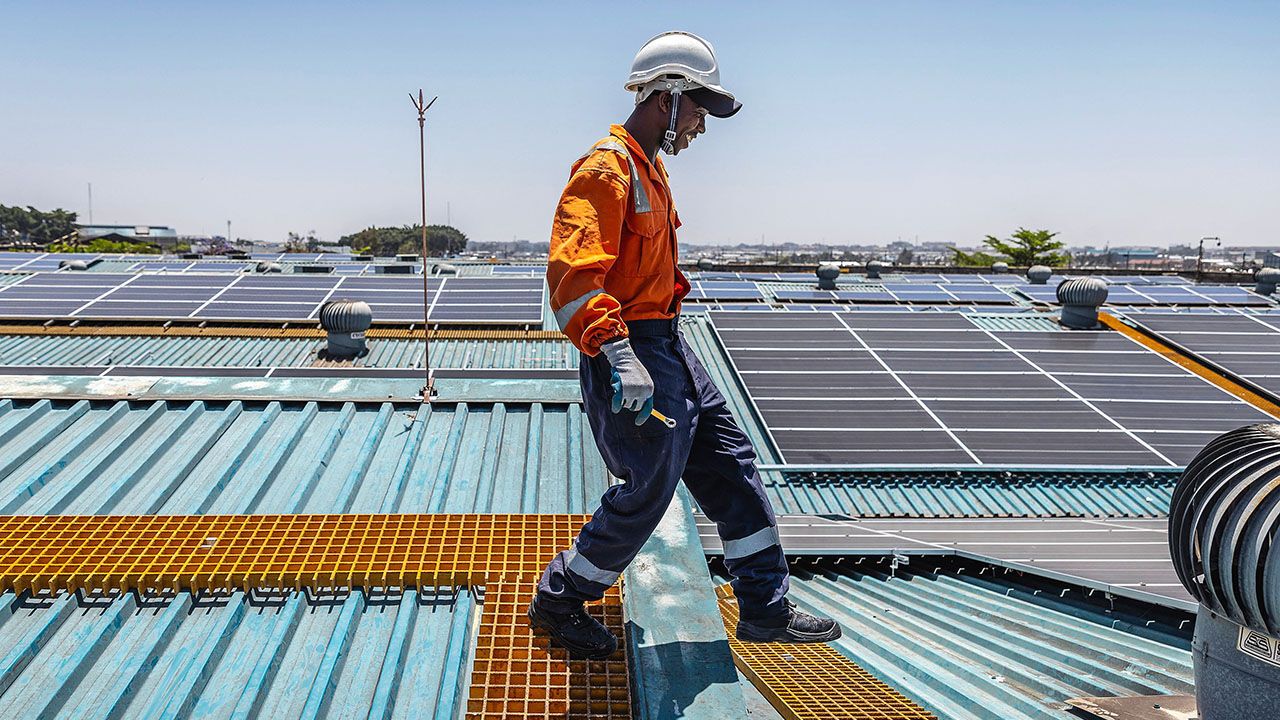
If at first you cannot find the new power project in an industrial area of Harare, Zimbabwe’s capital, try looking up(不妨抬头看看). The Limpopo Way Power solar farm has no conventional site, just rows of panels across the rooftops of two tobacco warehouses, and an agreement to supply a factory.(林波波路电力太阳能农场没有传统场地,只有两座烟草仓库屋顶上的一排排太阳能板,以及一份向工厂供电的协议。) In Zimbabwe, as in much of Africa and Asia, the signs of an energy revolution are everywhere.
如果你在津巴布韦首都哈拉雷的工业区一时找不到这个新的电力项目,不妨抬头看看。林波波路电力太阳能农场没有传统的场地,只有铺设在两座烟草仓库屋顶上的一排排太阳能板,以及一份向一家工厂供电的协议。在津巴布韦,如同在非洲和亚洲的大部分地区一样,能源革命的迹象无处不在。
Assessing its true scale is still tricky(棘手的;难办的), however. Few African governments publish timely data on solar installations. Those that do(那些发布数据的政府) are probably underestimating their expansion. The best guess comes from two think-tank(智库)s, Ember and Africa Tech Futures Lab, using data on exports of Chinese solar panels to the continent. Assuming that three-quarters of those panels have been installed, and including imports from other countries, they reckon that Zimbabwe has added 948MW of solar power since the start of 2023, equivalent to a third of its previous grid capacity.(假设这些面板中有四分之三已安装,并计入从其他国家的进口,他们估计自2023年初以来,津巴布韦新增了948兆瓦的太阳能发电能力,相当于其此前电网容量的三分之一。)
然而,评估其真实规模仍然棘手。很少有非洲政府发布及时的太阳能安装数据。那些发布数据的政府很可能低估了其扩张速度。最可靠的估计来自两家智库——Ember和Africa Tech Futures Lab,它们利用中国太阳能板对非洲大陆的出口数据。假设这些面板中有四分之三已安装,并计入从其他国家的进口,他们估计自2023年初以来,津巴布韦新增了948兆瓦的太阳能发电能力,相当于其此前电网容量的三分之一。
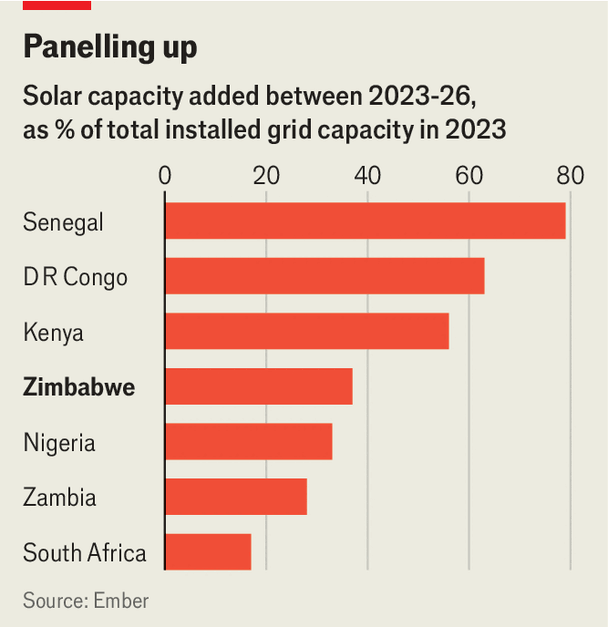
Africa will install a record 17GW of solar capacity in 2026, the researchers think, or about 100,000 panels a day (see chart). In 19 countries, installations have more than doubled since last year; in the Democratic Republic of Congo, they have risen six-fold(六倍). A megawatt of solar produces less power than a megawatt of hydro or coal (even in sunny countries, it gets dark).(一兆瓦太阳能产生的电力少于同等规模的水电或煤电(即使在阳光充足的国家,天也会黑)。) Still, the amount of extra electricity generated would roughly match(大致相当于) the entire annual growth in demand. Imports of Chinese batteries are growing even faster.
研究人员认为,非洲将在2026年安装创纪录的17吉瓦太阳能容量,约合每天10万块面板(见图表)。在19个国家,安装量自去年以来翻了一番多;在刚果民主共和国,安装量增长了六倍。一兆瓦太阳能产生的电力少于同等规模的水电或煤电(即使在阳光充足的国家,天也会黑)。尽管如此,新增发电量仍大致相当于全年电力需求的总增长量。中国电池的进口增长更快。