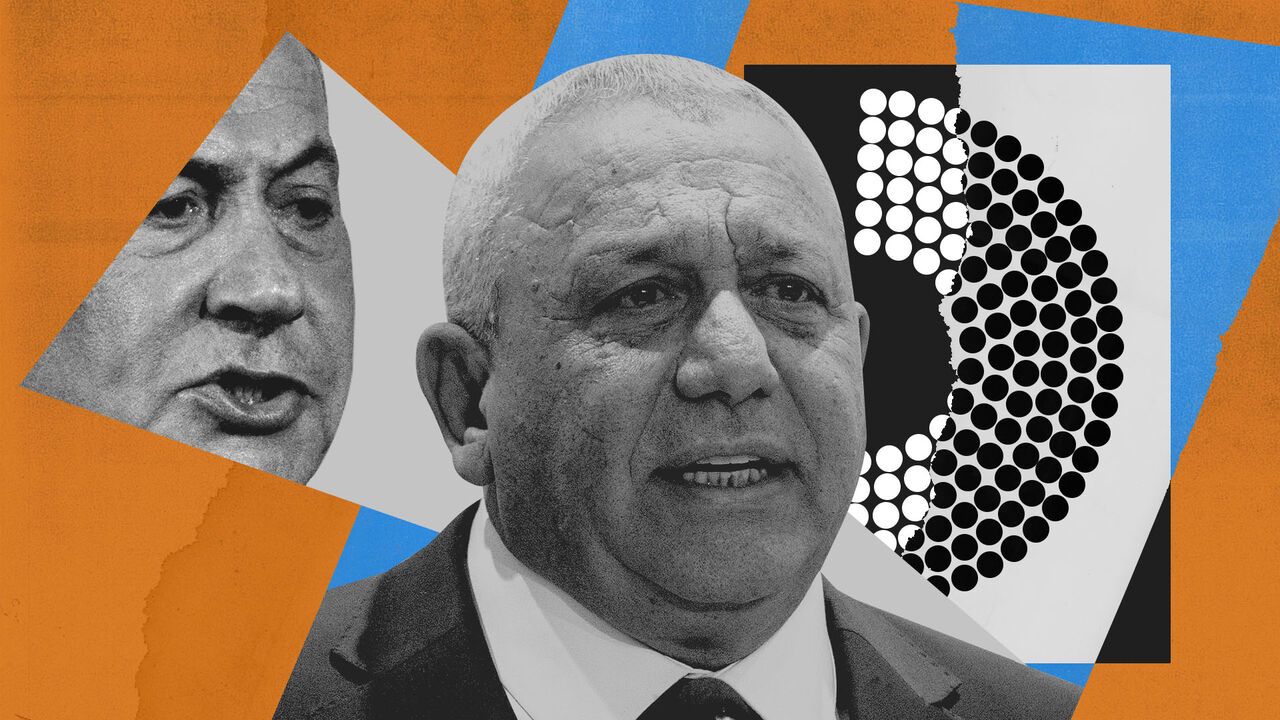
GADI EISENKOT cleared the first hurdle(障碍,难关) on his path to power on November 8th when Israel’s president, Isaac Herzog, gave him the mandate(授权,委任) to form a new government. But he will have to overcome more formidable trials, including the breaking of election promises, if he is to replace Binyamin Netanyahu, the prime minister who lost his coalition’s majority in the election on October 27th.(但他若要取代本雅明·内塔尼亚胡,还必须克服更严峻的考验,包括打破竞选承诺。内塔尼亚胡这位总理在10月27日的选举中失去了其执政联盟的多数席位。)
11月8日,加迪·艾森科特扫清了通往权力之路的第一道障碍:以色列总统伊萨克·赫尔佐格授权他组建新政府。但他若要取代本雅明·内塔尼亚胡,还必须克服更严峻的考验,包括打破竞选承诺。内塔尼亚胡这位总理在10月27日的选举中失去了其执政联盟的多数席位。
In a short ceremony at the president’s residence, Mr Eisenkot conceded(承认,让步) that “no one can stand for(坚守,代表) all the commitments they made. We will all have to make compromises.” He hopes to swear in(使宣誓就职) a minority “emergency” government, formed of four Jewish opposition parties. Neither Arab nor Jewish ultra-Orthodox(极端正统派的) parties would formally be part of his coalition—at least to start with(至少一开始是这样)—but they would offer support when needed.
在总统府举行的简短仪式上,艾森科特承认:“没有人能坚守自己做出的所有承诺。我们都必须做出妥协。”他希望宣誓就职一个由四个犹太反对党组成的少数派“紧急”政府。阿拉伯政党和犹太极端正统派政党都不会正式加入他的执政联盟——至少一开始不会——但它们会在需要时提供支持。
Mr Eisenkot’s rationale(理由,逻辑依据) is that removing Mr Netanyahu is the most urgent priority. In recent weeks the prime minister has tried to drag Israel into another war with Iran and urged the head of the country’s secret service(秘密情报机构) to investigate the Arab votes and disqualify(使不合格,取消资格) the election results. To form a coalition with a majority would mean lengthy negotiations and he has only six weeks before the president asks someone else to try forming a government.(要组建拥有多数席位的执政联盟,意味着漫长的谈判,而他只有六周时间,之后总统就会要求其他人尝试组阁。)
艾森科特的理由是,赶内塔尼亚胡下台是最紧迫的优先事项。近几周,这位总理试图把以色列拖入与伊朗的又一场战争,并敦促该国秘密情报机构负责人调查阿拉伯选民的投票,企图使选举结果无效。要组建拥有多数席位的执政联盟,意味着漫长的谈判,而他只有六周时间,之后总统就会要求其他人尝试组阁。