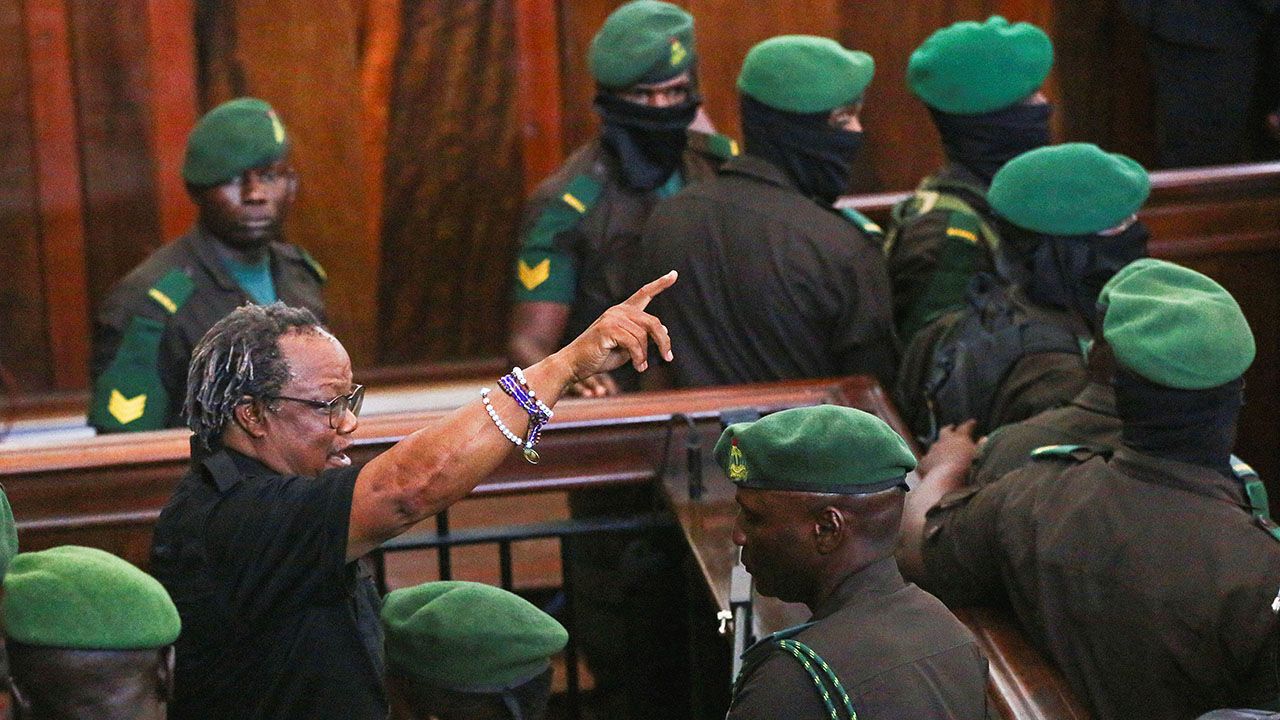
From the moment Tundu Lissu(坦桑尼亚著名反对派领袖) was seized(被捕;被抓获), after a public meeting in April 2025, it was clear that his would be no ordinary trial. The Tanzanian opposition leader had been cycling through jail cells(频繁进出牢房) with almost farcical(荒诞可笑的) regularity since his first arrest, on Christmas Eve in 2002. Between 2016 and 2017 he was arrested eight times and charged on six occasions, as well as shot with 16 bullets in 2017.(2016至2017年间,他八次被捕、六次被起诉,2017年还身中16枪。) Even so, this time felt different. Mr Lissu knew Samia Suluhu Hassan, Tanzania’s brittle(脆弱的;易碎的) and autocratic(专制的;独裁的) president, feared him. In the months following his detention(拘留;羁押), says a source close to Mr Lissu, police subjected him to psychological tricks(对他施以心理手段) meant to force a confession(意在逼供). Cameras tracked his every move, even to the toilet. He was put in a cell with death-row inmates(死囚牢房里的囚犯).
2025年4月,通杜·利苏在一场公开集会后被捕。从那一刻起,人们就清楚这不会是一场普通的审判。这位坦桑尼亚反对派领袖自2002年圣诞夜首次被捕以来,进出牢房几乎成了荒诞的常态。2016年至2017年间,他八次被捕、六次被起诉,2017年还身中16枪。即便如此,这一次感觉不同。利苏知道,坦桑尼亚那位脆弱而专制的总统萨米娅·苏卢胡·哈桑害怕他。据利苏身边的一位消息人士说,在他被拘留后的几个月里,警方对他施以心理手段,企图逼他认罪。摄像头追踪他的一举一动,连上厕所也不例外。他还被关进死囚牢房。
So the judges’ verdict(裁决;判决), announced to a courtroom surrounded by armed police on November 6th, came as little surprise(并不令人意外). The chairman of Chadema, Tanzania’s biggest opposition party, was found guilty of inciting(煽动;鼓动) unrest and sentenced to four years in prison. (He is appealing the verdict.) Since Mr Lissu had been on trial for treason, an offence carrying the death penalty, his family and supporters can breathe a sigh of relief(松了一口气). Still, it is a curious outcome for a case where the only physical evidence of wrongdoing prosecutors could muster was a video deemed inadmissible in court.(然而,对于一个检方唯一能拿出的实物证据只是一段被法庭裁定不可采纳的视频的案件来说,这个结果仍显得蹊跷。)
因此,11月6日法官在武装警察包围的法庭上宣布判决时,人们并不感到意外。这位坦桑尼亚最大反对党 Chadema 的主席被判煽动骚乱罪名成立,判处四年监禁。(他正在上诉。)由于利苏此前因叛国罪受审,而该罪名可判死刑,他的家人和支持者总算可以松一口气。不过,这仍是一个奇怪的结果:检方所能拿出的唯一实物证据,是一段被法庭认定为不可采纳的视频。
If Mr Lissu’s case is egregious(极其恶劣的), it is hardly exceptional in the region. Scores of Chadema members face treason or terrorism charges in Tanzania. Over the border in Uganda, Kizza Besigye(乌干达资深反对派领袖) is on trial for treason; in Rwanda, Victoire Ingabire(卢旺达反对派领袖) is in the dock(在被告席上受审) charged with inciting unrest. Venâncio Mondlane(莫桑比克反对派领袖) goes on trial in Mozambique on November 17th, accused of instigating(煽动;唆使) terrorism, among other things(以及其他事项). Brian Mundubile(赞比亚反对派人物), in Zambia, has been held on treason charges since an election in August. The clustering of such cases can be read as the stress response of political systems that are beginning to come apart under pressure of public dissatisfaction.(这类案件的集中出现,可以解读为政治体系在公众不满压力下开始崩解时的应激反应。)
如果说利苏案情节恶劣,那它在该地区也绝非孤例。坦桑尼亚有数十名 Chadema 成员面临叛国罪或恐怖主义罪指控。邻国乌干达,基扎·贝西杰因叛国罪受审;卢旺达,维克图瓦·英加比雷因煽动骚乱等罪名出庭受审。莫桑比克的韦南西奥·蒙德拉内将于11月17日出庭,被控煽动恐怖主义等罪名。赞比亚的布赖恩·蒙杜比莱自8月大选以来一直因叛国罪被关押。这类案件集中出现,可以解读为政治体系在公众不满压力下开始崩解时的应激反应。