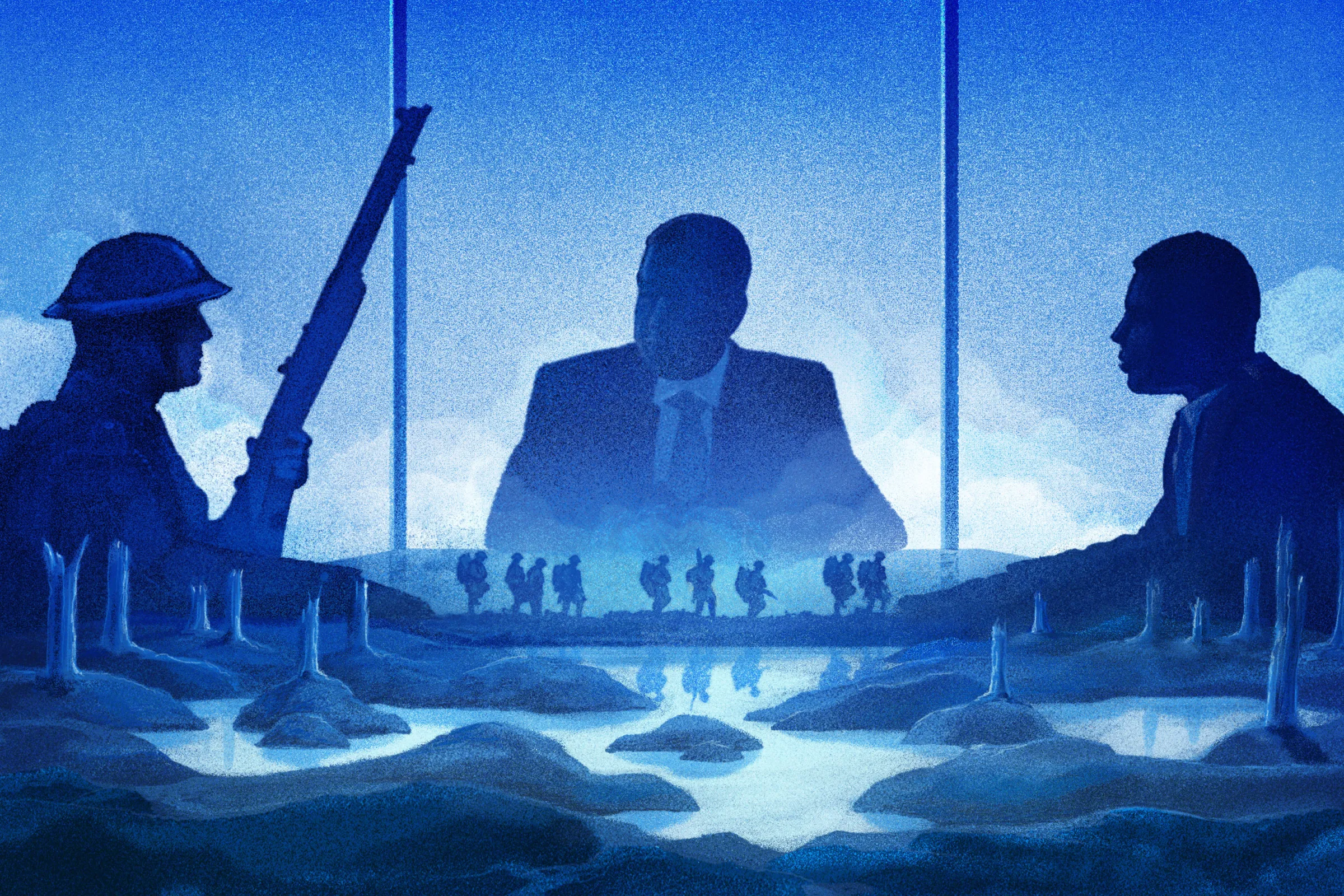
History, in the hands of a policymaker, can be a dangerous thing. When officials recruit(使用,征用) the wrong historical analogy—or misinterpret an apt one—in the decision-making process, the consequences can be catastrophic. During the Vietnam War, to take one notable example, some American leaders perceived in North Vietnam’s Ho Chi Minh another Adolf Hitler. The comparison helped fuel the United States’ misadventures(不幸的经历,灾难) in Southeast Asia by making any accommodation in Vietnam tantamount to(等同于,无异于) the notorious(臭名昭著的) appeasement of the 1938 Munich Agreement. This case became a central example in Ernest May’s 1973 cautionary tale, “Lessons” of the Past. May advocated for more nuanced(细致入微的,精妙的) approaches to historical precedents and argued that analogies might be used responsibly and effectively “to point out criteria for a choice rather than to indicate what the choice ought to be.”
历史在政策制定者手中可能是一件危险的事情。当官员们在决策过程中选错了历史类比——或者误解了恰当的类比——后果可能是灾难性的。以越南战争为例,一些美国领导人认为北越的胡志明是另一个阿道夫·希特勒。这种比较使在越南的任何妥协都等同于1938年臭名昭著的《慕尼黑协定》绥靖政策,从而助长了美国在东南亚的冒险行为。这个案例成为欧内斯特·梅1973年的警示之作《过去的“教训”》的核心例子。梅主张对历史先例采取更细致的方法,并认为类比可以被负责任、有效地使用,用以“指出选择的标准,而不是表明选择应当是什么。”
Thirteen years later, in 1986, May teamed up with(与……合作) Richard Neustadt to publish Thinking in Time, a how-to(操作指南,实用手册) for decision-makers. Instead of searching for perfect analogies, May and Neustadt proposed, policymakers might find more success by looking for not only the similarities but also the crucial differences between the present and potential historical parallels(相似事物,类比). Building on this work, in 2016, the scholars Graham Allison and Niall Ferguson launched the Applied History Project at Harvard’s Belfer Center. “Applied history,” they explain, “is the explicit attempt to illuminate(阐明,照亮) current challenges and choices by analyzing historical precedents and analogs.”
十三年后的1986年,梅与理查德·诺伊施塔特合著出版了《思考时间》,这是一本决策者操作指南。梅和诺伊施塔特提出,政策制定者不应急于寻找完美类比,而应同时审视当前状况与潜在历史相似案例之间的相似之处和关键差异,这样更可能取得成功。在此研究基础上,2016年,学者格雷厄姆·艾利森和尼尔·弗格森在哈佛大学贝尔弗中心启动了“应用历史项目”。他们解释说:“应用历史,就是通过分析历史先例和类比,明确地试图照亮当前的挑战和选择。”
Analogy is likewise the motor(驱动力,发动机) of Odd Arne Westad’s The Coming Storm: Power, Conflict, and Warnings From History. “This world is unlike anything any of us have experienced in our lifetimes,” argues Westad, a professor at Yale and a specialist in modern international and global history. “But it does look quite a bit like the world of more than a hundred years ago, from the late nineteenth century to 1914.” This comparison—between the great-power competition that ultimately erupted(爆发(尤指战争)) in World War I and the increasingly multipolar(多极的) twenty-first century, characterized by contests for regional dominance among a growing number of great (if no longer decisively super) powers—frames the book(构成书的框架).
类比同样是奥德·阿恩·韦斯塔德《即将来临的风暴:权力、冲突与来自历史的警告》一书的驱动力。韦斯塔德是耶鲁大学教授、现代国际史和全球史专家,他认为:“这个世界与我们任何人一生中经历过的都不同。但它确实与一百多年前的世界——从19世纪末到1914年——颇为相似。”这种比较——最终爆发第一次世界大战的大国竞争与日益多极化的21世纪(其特征是越来越多的大国——即使不再具有决定性超级大国地位——争夺地区主导权)——构成了全书的框架。
BEWARE THE ONE-EYED GENERAL
警惕独眼将军
THE PARADOX OF PREPARATION
准备的悖论
A DANGEROUS FANTASY
危险的幻想