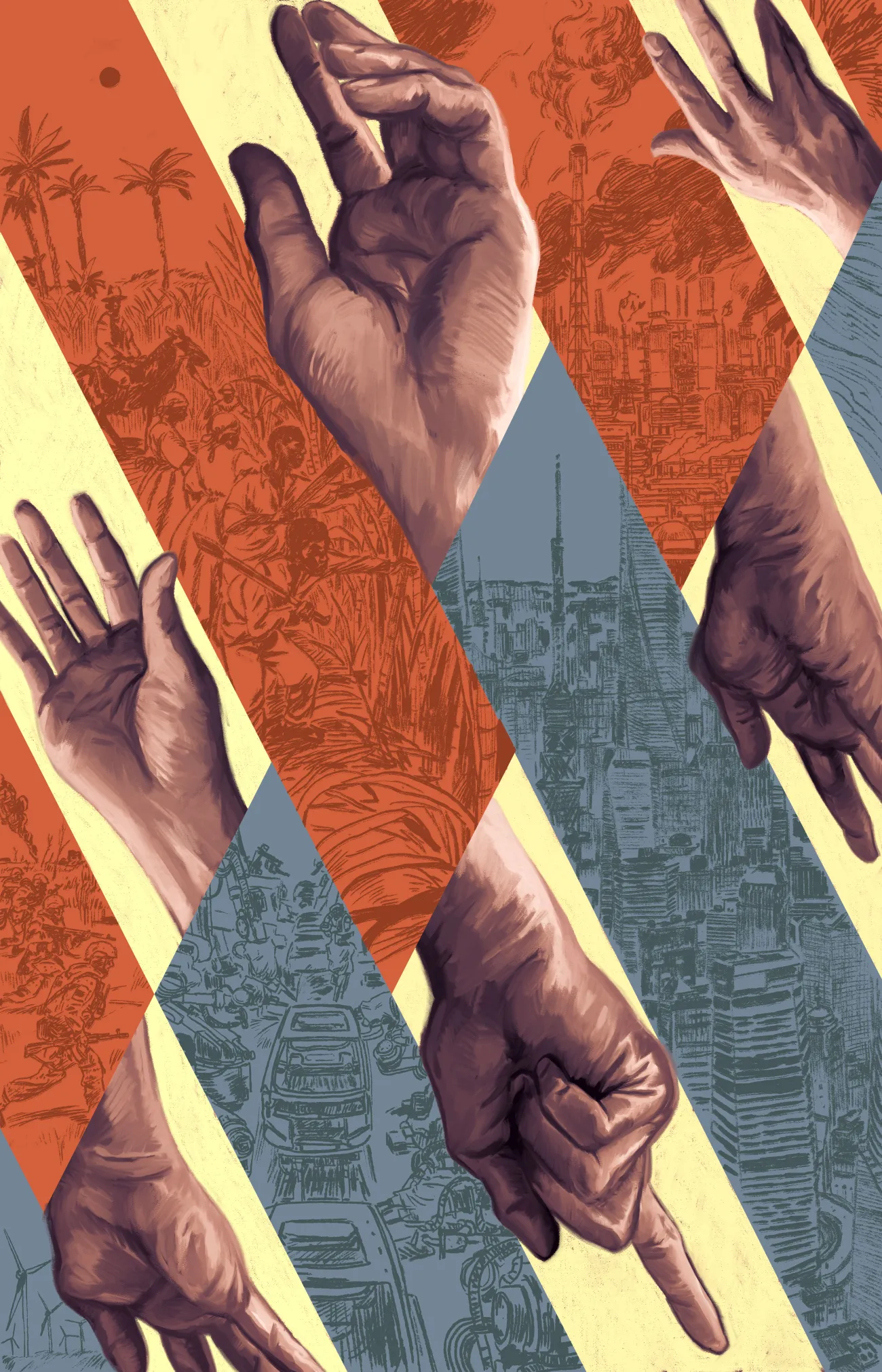
The world has entered an era of autopsies(解剖、审视(比喻)) and prophecies. According to many scholars and commentators, the order that the United States presided over after the end of the Cold War is dead. After the Soviet Union imploded, many assumed that the defeat of communism would augur(预示、是…的预兆) the ineluctable(不可避免的、必然的) spread of both capitalism and democracy—all stewarded by(由…引导/管理) the United States. But it is now liberal democracy that finds itself in crisis, with democratic backsliding(民主倒退) common around the globe, public mistrust of liberal institutions on the rise, and growing doubt about the wisdom of free trade and open markets. The convulsed domestic politics and foreign policy of the United States have thrown this crisis into stark relief(使这场危机更加突出/鲜明). In his now famous speech at the annual meeting of the World Economic Forum in Davos in January, Canadian Prime Minister Mark Carney offered a valediction(告别辞、悼词) for the U.S.-led order and urged others to accept its passing without mourning or nostalgia.
世界已进入一个解剖与预言的时代。许多学者和评论家认为,美国在冷战结束后主导的秩序已经死亡。苏联解体后,许多人曾以为共产主义的失败预示着资本主义和民主制度将不可阻挡地传播——而这一切都在美国的保驾护航之下。但如今,正是自由民主制陷入了危机:全球范围内民主倒退司空见惯,公众对自由体制的不信任加剧,对自由贸易和开放市场的明智性产生怀疑。美国动荡的国内政治和外交政策使这场危机更加凸显。加拿大总理马克·卡尼在1月达沃斯世界经济论坛年会上那场著名的演讲中,为美国主导的秩序致了悼词,并敦促其他人不加哀悼或怀旧地接受它的逝去。
What comes next after this “rupture(断裂、决裂),” to use the prime minister’s phrasing, is the subject of great debate. On the right in Western countries, the rupture is considered a restoration, an opportunity to make capitalism great again(让资本主义再次伟大) by reversing generations of the cosmopolitan(世界主义的、全球性的) embrace of free markets. Critics on the left worry that states are seizing control of markets(夺取市场控制权) not in service of stronger social safety nets and protections for the vulnerable, but to elevate and entrench(巩固、使根深蒂固) a new oligarchy of tech elites. Lamentations abound. Market fundamentalists bemoan(悲叹、惋惜) the return of tariffs, soaring public debt, and what they consider excessive regulation. Centrist liberals survey the turbulence and see the end of the Enlightenment altogether, with its commitments to reason, moderation, and cooperative self-interest.
接下来这个“断裂”(借用总理的措辞)之后会发生什么,是激烈争论的主题。在西方国家的右翼看来,断裂是一种恢复,是让资本主义再次伟大的机会,通过逆转几代人对自由市场的世界主义拥抱。左翼批评者担心国家控制市场不是为了加强社会安全网和保护弱势群体,而是为了提升和巩固一个新的科技精英寡头统治。哀叹之声不绝于耳。市场原教旨主义者悲叹关税回归、公共债务飙升以及他们认为过度的监管。中间派自由主义者审视这场动荡,看到了启蒙运动的终结——连同其对理性、节制和合作性自我利益的承诺。
A rough consensus(大致共识) emerges from these swirling narratives. Liberalism, the political and philosophical system once seen as capitalism’s cornerstone, is spent(耗尽、力竭的). Proponents of liberalism championed the belief(倡导/支持这种信念) in personal autonomy and the unobstructed right to property, ideas that supported the opening of markets and underpinned modern gospels(福音、信条(比喻)) of free trade. The nineteenth-century liberal philosopher John Stuart Mill, for instance, insisted that a healthy economic system rested on distributed property rights(分散的财产权) and access to market exchange. And yet such systems in the current age have produced glaring(明显的、刺眼的(常指负面)) inequality and strong concentrations of personal wealth and state power.
从这些纷繁复杂的叙事中,大致形成了一个共识。自由主义,这个曾被视为资本主义基石的政治和哲学体系,已经耗尽。自由主义的支持者曾倡导个人自主和不受阻碍的财产权,这些理念支持了市场开放,并支撑了现代自由贸易的福音。例如,19世纪自由主义哲学家约翰·斯图尔特·密尔坚持认为,健康的经济体系依赖于分散的财产权和市场交换的机会。然而,在当今时代,这样的体制却产生了明显的不平等以及个人财富和国家权力的高度集中。
THE MERCHANT AND THE STATE
商人与国家
A LOST CAUSE
一项失败的事业
USable PAST
可资借鉴的过去