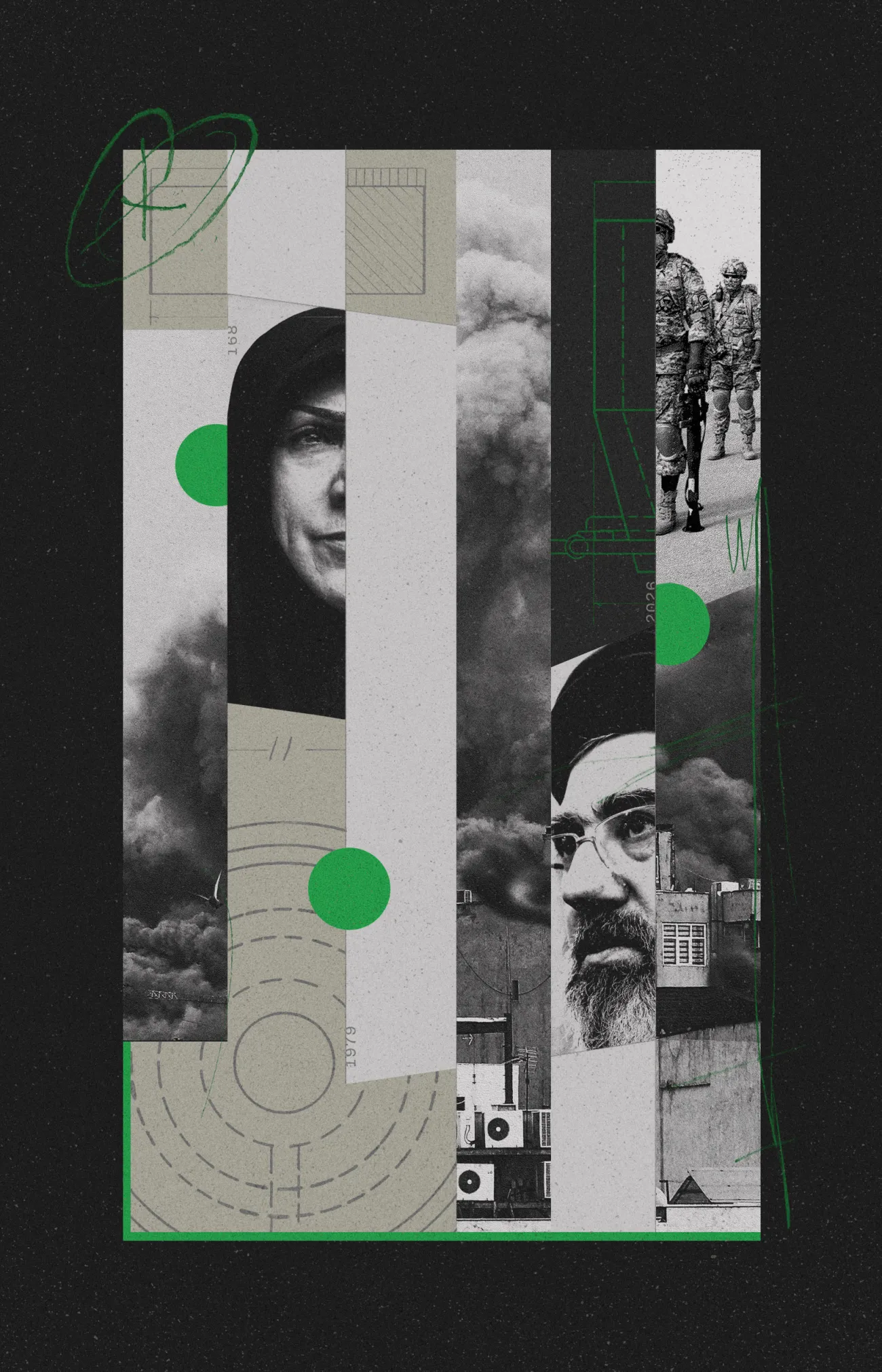
At the outset of the U.S.-Israeli war on Iran in February 2026, the Islamic Republic appeared battered(遭受重创的) and weakened. Large-scale bombing had destroyed industry and infrastructure, and a U.S. naval blockade had devastated an already ailing economy(病态的经济). In early March, U.S. President Donald Trump told reporters on Air Force One(① 背景:Air Force One 是...), “We’ve decimated their whole evil empire.” Several weeks later, he declared “total and complete victory.”
2026年2月美以对伊朗战争之初,伊斯兰共和国显得伤痕累累、虚弱不堪。大规模轰炸摧毁了工业和基础设施,美国海军封锁使本已疲弱的经济雪上加霜。3月初,美国总统唐纳德·特朗普在空军一号上对记者说:“我们已经摧毁了他们整个邪恶帝国。”几周后,他宣布“取得了彻底而全面的胜利”。
Three months in, however, the picture looks quite different.(然而三个月后,情况却大不相同。) Iran retains its military and industrial capacity, and despite Trump’s call for Iranians to topple the regime, no popular uprising is in the offing(即将发生). The war’s initial aim—to deliver a death blow(给予致命一击) to the Islamic Republic—has proved unattainable.
然而三个月后,情况却大不相同。伊朗保留了其军事和工业能力,尽管特朗普呼吁伊朗人推翻政权,但并未出现民众起义。战争的初始目标——给伊斯兰共和国致命一击——已证明无法实现。
Rather than breaking Iran, the crucible(熔炉;严峻考验) of war has transformed it in unanticipated ways. To survive and establish new strategic advantages, the Islamic Republic had to adapt and innovate, changing how it waged war(发动战争), ran the state, and managed society. And it had to do so with unprecedented speed. Tehran is now confident in what it has achieved and determined to consolidate(巩固;加强) those gains at home and abroad. The war has given rise to a new Iran, one that will reshape the Middle East and influence the course of geopolitics for years to come.
战争这个熔炉非但没有摧毁伊朗,反而以意想不到的方式改变了它。为了生存并建立新的战略优势,伊斯兰共和国不得不适应和创新,改变其发动战争、治理国家和管理社会的方式,而且必须以空前的速度进行。德黑兰如今对其所取得的成就充满信心,并决心在国内和国际上巩固这些成果。这场战争催生了一个新的伊朗,它将重塑中东,并在未来多年影响地缘政治的走向。
A QUIET SUCCESSION
悄然继位
BATTLE HARDENED
战火淬炼
A NEW BALANCE OF POWER
新的力量平衡
STATECRAFT OVER IDEOLOGY
治国优先于意识形态
THE NATIONALIST TURN
民族主义转向
“ARE YOU IRANIAN ENOUGH?”
“你够伊朗吗?”
THE MULTIFRONT DOCTRINE
多战线原则
A NEW ISLAMIC REPUBLIC
新的伊斯兰共和国