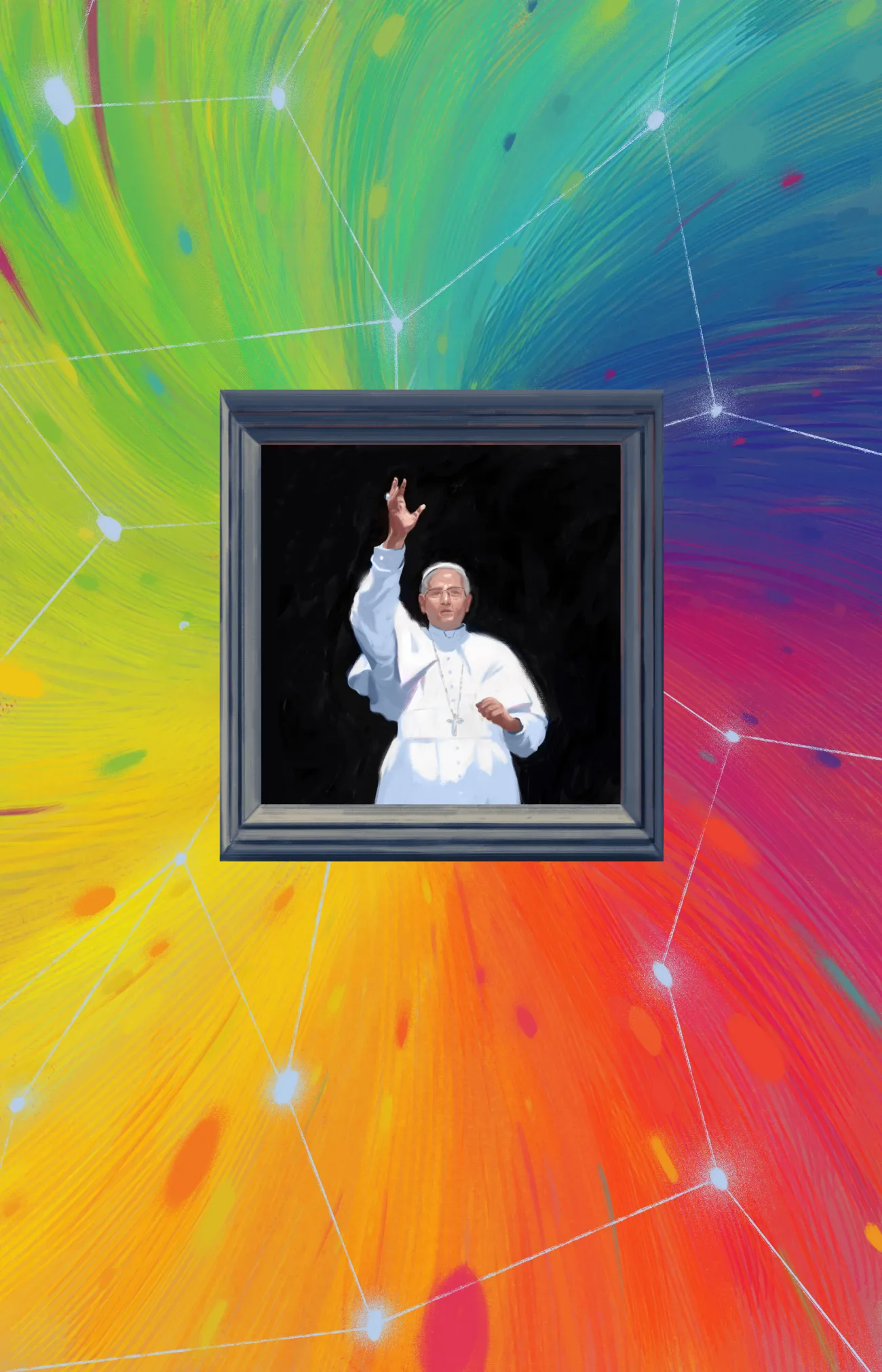
The quest for machine superintelligence(超级智能,超越人类智能的智能) is not merely a gold rush(淘金热,比喻对某事物的狂热追求), motivated by money. In the minds of many of its leaders, the arrival of a new form of cognition has a tingling(刺痛的,兴奋的), existential(存在的,关乎存在的) feel because of the danger and disruption it promises. Billions of years of evolution have produced something that we take to be special: human intelligence.(数十亿年的进化产生了我们视为特别的东西:人类智能。) But now we have arrived at a perilous(危险的,险峻的) moment—the birth of what amounts to a new species, one that outsmarts humans. AI “raises profound questions for us,” the Google executive James Manyika said in an interview. “Who are we? What do we value? What are we good at? How do we relate with each other?” The AI pioneer Demis Hassabis believes that AI will be “the most important invention that humanity will ever make.”
对机器超级智能的追求不仅仅是一场由金钱驱动的淘金热。在许多领军人物看来,一种新认知形式的出现带有一种令人兴奋的、关乎存在的意味,因为它预示着危险和颠覆。数十亿年的进化产生了我们视为特别的东西:人类智能。但现在我们来到了一个危险的时刻——一种相当于新物种的诞生,它比人类更聪明。谷歌高管詹姆斯·曼尼卡在接受采访时说,AI“为我们提出了深刻的问题”。“我们是谁?我们珍视什么?我们擅长什么?我们如何彼此相处?”AI先驱德米斯·哈萨比斯相信,AI将是“人类有史以来最伟大的发明”。
Contemplating a technology with almost infinite potential, experts fail to agree even on the basics of what it means for humankind. The leaders of the AI lab Anthropic give better-than-even odds(超过50%的概率) that, by the end of 2028, they will be able to prompt their system to make a smarter version of itself—and that it will do so without any further instruction. The chief executives of other major tech companies speak of systems that will outperform(超越,胜过) humans on all cognitive assignments; they imagine futuristic companies with almost no human employees and predict cataclysmic(灾难性的,剧变的) job losses. Others are more skeptical(怀疑的). The economist and Nobel laureate(获奖者,荣誉获得者) Daron Acemoglu suggests that AI will disrupt only a fraction of human tasks and that productivity will therefore change marginally. The computer scientist Yann LeCun stresses the limits of the current AI paradigm(范式,典范), charging that the billions of dollars of investment chasing superintelligence represent the triumph of “complete BS(彻头彻尾的胡扯).”
面对一项潜力近乎无限的技术,专家们甚至无法就它对人类意味着什么的基本问题达成一致。AI实验室Anthropic的负责人给出的概率超过50%,认为到2028年底,他们将能够提示自己的系统制造出一个更聪明的自身版本——而且无需任何进一步指令。其他大型科技公司的首席执行官们谈论着将在所有认知任务上超越人类的系统;他们设想几乎没有人类员工的未来公司,并预测灾难性的失业。其他人则更为怀疑。经济学家、诺贝尔奖得主达龙·阿西莫格鲁认为,AI只会扰乱人类任务的一小部分,因此生产率只会发生微小变化。计算机科学家扬·勒昆强调当前AI范式的局限性,指责追逐超级智能的数十亿美元投资代表着“彻头彻尾的胡扯”的胜利。
On the question of whether AI systems threaten humans and not just their livelihoods, the polarization(两极分化) is equally dizzying(令人眩晕的). In a 2023 essay titled “Why AI Will Save the World,” the venture capitalist(风险投资家) Marc Andreessen insisted that “AI doesn’t <em>want</em>, it doesn’t have <em>goals</em>, it doesn’t want to <em>kill you</em>, because it’s not <em>alive</em>. . . . [AI] is not going to come alive(活过来,变得有生命) any more than your toaster will.” But at AI labs such as Anthropic, many researchers fear that AI will develop a survival instinct and compete aggressively. Some put their “p(doom)”—the probability that superintelligence will result in human annihilation(灭绝,毁灭)—at 50 percent, but there are extreme doomer(末日论者)s who go even higher. Last year, two prominentmaximalist(极端主义者,最大化主义者)s published a book titled <em>If Anyone Builds It, Everyone Dies</em>.
在AI系统是否威胁人类而不仅仅是其生计的问题上,两极分化同样令人眩晕。在2023年一篇题为《为什么AI将拯救世界》的文章中,风险投资家马克·安德森坚称,“AI不想要,它没有目标,它不想杀你,因为它没有生命……AI不会比你的烤面包机更有生命。”但在Anthropic等AI实验室,许多研究人员担心AI会发展出生存本能并激烈竞争。一些人将他们的“p(doom)”——超级智能导致人类灭绝的概率——定为50%,但极端末日论者甚至更高。去年,两位著名的极端主义者出版了一本名为《如果任何人建造它,每个人都会死》的书。
THE IMITATION GAME
模仿游戏
O YE OF LITTLE FAITH
你们这些小信的人啊
THE SACRED AND THE PROFANE
神圣与世俗
POLICY’S PURGATORY
政策的炼狱