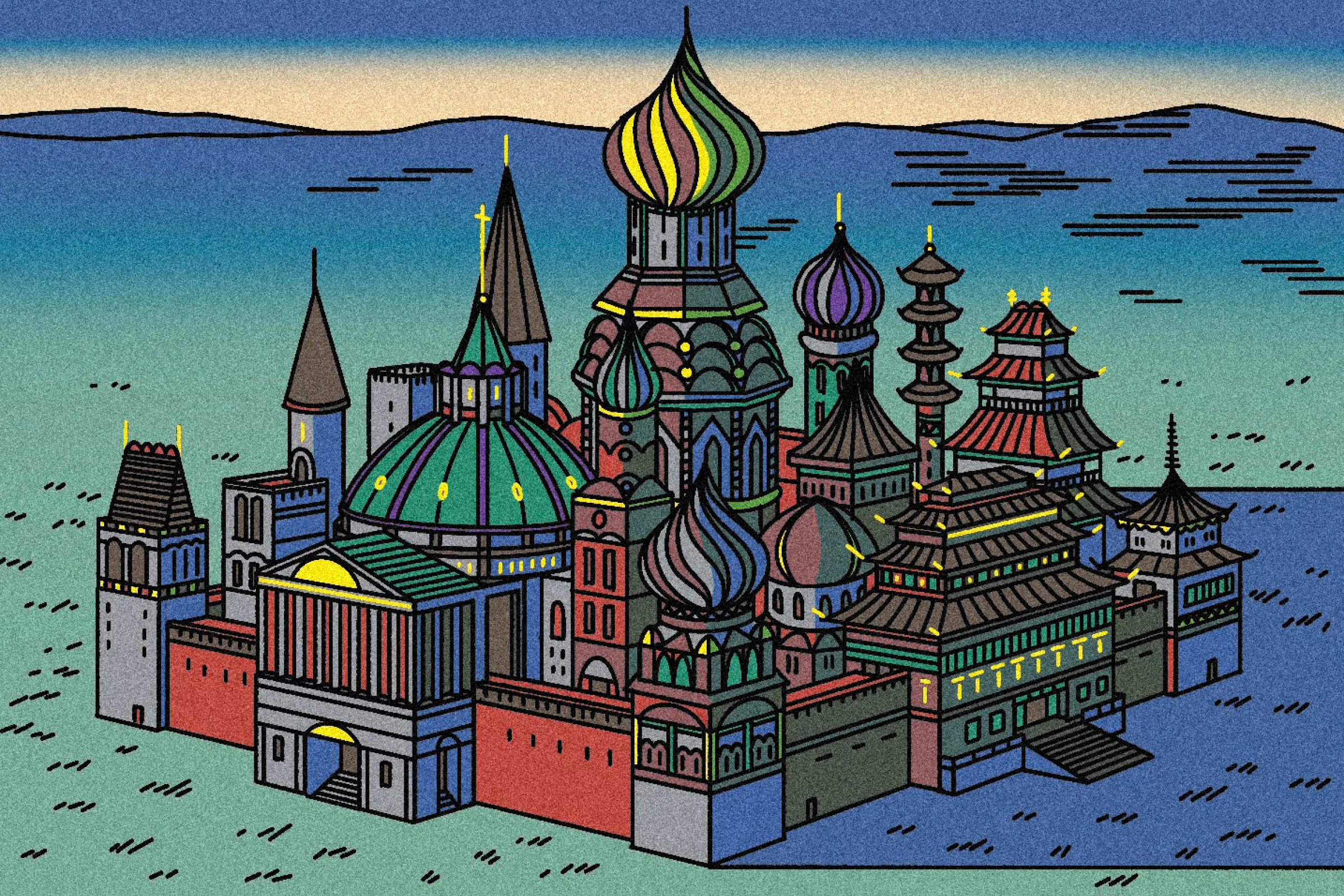
The frontlines of the war in Ukraine run not just through floodplains and shattered towns but also through a more nebulous(模糊的,朦胧的) kind of terrain: the realm of civilization. From the outset, Russian President Vladimir Putin has cast(把…描绘成,投射) his invasion as part of a cultural struggle, a view shared by some of his adversaries on the Western side. In October 2022, as he grappled with the disappointing course of the war he had begun just months earlier, he used a speech at the Valdai International Discussion Club to advocate(提倡,主张) “civilizational diversity.” “The smoothing out and erasure of all and any differences is essentially what the modern West is all about,” Putin said. The United States wanted to spread its “neocolonial” hegemony all over the world, including by suppressing the aspirations of Russians. Western support for Ukraine was part and parcel(重要组成部分) of the wider motivation to “restrain and block the free development of other civilizations.” At stake in this fight, Putin insisted, was the right of “any civilization to follow its own path and organize its own sociopolitical system.”(普京坚称,这场斗争的关键在于“任何文明都有权走自己的道路,组织自己的社会政治制度”。)
乌克兰战争的前线不仅穿过洪泛区和破碎的城镇,还穿过一种更为模糊的地带:文明领域。从一开始,俄罗斯总统弗拉基米尔·普京就将他的入侵描绘为一场文化斗争,西方的一些对手也持同样看法。2022年10月,当他在几个月前发起的战争进展不顺而苦恼时,他在瓦尔代国际讨论俱乐部的一次演讲中倡导“文明多样性”。“抹平并消除一切差异,本质上就是现代西方的全部追求,”普京说。美国想将其“新殖民”霸权传播到全世界,包括压制俄罗斯人的愿望。西方对乌克兰的支持,是“遏制和阻碍其他文明自由发展”这一更广泛动机的重要组成部分。普京坚称,这场斗争的关键在于“任何文明都有权走自己的道路,组织自己的社会政治制度”。
This was familiar territory(熟悉的领域) for Putin and, indeed, for many Russian thinkers over the years. Recent developments have made new an old idea that emerged among nineteenth-century intellectuals in tsarist Russia who rebelled against the elite fixation with the West. They argued that mimicry(模仿,仿效) of Europe would only enfeeble(使衰弱) their country. Instead, they believed that Russia was a civilization in its own right(本身,凭自身资格) with a unique inheritance that it could not wish away(希望…消失,一厢情愿地摆脱). Russia’s identity was anchored in both Europe and Asia, they insisted, a complexity best represented by the Eurasian steppe, the vast grassland thoroughfare stretching from China to eastern Europe around which so many great empires came into being.(他们坚持认为,俄罗斯的身份同时扎根于欧洲和亚洲,这种复杂性最好地体现在欧亚草原上——这片从中国延伸到东欧的广阔草地通道,众多伟大帝国都围绕它而兴起。) Known as Eurasianism, this conviction in the fundamental difference between Russia and the West at least partly underpin(支撑,巩固)s the Kremlin’s ruling ideology today. It helps Putin eschew(回避,避开) liberal values at home and style Russia as “a unique country-civilization,” as the Kremlin described it in 2023, intent on defy(反抗,蔑视)ing an expansionist West. And it offers Russia’s critics and its defenders an explanation for why the country behaves as it does.
这对普京来说,而且事实上对多年来许多俄罗斯思想家来说,都是熟悉的领域。近期的发展让一个旧观念焕然一新,这个观念产生于十九世纪沙皇俄国的知识分子中,他们反抗精英阶层对西方的迷恋。他们认为,模仿欧洲只会削弱自己的国家。相反,他们相信俄罗斯本身就是一个文明,拥有无法抹去的独特遗产。他们坚持认为,俄罗斯的身份同时扎根于欧洲和亚洲,这种复杂性最好地体现在欧亚草原上——这片从中国延伸到东欧的广阔草地通道,众多伟大帝国都围绕它而兴起。这种被称为“欧亚主义”的信念,即俄罗斯与西方存在根本差异,至少部分支撑着今天克里姆林宫的统治意识形态。它帮助普京在国内回避自由主义价值观,并将俄罗斯塑造成“一个独特的国家文明”,正如克里姆林宫在2023年所描述的那样,意图对抗扩张主义的西方。它为俄罗斯的批评者和辩护者提供了一个解释,说明这个国家为何如此行事。
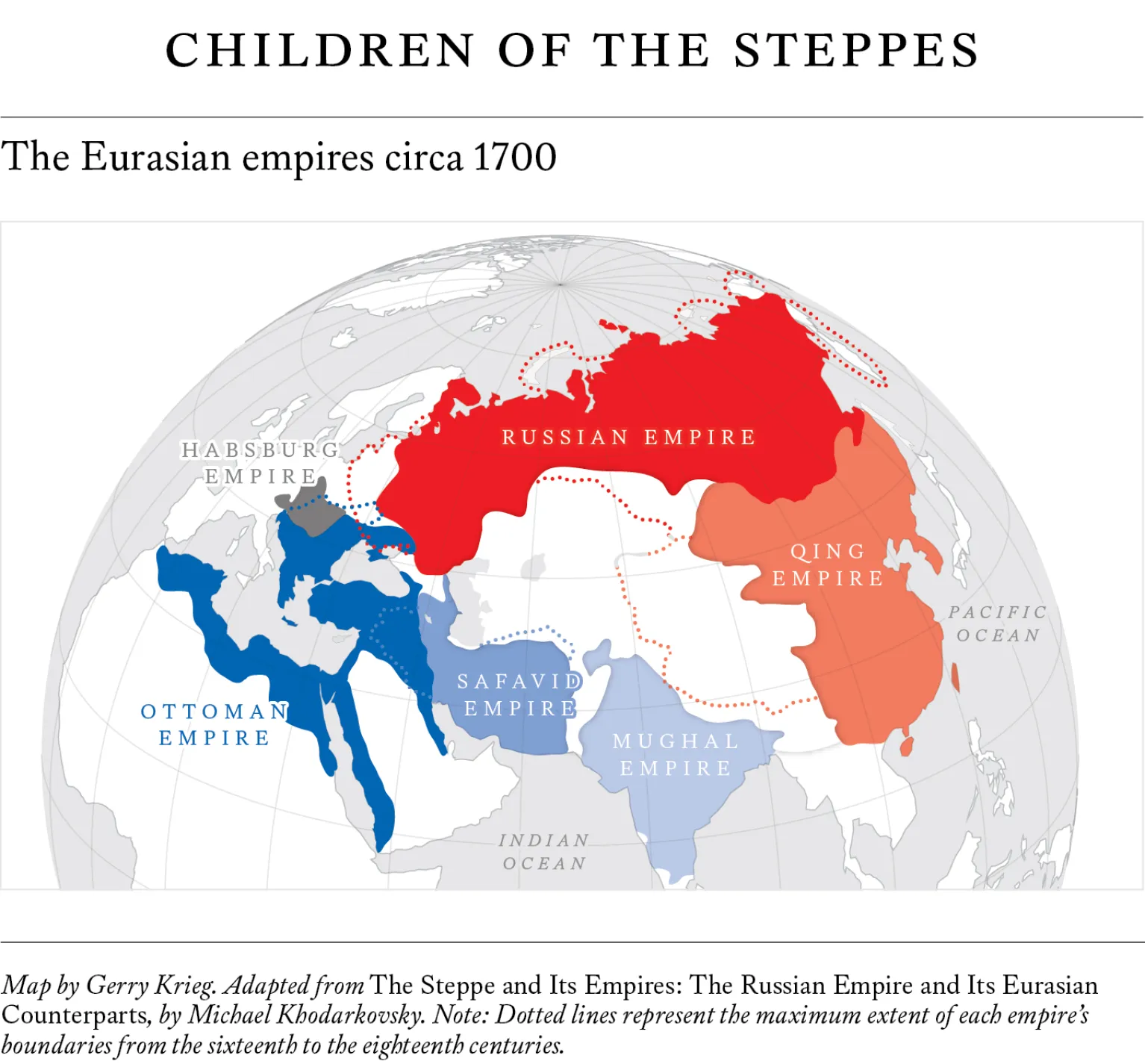
In <em>The Steppe and Its Empires</em>, the historian Michael Khodarkovsky accepts that historical and cultural differences separate Russia from western Europe. “The Kremlin’s spin masters(舆论操控者)’ claim of Eurasianism,” he writes, “is perfectly valid(合理的,有效的).” In his view, Russia has much in common with certain Asian traditions. Khodarkovsky compares the Russia of the early modern era with other large, land-based(陆基的,以陆地为基础的) empires that formed around the steppe: the Ottomans centered in what is now Turkey, the Safavids in Iran, and the Qing in China. Despite their differences, he finds core similarities in their conceptions of sovereignty and territory, their militarized(军事化的) bureaucracies, their legal systems, and their diverse and multireligious(多宗教的) populations. These empires, he writes, “were fundamentally different from the West in social, economic, ideological, legal, and cultural ways, just as their successors, the states of Russia, Turkey, Iran, and China, remain today quite distant from Europe’s liberal democracies.”(他写道,这些帝国“在社会、经济、意识形态、法律和文化方面与西方根本不同,正如它们的继承者——俄罗斯、土耳其、伊朗和中国——今天仍然与欧洲的自由民主国家相距甚远。”) That shared history, he argues, decidedly(无疑地,明确地) informs(影响,塑造) the present, in which many in Washington see the descendants of these empires as resolute(坚决的,坚定的) enemies of the United States.
在《草原及其帝国》一书中,历史学家迈克尔·科达尔科夫斯基承认,历史和文化差异将俄罗斯与西欧分开。“克里姆林宫的舆论操控者声称的欧亚主义,”他写道,“是完全合理的。”在他看来,俄罗斯与某些亚洲传统有很多共同之处。科达尔科夫斯基将近代早期的俄罗斯与围绕草原形成的其他大型陆基帝国进行比较:以今土耳其为中心的奥斯曼帝国、伊朗的萨法维王朝和中国的清朝。尽管存在差异,他在这些帝国的主权和领土观念、军事化官僚机构、法律体系以及多样且多宗教的人口方面发现了核心相似之处。他写道,这些帝国“在社会、经济、意识形态、法律和文化方面与西方根本不同,正如它们的继承者——俄罗斯、土耳其、伊朗和中国——今天仍然与欧洲的自由民主国家相距甚远。”他认为,这段共同历史无疑影响着当下,在华盛顿,许多人将这些帝国的后裔视为美国的坚决敌人。
POLITICAL FICTIONS
政治虚构
STATES OF EXCEPTION
例外状态
NATION-STATE OR EMPIRE?
民族国家还是帝国?