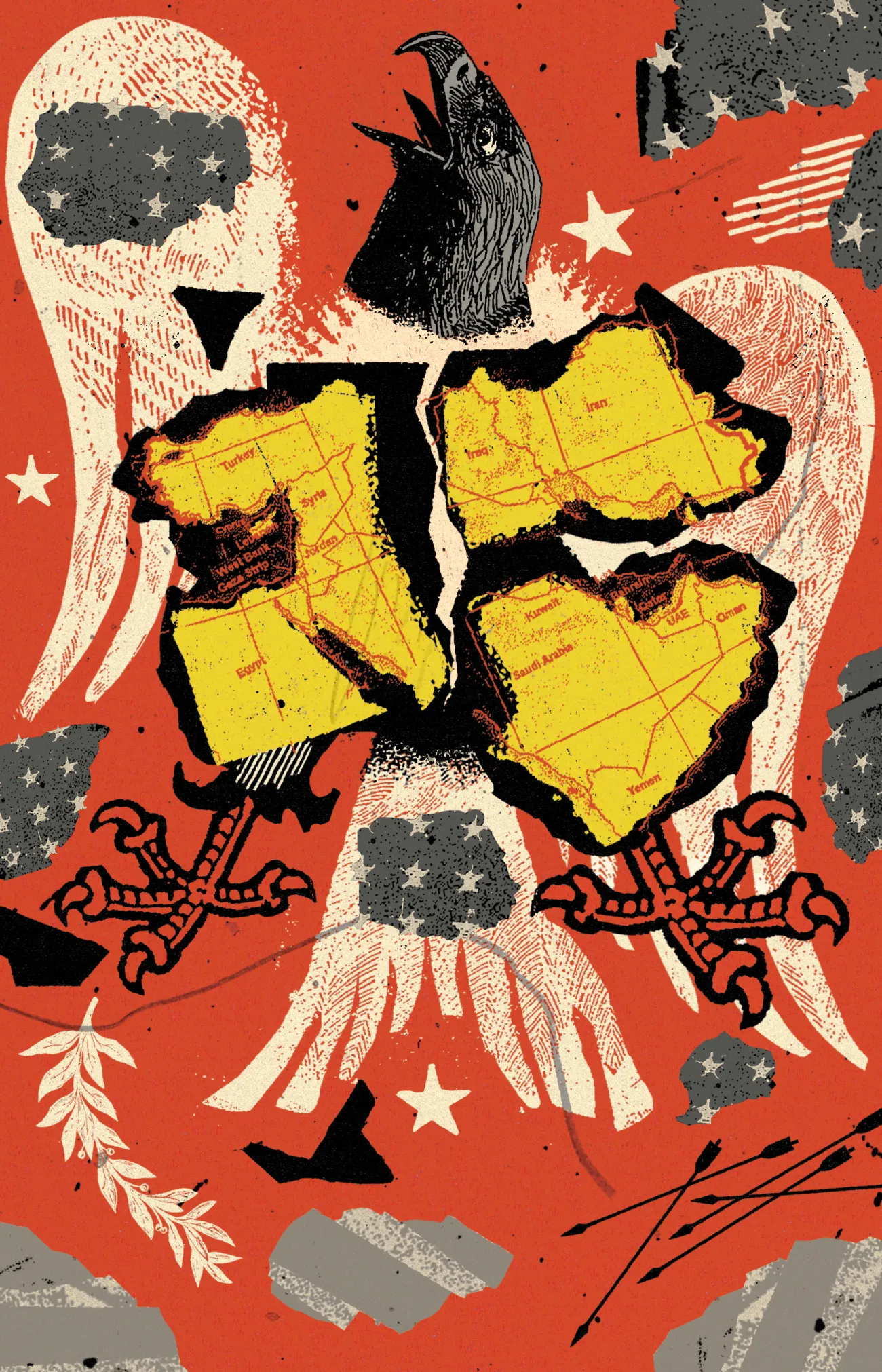
The American Middle East is finished. The regional order that has prevailed since 1991 has been one of the many casualties(牺牲品,受害者) of the U.S.-Israeli war with Iran. The American and Israeli failure to dislodge(驱逐,赶走) the regime in Tehran has proved the bankruptcy(破产,彻底失败) of decades of sanctions and violence. The inability of the United States to protect its Gulf allies from Iranian attacks or to keep the Strait of Hormuz open has fatally undermined the core security bargain that justified its network of military bases in the region.(美国无力保护海湾盟友或保持霍尔木兹海峡畅通,致命地削弱了其军事基地网络所依据的核心安全契约。) And Israel’s increasingly threatening posture and abandonment of any pretense(伪装,假装) of interest in reaching an accommodation(达成和解,达成协议) with the Palestinians have ended Washington’s decades-long mission of bringing its Arab allies and Israel together into an enduring security partnership.
美国的中东秩序已经终结。自1991年以来一直主导该地区的区域秩序,已成为美以与伊朗战争的众多牺牲品之一。美国和以色列未能推翻德黑兰政权,证明了数十年制裁与暴力的破产。美国无力保护其海湾盟友免受伊朗攻击,也无法保持霍尔木兹海峡畅通,这致命地削弱了其在该地区军事基地网络所依托的核心安全契约。而以色列日益咄咄逼人的姿态,以及完全放弃与巴勒斯坦人达成和解的任何伪装,终结了华盛顿数十年来推动阿拉伯盟友与以色列结成持久安全伙伴关系的使命。
The United States’ primary goal for three and a half decades has been to lock its disparate(迥然不同的,异质的) allies into an order built around protecting Israel while containing, at first, Iran and Iraq, and more recently Iran and its nonstate allies. Far from being a deviation from that strategy, President Donald Trump’s war took it to its logical end, seeking to remove the Iranian threat by force in one fell swoop(一举,一下子). As American leaders did before the 2003 invasion of Iraq and Israel has done in its wars against Hezbollah and Hamas, the architects of this war vastly exaggerated what military power could achieve, underestimated the capacity of adversaries to adapt, took for granted that allies would fall in line, and callously disregarded the lives of ordinary people.(正如美国领导人在2003年入侵伊拉克前和以色列在对抗真主党和哈马斯的战争中所做的那样,这场战争的策划者极大地夸大了军事力量的作用,低估了对手的适应能力,想当然地认为盟友会服从,并冷酷地漠视平民生命。) Washington’s misadventure was not an aberration(反常现象,偏离) so much as the ultimate expression of the inherent vice(固有弊端,内在缺陷) of its Middle East strategy.
美国三十五年来的首要目标,一直是将其各不相同的盟友锁定在一个以保护以色列为核心、同时遏制(起初是伊朗和伊拉克,后来是伊朗及其非国家盟友)的秩序中。唐纳德·特朗普总统的战争绝非偏离这一战略,而是将其推向了逻辑终点,试图一蹴而就地以武力消除伊朗威胁。正如美国领导人在2003年入侵伊拉克之前所做的那样,也正如以色列在与真主党和哈马斯的战争中所做的那样,这场战争的策划者极大地夸大了军事力量所能达到的效果,低估了对手的适应能力,想当然地认为盟友会服从,并冷酷地漠视普通人的生命。华盛顿的冒险并非反常之举,而是其中东战略固有弊端的终极体现。
At first, it may not look as though the war has had much effect on the alliances that form the American order. Facing an inconclusive(无定论的,无结果的) war and an empowered Iran, the Gulf states may ramp up(增加,提升) their arms purchases and their demands for renewed security guarantees, creating the illusion of continuity. But the old order is in fact giving way to(让位于,被取代) something new. The 1956 Suez crisis is remembered today as the last gasp of British and French imperial power in the Middle East, but it took years to reach that inevitable end. American primacy(首要地位,霸权) will not disappear immediately, either, but long-building doubts about American power and purpose have passed their tipping point(临界点,引爆点). The revelations(揭露,披露) of the Iran war and of the Israeli war in Gaza before it have already changed the calculations of U.S. allies and adversaries. Another round of fighting or the election of a different American president will not repair the rupture(破裂,决裂).
起初,这场战争对美国秩序所构成的联盟的影响可能看起来并不大。面对一场无果的战争和一个更加强大的伊朗,海湾国家可能会加大武器采购,并提高对更新安全保证的要求,从而制造出延续性的假象。但旧秩序实际上正在让位于新事物。1956年的苏伊士危机如今被视为英法在中东帝国权力的最后一口气,但那是经过多年才达到的必然结局。美国的霸权地位也不会立即消失,但长期以来对美国实力与意图的疑虑已经过了临界点。伊朗战争以及此前加沙战争的种种揭露,已经改变了美国盟友和对手的算计。又一轮战斗或另一位美国总统的当选,都无法修复这一裂痕。
CRACKS IN THE FOUNDATION
根基上的裂缝
ONE-TWO PUNCH
双重打击
THIS TIME IS DIFFERENT
这次不同
LAST CHANCE
最后的机会