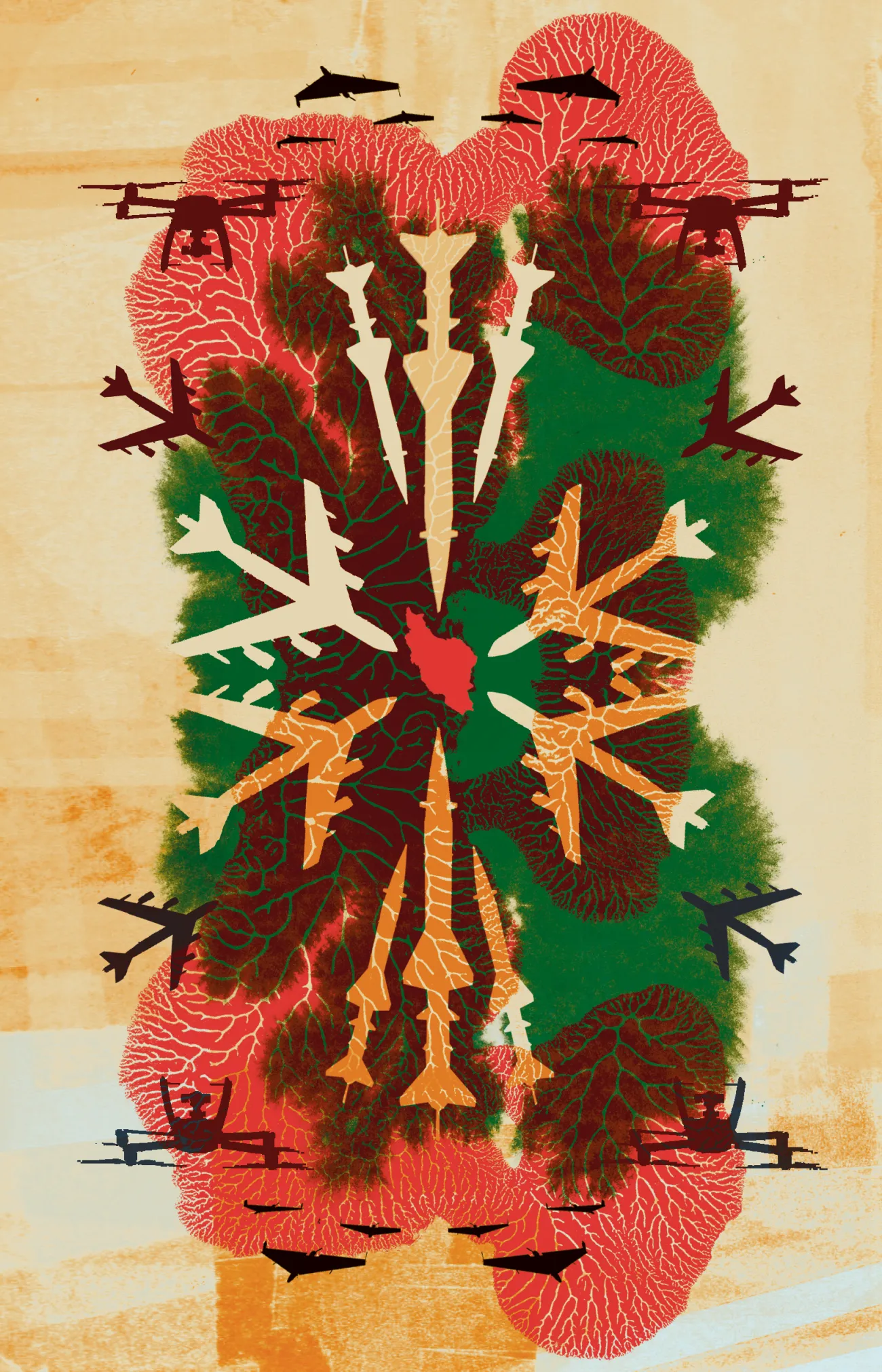
When will the war in Iran end? American officials claim that the answer is soon. “I think the war is going to end immediately after the [November] election,” declared U.S. President Donald Trump in September. “They can’t hold out(坚持,抵抗) any longer.” Iranian leaders agree that the war’s conclusion is near. Tehran has “brought the most heavily armed army in the history of the world to its knees,” proclaim(宣称,宣告)ed Ahmad Vahidi, the commander in chief of the Islamic Revolutionary Guard Corps, in August. Many outside analysts think that the conflict will drag on(拖延,持续过久) for longer and end with negotiations rather than with a clear winner. But generally, there is a sense that the fighting will soon be resolved, one way or another(无论如何,以某种方式).
伊朗战争何时结束?美国官员声称答案就在眼前。美国总统唐纳德·特朗普在9月宣称:“我认为战争将在(11月)选举后立即结束。他们撑不下去了。”伊朗领导人也认为战争接近尾声。伊斯兰革命卫队总司令艾哈迈德·瓦希迪在8月宣称,德黑兰“已让世界上武装最强大的军队跪地求饶”。许多外部分析人士认为,冲突将持续更久,并以谈判而非明确胜者告终。但总体而言,人们感觉战斗很快会以某种方式得到解决。
Such thinking is understandable. All wars eventually end, and after months of rising energy prices, the world is especially eager for this one to stop. Yet the unsettling(令人不安的) reality is that the conflict is nowhere near over. The war’s two principal belligerents cannot achieve their desired goals, yet they both feel they are accomplishing enough to make continued fighting through a mix of military and economic tools worth it.(战争的两个主要交战方都无法实现各自期望的目标,但双方都觉得自己取得的成果足以让通过军事和经济手段混合进行的持续战斗值得。) The United States cannot topple(推翻,颠覆) the Iranian regime, get it to give up its missile program, force it to abandon its nuclear program, or make it stop supporting its regional partners. But Washington can keep degrading Iran’s military and constrict(限制,收缩)ing its economy. Iran cannot evict(驱逐,赶出) the world’s only superpower from the Middle East. Yet it can keep damaging U.S. regional bases, bombing the United States’ regional allies, and disrupting international commerce.
这种想法可以理解。所有战争终将结束,而且在能源价格持续上涨数月后,世界尤其渴望这场战争停止。然而,令人不安的现实是,冲突远未结束。战争的两个主要交战方都无法实现各自期望的目标,但双方都觉得自己取得的成果足以让通过军事和经济手段混合进行的持续战斗值得。美国无法推翻伊朗政权,无法让其放弃导弹计划,无法迫使其放弃核计划,也无法让它停止支持地区伙伴。但华盛顿可以继续削弱伊朗的军事力量并扼制其经济。伊朗无法将世界上唯一的超级大国逐出中东。但它可以继续破坏美国在该地区的基地,轰炸美国的地区盟友,并扰乱国际商业。
Critically, both states have the resources needed to fight indefinitely(无限期地)—and both believe they have no choice but to use them. They think that if their side lets up, the other will press on(继续前进,坚持) until it has either humiliate(羞辱,使丢脸)d them or achieved its main objectives. They carry out periodic talks, but there is no mutual trust. In fact, they suspect that their enemy will simply use a cease-fire(停火) to regroup(重整,重新集结) and resupply before attacking again. The Iranian government fears that relinquish(放弃,交出)ing leverage(筹码,影响力), whether over Hormuz, its missile arsenal(武器库,军火库), or the nuclear program, would leave it exposed to pressure later. Washington, for its part, worries that sweeping sanctions relief(解除制裁) would provide Tehran with the resources and time it needs to reconstitute(重建,重新构成) its capabilities. Israel, meanwhile, fears that restraint today would only create a stronger Iran tomorrow. The steps required to escape the war look dangerous precisely because they require each side to temporarily make itself more vulnerable.(摆脱战争所需的步骤看起来危险,恰恰是因为它们要求每一方暂时让自己变得更加脆弱。)
关键的是,两国都拥有无限期作战所需的资源——而且都认为自己别无选择,只能使用这些资源。它们认为,如果自己一方放松,另一方就会继续施压,直到羞辱它们或实现其主要目标。它们进行定期会谈,但缺乏互信。事实上,它们怀疑敌人只会利用停火来重整旗鼓、补充给养,然后再次发动攻击。伊朗政府担心,放弃筹码——无论是霍尔木兹海峡、导弹库还是核计划——会让它日后暴露于压力之下。华盛顿方面则担心,全面解除制裁将给德黑兰提供重建能力所需的资源和时间。与此同时,以色列担心,今天的克制只会造就明天更强大的伊朗。摆脱战争所需的步骤看起来危险,恰恰是因为它们要求每一方暂时让自己变得更加脆弱。
NO WAY OUT
无路可退
STRAIT OF EQUILIBRIUM
平衡海峡
NEIGHBORHOOD WATCH
邻里观察
ONE BATTLE AFTER ANOTHER
一场接一场的战斗