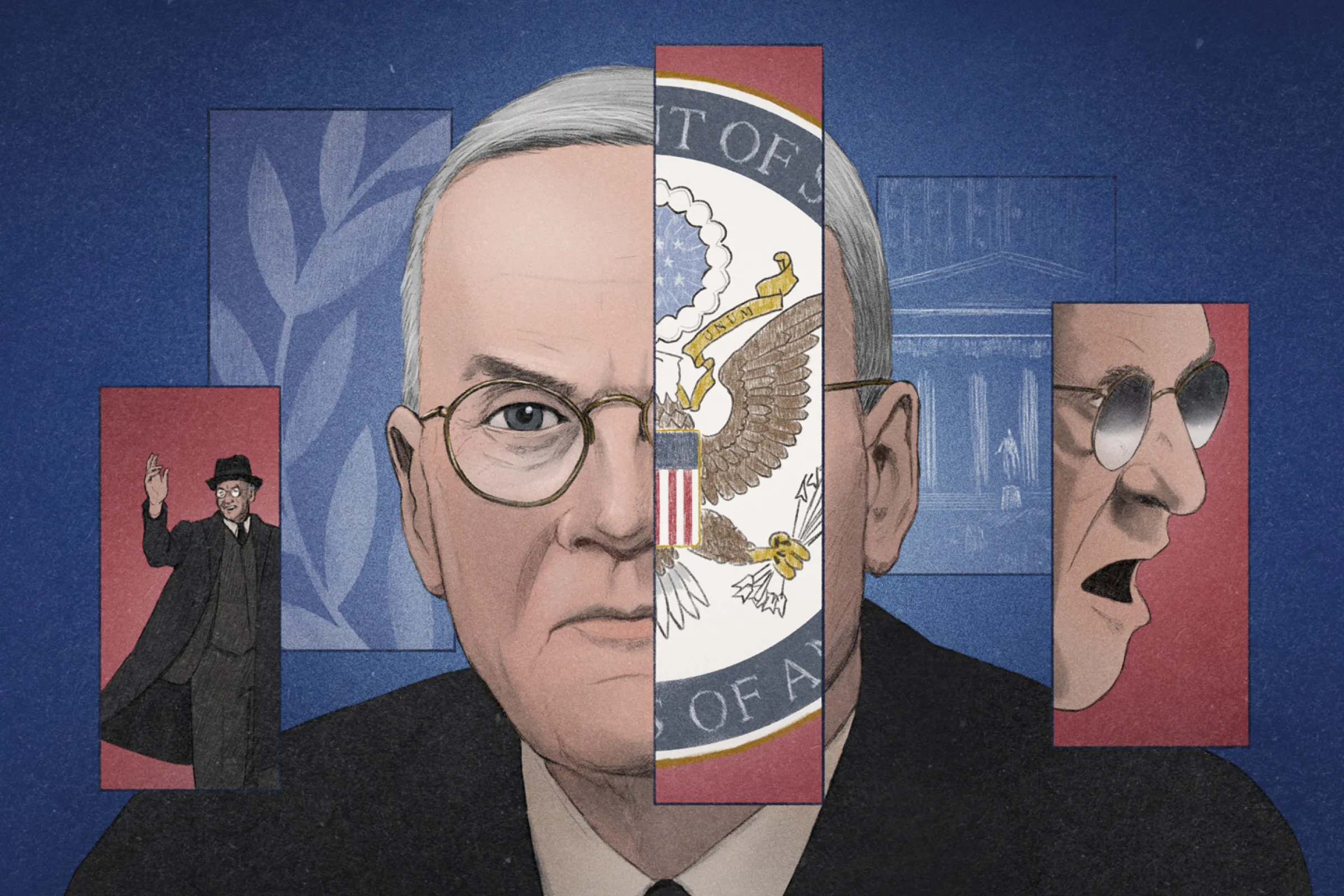
John Foster Dulles was the most and least compelling of men. As secretary of state under U.S. President Dwight Eisenhower from 1953 to 1959, Dulles presided over some of the most controversial and dramatic episodes in American foreign policy in the early years of the Cold War: the clandestine U.S.-backed coups in Guatemala and Iran; the American break with France, Israel, and the United Kingdom during the Suez crisis; the frenzied effort to capitalize on Soviet leader Nikita Khrushchev’s secret speech revealing Stalin’s crimes; the turn to covert action as an essential tool of U.S. foreign policy.(1953年至1959年,杜勒斯在艾森豪威尔总统手下担任国务卿,主持了冷战初期美国外交政策中一些最具争议和戏剧性的事件:美国暗中支持危地马拉和伊朗的政变;苏伊士危机期间与法国、以色列和英国的决裂;利用赫鲁晓夫秘密讲话的疯狂努力;以及转向秘密行动作为外交政策的基本工具。) Dulles believed in going toe to toe with the Soviet Union, even at the cost of a potential World War III. He argued—outrageously—for the offensive use of nuclear weapons and insisted that Soviet communism should be vanquished(被征服;被击败) rather than merely contained(被遏制;被控制). His signature policy, the threat of “massive retaliation(大规模报复)” in response to Soviet expansion, sent shudders coursing through the United States and the world.
约翰·福斯特·杜勒斯是最具魅力、也最乏味的一个人。1953年至1959年,他在美国总统德怀特·艾森豪威尔手下担任国务卿,主持了冷战初期美国外交政策中一些最具争议、最具戏剧性的事件:美国暗中支持在危地马拉和伊朗的政变;苏伊士危机期间美国与法国、以色列和英国的决裂;利用苏联领导人尼基塔·赫鲁晓夫揭露斯大林罪行的秘密讲话的疯狂努力;以及转向把秘密行动作为美国外交政策的基本工具。杜勒斯信奉与苏联正面硬碰硬,哪怕代价是可能爆发第三次世界大战。他令人震惊地主张进攻性地使用核武器,并坚持认为苏联共产主义应当被消灭,而不仅仅是遏制。他的标志性政策——以“大规模报复”的威胁回应苏联扩张——让美国和全世界不寒而栗。
And yet he was also the ultimate Man in the Gray Flannel Suit, with none of the dash(潇洒;锐气) and color and charm of his younger brother Allen, who headed the CIA during those same years. As the historian Bevan Sewell notes in his new book, contemporaries of the elder Dulles thought of him as simultaneously an ideologue and a grind.(正如历史学家贝文·休厄尔在其新书中所指出的,与老杜勒斯同时代的人认为他既是一个意识形态分子,又是一个埋头苦干的工作狂。) As usual, British Prime Minister Winston Churchill put it best(说得最妙;表达得最好), describing the great diplomat as “dull, duller, Dulles.” Even Dulles himself admitted that he could be a chore. “I know that in some ways I am a cold fish(冷冰冰的人;冷漠的人),” he once acknowledged to his bodyguard, “and that, I’m afraid, is that.”
然而,他也是典型的“穿灰色法兰绒西装的人”,丝毫没有弟弟艾伦那种潇洒、多彩和魅力——艾伦在同一时期执掌中央情报局。正如历史学家贝文·休厄尔在其新书中所指出的,与老杜勒斯同时代的人认为他既是一个意识形态分子,又是一个埋头苦干的工作狂。英国首相温斯顿·丘吉尔一如既往地一语中的,称这位伟大的外交家“沉闷,更沉闷,杜勒斯”。就连杜勒斯自己也承认,他可能是个乏味的人。“我知道在某些方面我是个冷冰冰的人,”他曾对保镖坦言,“而且,恐怕就是这样了。”
Sewell aims to present a more appealing Dulles: less ideologue than pragmatist(务实主义者), interested in peace as well as war. From his early years as junior legal counsel at the Paris Peace Conference after World War I through a dreamy period in the 1930s and 1940s, Dulles spent much of his time “offering what, for a Wall Street lawyer, were radical solutions to the crises” of the era, Sewell writes.(休厄尔写道,从一战后巴黎和会上的初级法律顾问,到20世纪30、40年代那段爱幻想的时期,杜勒斯大部分时间都在“为那个时代的危机提供——对一个华尔街律师而言——激进的解决方案”。) Dulles was an unabashed(毫不掩饰的;不害羞的) capitalist who recognized socialism’s charismatic(有魅力的;有感召力的) appeal. He was an Anglo-American partisan who understood that other countries, including those outside Europe, would want more room to maneuver(回旋余地). He called for “a policy of boldness(大胆政策)” in U.S. foreign policy but worried above all about the stability of the global order.
休厄尔旨在呈现一个更有吸引力的杜勒斯:与其说是意识形态分子,不如说是务实主义者,既关心战争也关心和平。休厄尔写道,从一战后巴黎和会上的初级法律顾问,到20世纪30、40年代那段爱幻想的时期,杜勒斯大部分时间都在“为那个时代的危机提供——对一个华尔街律师而言——激进的解决方案”。杜勒斯是一个毫不掩饰的资本家,但他认识到社会主义具有蛊惑人心的吸引力。他是一个英美主义者,但明白其他国家——包括欧洲以外的国家——会想要更大的回旋余地。他呼吁美国外交政策采取“大胆的政策”,但最担心的还是全球秩序的稳定。
STATESMAN IN TRAINING
受训中的政治家
REALITY CHECK
现实检验
DREAMS DEFERRED
被推迟的梦想