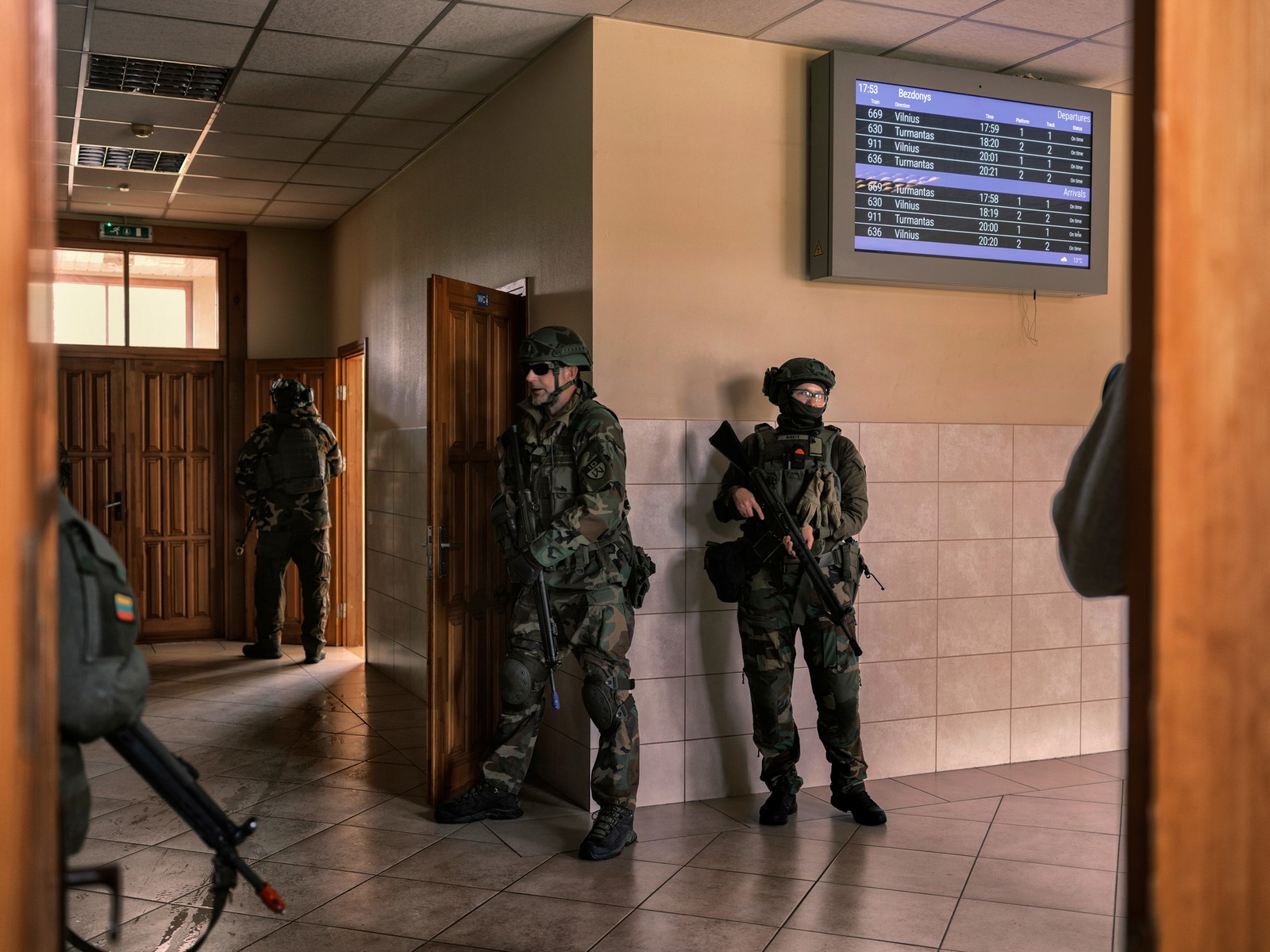
One evening this summer, in the village of Bezdonys, in eastern Lithuania, I watched as a platoon(排(军队编制)) of riflemen arrived at a train station occupied by enemy forces. Some of the Lithuanians let out a burst of gunfire from across the tracks, pinning the adversary in place as the rest of the unit advanced on the station.(一些立陶宛人从铁轨对面发出一阵枪火,把敌人压制在原地,其余部队则向车站推进。) As the firefight intensified, wounded riflemen were evacuated(疏散,撤离) to makeshift(临时的,凑合的) medical tents. An enemy soldier lay slumped(瘫倒,颓然倒下) against the station’s yellow clapboard(隔板墙,护墙板) siding.
今年夏天的一个傍晚,在立陶宛东部的贝兹多尼斯村,我看着一个步枪排抵达被敌军占领的火车站。一些立陶宛人从铁轨对面发出一阵枪火,把敌人压制在原地,其余部队则向车站推进。随着交火加剧,受伤的步枪手被疏散到临时医疗帐篷。一名敌军士兵瘫倒在车站黄色隔板墙边。
Military exercises are elaborate(精心制作的,复杂的) acts of make-believe(假想,虚构). I was observing this one to understand how a large-scale attack on the most vulnerable(脆弱的,易受攻击的) part of the NATO alliance might play out(展开,发生)—and to see how the Baltic states of Estonia, Latvia, and Lithuania think about their own defense. The raid(突袭) in Bezdonys was part of a nationwide simulation and involved the Lithuanian Riflemen’s Union, a state-supported militia(民兵组织) group that traces its history to(历史可追溯到) the end of World War I. The Lithuanians I met wore camouflage(迷彩,伪装) fatigues(军服,工作服) and had no trouble accepting the scenario(设想,情景) behind the exercise: that the enemy—Russia—had invaded their country, and that defensive forces had retreated to a city in the north. In their civilian lives, the riflemen are teachers and sales managers, economists and medical students. Now, suddenly, they were responsible for ambushing(伏击) Russian outposts(前哨,哨所), killing enemy soldiers, and transmitting(传输,传递) intelligence to the army.
军事演习是精心设计的假想场景。我观察这次演习,是为了了解对北约联盟最脆弱部分的大规模攻击可能如何展开——并了解爱沙尼亚、拉脱维亚和立陶宛这三个波罗的海国家如何看待自己的防御。贝兹多尼斯的突袭是一次全国性模拟的一部分,涉及立陶宛步枪手联盟,这是一个国家支持的民兵组织,其历史可追溯到第一次世界大战结束。我遇到的立陶宛人穿着迷彩服,毫不费力地接受了演习背后的设定:敌人——俄罗斯——已经入侵了他们的国家,防御部队已撤退到北部的一座城市。在日常生活中,这些步枪手是教师和销售经理、经济学家和医学生。现在,他们突然负责伏击俄罗斯前哨、杀死敌军士兵,并向军队传递情报。
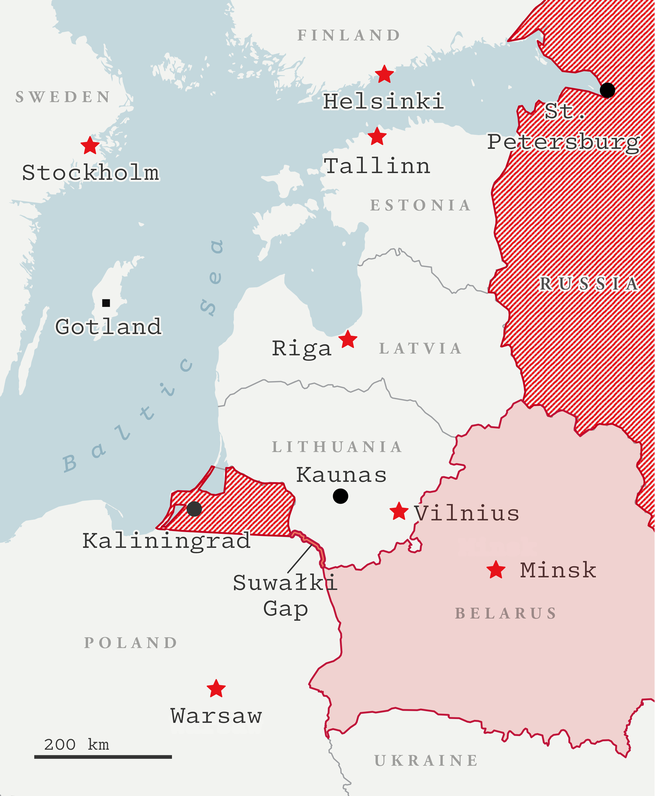
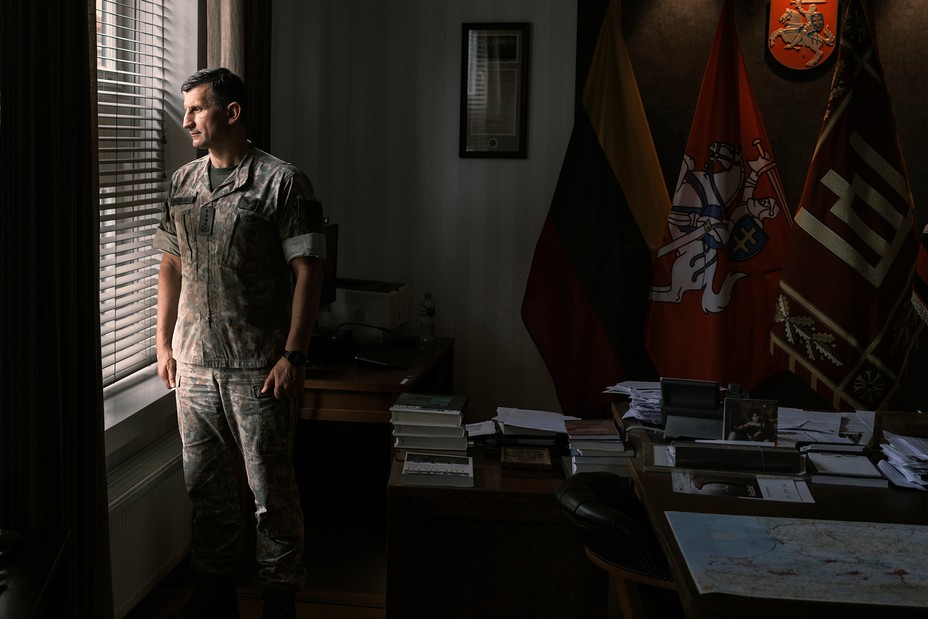
“The enemy has to know,” General Raimundas Vaikšnoras told me, “that if they step one foot in our territory, we will strike back.” Vaikšnoras is Lithuania’s defense chief, and his distrust of Russia, a former occupying power, is not a notional(概念上的,空想的) concern. Ever since Russia’s invasions of other post-Soviet nations—Georgia in 2008; Ukraine in 2014 and 2022—conflict with Moscow has been front of mind(首要考虑,最关心的事) for the people of the Baltic states. The three countries are small—Lithuania, the largest, is about the size of West Virginia—and grouped, one atop the other, on the shores of the Baltic Sea. They are also linked geopolitically by their common experience on Russia’s western borderlands, one of subjugation and dispossession.(它们在地缘政治上也有联系,因为它们在俄罗斯西部边境地区有着共同的被征服和剥夺的经历。) The Baltic states escaped some of that past after the fall of communism and the breakup of the Soviet Union, when they regained their sovereignty(主权). And they took measures to solidify(巩固,加强) that status when they joined NATO, in 2004, attaching(依附,连接) themselves to the American-led security order.
“敌人必须知道,”雷蒙达斯·瓦伊克什诺拉斯将军告诉我,“如果他们踏入我们的领土一步,我们将反击。”瓦伊克什诺拉斯是立陶宛的国防部长,他对俄罗斯这个前占领国的不信任并非空想。自从俄罗斯入侵其他后苏联国家——2008年的格鲁吉亚、2014年和2022年的乌克兰——与莫斯科的冲突一直是波罗的海国家人民最关心的事。这三个国家很小——最大的立陶宛大约相当于西弗吉尼亚州——它们一个叠一个地分布在波罗的海沿岸。它们在地缘政治上也有联系,因为它们在俄罗斯西部边境地区有着共同的被征服和剥夺的经历。波罗的海国家在共产主义垮台和苏联解体后重新获得主权,从而摆脱了部分过去。2004年加入北约时,它们采取措施巩固了这一地位,依附于美国领导的安全秩序。