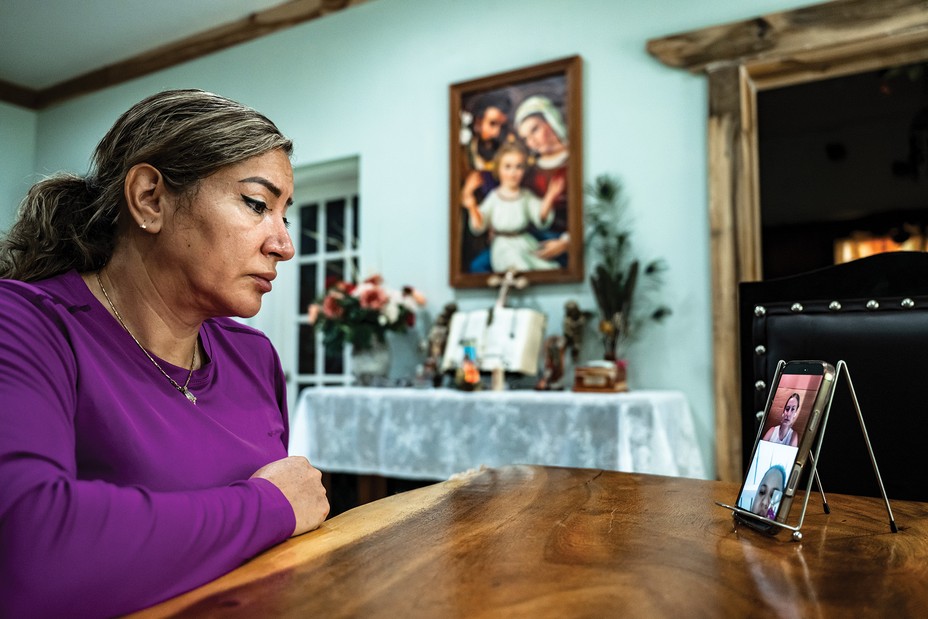
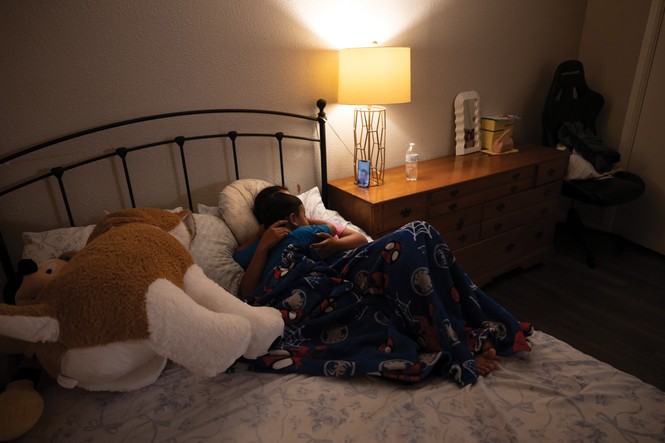
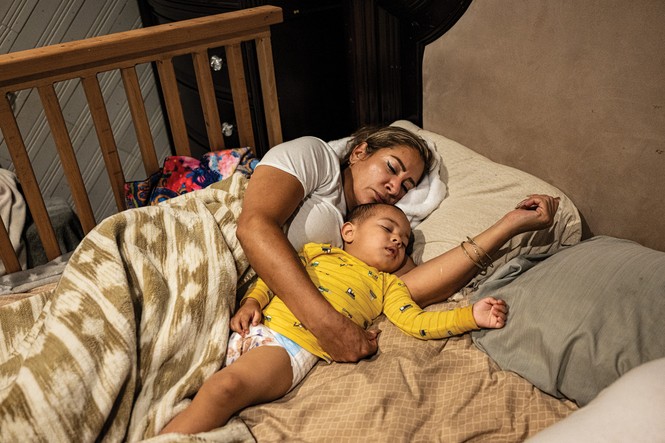
Estela Díaz and 2-year-old Eber repeat their routine every morning: Around 8 a.m., he rustle(弄醒;沙沙作响)s her awake in the bed they share. She picks him up, changes his diaper, and pulls out a fresh set of tiny clothes. While Estela dresses him, Eber coo(咕咕叫;轻柔低语)s, “Mama, mama.” She smiles and strokes his cheeks, trying to hide her sadness at his confusion. Estela is 50 and has three sons, but Eber is not one of them. She’s been caring for him because ICE deported his parents to Venezuela, despite his mother’s pleas to be reunited first.(她一直照顾他,因为ICE把他的父母驱逐到委内瑞拉,尽管他母亲恳求先团聚。)
埃斯特拉·迪亚斯和两岁的埃伯每天早晨都重复着同样的流程:八点左右,他在他们共睡的床上把她蹭醒。她抱起他,换尿布,拿出一套干净的小衣服。埃斯特拉给他穿衣服时,埃伯咿咿呀呀地叫着“妈妈,妈妈”。她微笑着抚摸他的脸颊,试图掩饰对他分不清谁是妈妈的悲伤。埃斯特拉50岁,有三个儿子,但埃伯不是其中之一。她一直在照顾他,因为移民和海关执法局(ICE)把他的父母驱逐到了委内瑞拉,尽管他母亲恳求先让他们团聚。
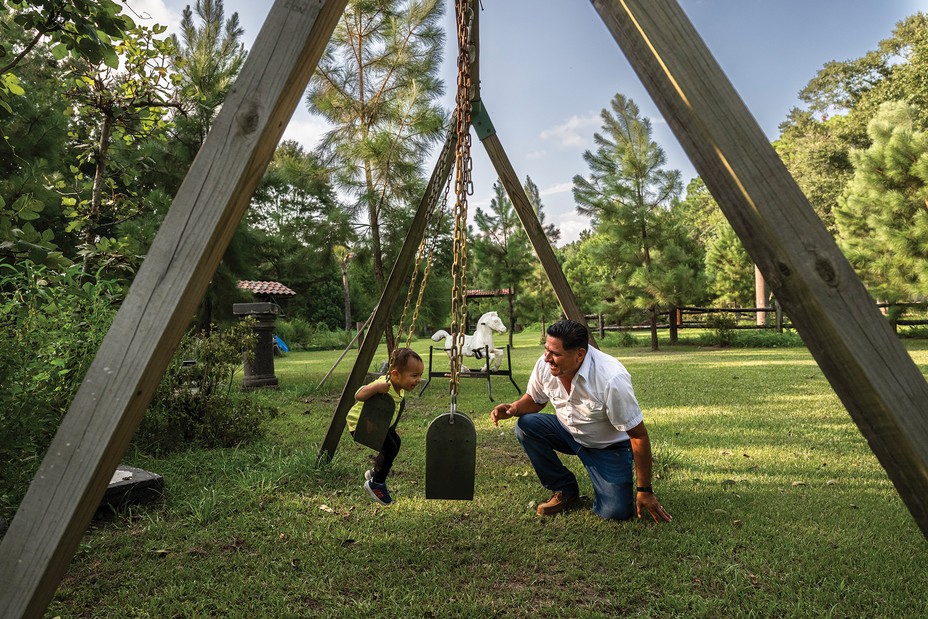
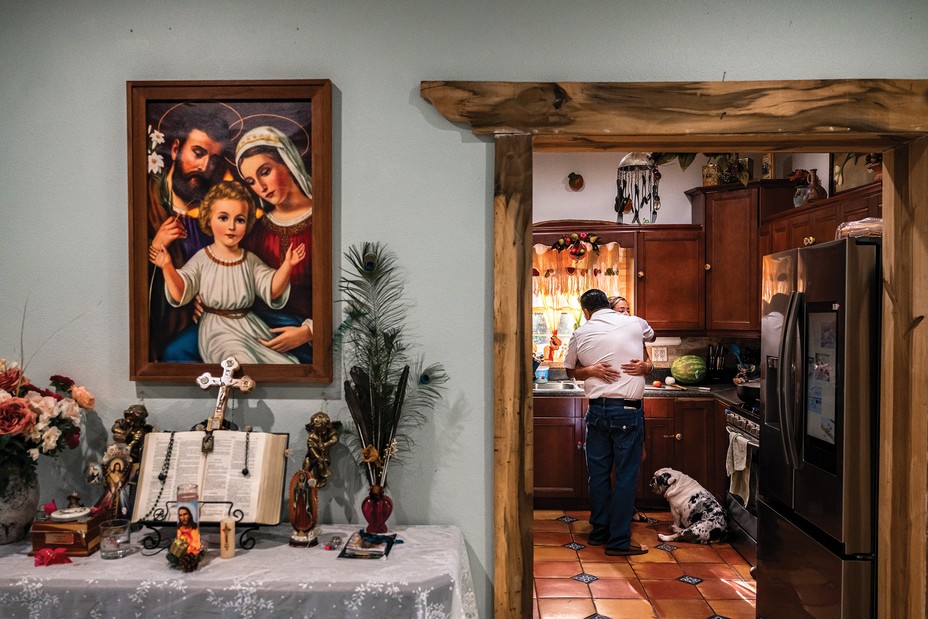
Estela and her husband, Miguel, moved to Mobile, Alabama, 20 years ago to raise their own boys in a place that felt safe and had a slower rhythm than Las Vegas, where they’d met.(埃斯特拉和丈夫米格尔20年前搬到阿拉巴马州莫比尔,在一个感觉安全、节奏比他们相识的拉斯维加斯更慢的地方抚养儿子。) Miguel works as a remodeling contractor(装修承包商). He spent years developing their four-acre property, building a wood shop, a chicken coop, and houses for two of their children (the third lives 15 minutes down the road). They bought peacocks as pets and planted bright perennial(多年生的;长期存在的) gardens, adorning them with stone fountains. By the driveway, they fly an American flag from an antique tractor. Over the years, their home evolved into a kind of retirement sanctuary(庇护所;圣所)—until this past winter, when it started to look like a day care.
埃斯特拉和丈夫米格尔20年前搬到阿拉巴马州莫比尔,想在一个感觉安全、节奏比他们相识的拉斯维加斯更慢的地方抚养自己的儿子。米格尔是装修承包商。他花了多年时间开发他们四英亩的房产,建了一个木工房、一个鸡舍,还为两个儿子盖了房子(第三个儿子住在15分钟车程外)。他们买孔雀当宠物,种了鲜艳的多年生花园,还用石喷泉点缀。车道旁,他们在一台古董拖拉机上挂美国国旗。多年来,他们的家逐渐变成某种退休圣所——直到去年冬天,它开始看起来像日托中心。
A police officer pulled over Eber’s mother, Marlyn, last November and, without accusing her of an infraction, turned her over to ICE, despite her work permit and pending asylum application.(去年11月,一名警察拦下埃伯的母亲玛琳,在没有指控她任何违规的情况下,把她交给了ICE,尽管她有工作许可和待决的庇护申请。) Eber, who had just finished breastfeeding, and his 7-year-old brother, Isaac, had nowhere to go. Marlyn’s 23-year-old cousin took the boys briefly. Then two of Marlyn’s friends—both undocumented(无证件的;无合法身份的)—agreed to take one child each. Eber was moved into a rusty trailer with no heat; the woman watching him put socks on his hands to keep him warm. He was sick, but she was too scared of ICE to take him to a doctor. Isaac’s caregiver worked nights. Sometimes he made it to school; sometimes he didn’t.
去年11月,一名警察拦下埃伯的母亲玛琳,在没有指控她任何违规行为的情况下,把她交给了ICE,尽管她有工作许可和待决的庇护申请。刚断奶的埃伯和他7岁的哥哥艾萨克无处可去。玛琳23岁的表亲短暂收留了兄弟俩。然后玛琳的两个朋友——都是无证移民——同意各带一个孩子。埃伯被搬进一辆生锈的拖车,没有暖气;照看他的女人给他手上套袜子保暖。他生病了,但她太害怕ICE,不敢带他看医生。艾萨克的看护人上夜班。他有时能去上学,有时不能。