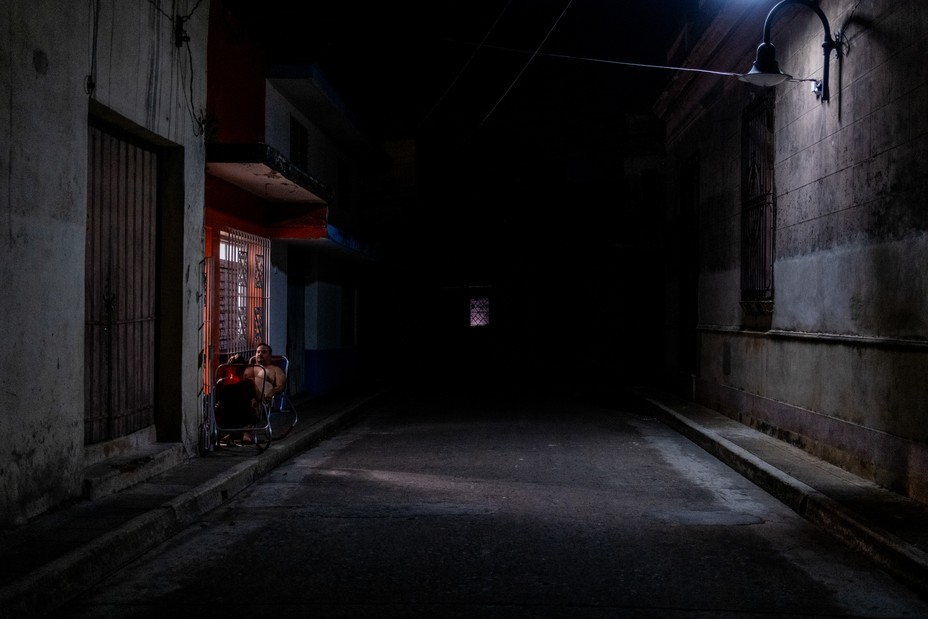
A priest led me up battered(破旧的) stairs to a tiny room at the top of a church. From the window, we gazed down at the decayed(破败的) colonial villas and scattered trash fires of eastern Havana. He pointed to the yellow wall behind us, where someone had sketched a meticulous(一丝不苟的) map of the local street grid.
一位神父带我走上破旧的楼梯,来到教堂顶部的一个小房间。从窗口望去,我们俯瞰着东哈瓦那破败的殖民时期别墅和散落的垃圾焚烧堆。他指向我们身后那面黄色的墙,有人在那里精心绘制了一幅当地街道网格图。
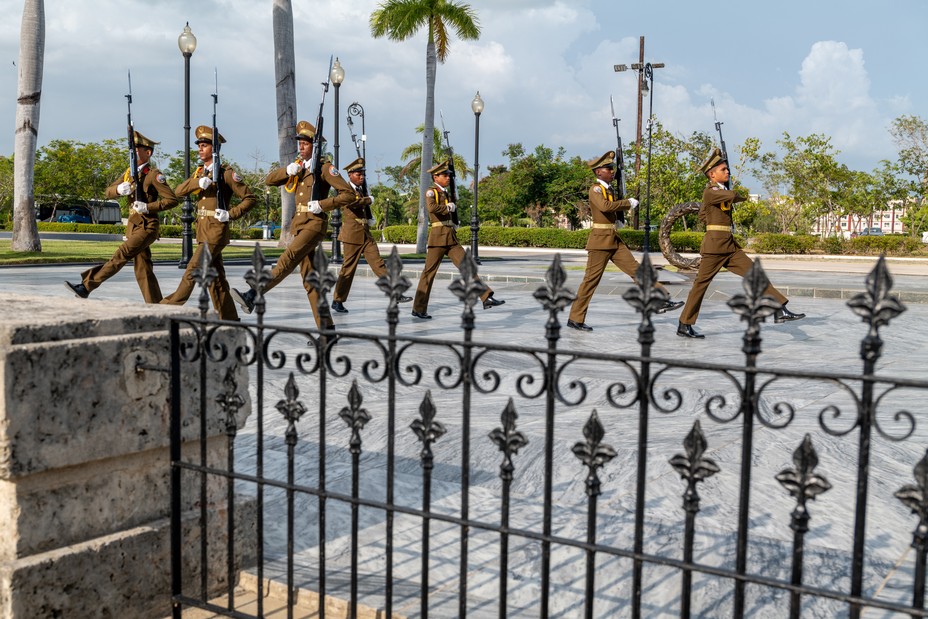
“They posted(派驻) armed guards here, to watch over us,” he said.
“他们在这里派驻了武装警卫,监视我们,”他说。
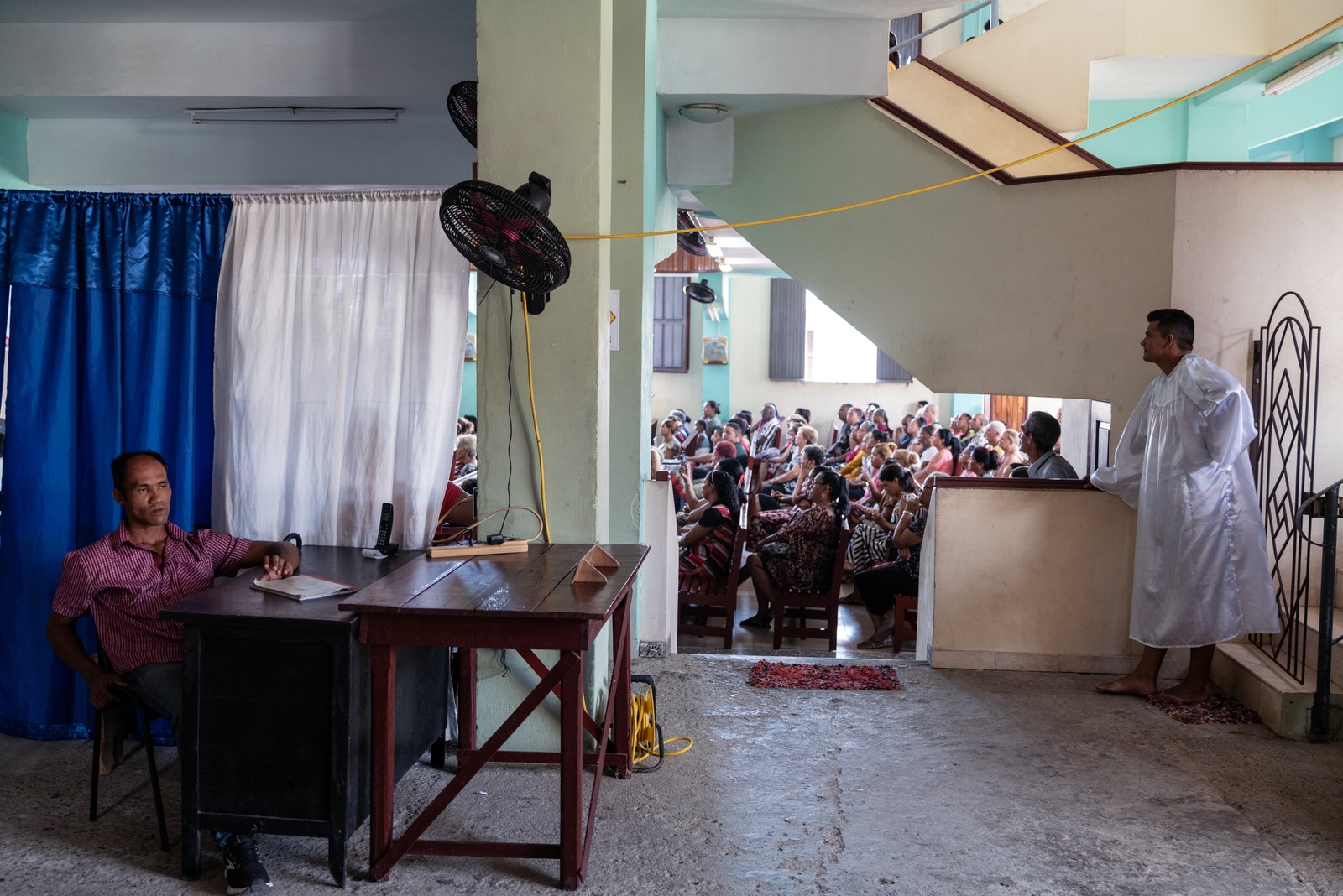
Cuba’s Communist government, the priest said, took over the convent(修道院), cloister(回廊), and school of Los Escolapios after the revolution of 1959, expelling(驱逐) the nuns and setting up a guard post—one part of the regime’s sprawling(庞大的) apparatus(机构) of surveillance(监视) and control. The church downstairs was virtually closed, the congregation(会众) mostly exiled(流放的) or jailed in accordance with Communist Cuba’s atheist(无神论的) principles.
神父说,古巴共产党政府在1959年革命后接管了洛斯埃斯科拉皮奥斯的修道院、回廊和学校,驱逐了修女,并设立了警卫岗哨——这是该政权庞大的监视和控制机构的一部分。楼下的教堂几乎关闭,会众大多被流放或监禁,这符合共产主义古巴的无神论原则。