In the end, the solar eclipse did not cause the electricity grid to flicker(闪烁;摇曳). The early drop-off in solar generation was manageable(可管理的;可应付的), just as the National Energy System Operator (Neso), the state-owned body responsible for keeping the lights on, predicted. Gas-fired generators still had to be paid nose-bleed prices(极高的价格) to fire up, and power via high-voltage interconnectors(互联电网;互连线路) to continental Europe was also expensively sourced. But the system worked.
最终,日食并未导致电网闪烁。太阳能发电的早期下降是可控的,正如负责维持供电的国有机构——国家能源系统运营商(Neso)所预测的那样。燃气发电机仍被支付了高昂的价格来启动,通过高压互联电网从欧洲大陆购电也代价不菲。但系统还是正常运转了。
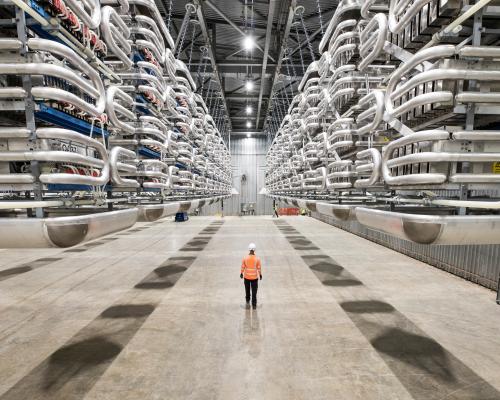
A summer of heatwaves, however, has highlighted European grids’ reliance(依赖;依靠) on those interconnectors – including seven between the UK and the continent – in an age of extreme weather and greater use of intermittent(间歇的;断断续续的) renewables. On Thursday, another low-wind “heat dome(热穹顶:高压系统困住热空气的现象)” day, a fifth of power to the British grid was coming from the continent at 10am. Cables from France alone were meeting 11%, or 3.54 gigawatts(吉瓦(电功率单位)), of demand, or more than twice as much as(是…的两倍多) the output at that time from the UK’s entire fleet of windfarms.
然而,一个充满热浪的夏天凸显了欧洲电网对这些互联线路的依赖——包括英国与欧洲大陆之间的七条线路——在极端天气和间歇性可再生能源使用增多的时代。周四,又是一个低风“热穹顶”日,上午10点,英国电网五分之一的电力来自欧洲大陆。仅来自法国的电缆就满足了11%(即3.54吉瓦)的需求,是当时英国全部风电场发电量的两倍多。
The economic appeal(吸引力;呼吁) of interconnectors is obvious: cross-border transfers should boost(提升;促进) security. For Britain, as on Thursday, it can sometimes be cheaper to source from the continent, especially from France’s nuclear-dominated system, than use domestic gas-fired generation. And on sunny windy days when the UK’s renewables are producing a surplus(盈余;过剩), the flow can be in the other direction. Over the course of a full year, the UK currently imports roughly(大约;粗略地) a tenth of its electricity.
互联电网的经济吸引力显而易见:跨境输电应能提升安全性。对英国来说,就像周四那样,有时从欧洲大陆(尤其是法国以核电为主的系统)购电比使用国内燃气发电更便宜。而在阳光充足、风力强劲的日子里,当英国的可再生能源产生盈余时,电力流向可以相反。全年来看,英国目前大约进口其电力的十分之一。