It feels like a very Greek summer here in the UK. The ground is scorched(烤焦的,干枯的), it last rained months ago, and the giant publicity machine(宣传机器) for Christopher Nolan’s billion-dollar-grossing The Odyssey – from red-carpet frocks to professorial disapproval – is a Charybdis(卡律布狄斯(希腊神话中的漩涡怪物)), swallowing all other cultural events in its gaping maw((动物的)嘴,喉咙). Mere Mortals – San Francisco Ballet’s astonishing(令人惊讶的,惊人的) work inspired by the story of Pandora – runs in Edinburgh this month before going to Sadler’s Wells in September. And Greek tragedy continues to fill London’s theatres.
在英国,这感觉像是一个充满希腊气息的夏天。大地被烤焦,上一次下雨已是数月之前,而克里斯托弗·诺兰那部票房破十亿美元的《奥德赛》的庞大宣传机器——从红毯礼服到教授们的非议——就像卡律布狄斯漩涡,张开巨口吞噬着其他一切文化活动。旧金山芭蕾舞团受潘多拉故事启发而创作的惊人作品《凡夫俗子》本月在爱丁堡上演,九月将移师伦敦沙德勒之井剧院。而希腊悲剧继续填满伦敦的各大剧院。
Last week, I went to see Simon Stone’s reworking(改编,重新处理) of Aeschylus’s Oresteia at the Bridge theatre in south London, and it was packed. Even on a Thursday afternoon, there was a huge audience for the story of a family who turn on one another(互相攻击,反目成仇), wreaking(造成(破坏等)) intergenerational violence until their whole house lies in tatters(破败不堪,四分五裂) and madness. Partly that is because of the excellent cast: David Morrissey and Mary-Louise Parker play Christopher and Montie – a modern Agamemnon and Clytemnestra, their marital squabbles(争吵,口角) fizzing(嘶嘶作响,充满活力) back and forth(来回地,反复地) until he cracks(崩溃,断裂) and she snaps(突然发作,崩溃). Their children are the ones who will have to try to reconcile the impossible: duty to their murdered father, respect to their murderous mother.(他们的孩子将不得不去调和那不可能调和的矛盾:对被杀父亲的忠诚,对杀人母亲的尊敬。)
上周,我去伦敦南部的桥剧院看了西蒙·斯通改编的埃斯库罗斯的《奥瑞斯提亚》,剧院座无虚席。即使是在一个周四下午,仍有大批观众来观看这个一家人自相残杀、造成代际暴力,直至整个家族分崩离析、陷入疯狂的故事。部分原因在于演员阵容强大:大卫·莫里西和玛丽-露易丝·帕克饰演克里斯托弗和蒙蒂——一对现代版的阿伽门农和克吕泰涅斯特拉,他们的婚姻争吵你来我往、火花四溅,直到他崩溃、她爆发。他们的孩子将不得不去调和那不可能调和的矛盾:对被杀父亲的忠诚,对杀人母亲尊敬。
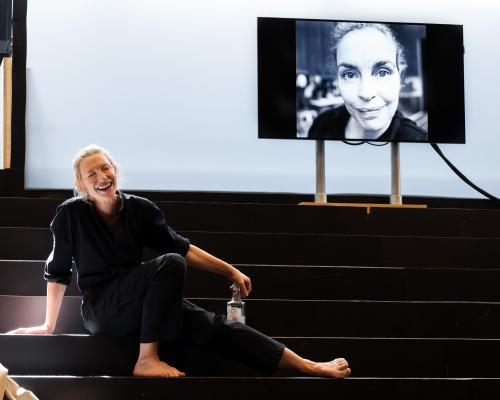
Partly it is because Stone has earned his audience for Greek tragedy. His version of Phaedra(淮德拉(希腊神话人物,悲剧题材)) with Janet McTeer at London’s National Theatre in 2023 blended(融合,混合) Euripides, Seneca and Racine. And his adaptation(改编,改编作品) of Euripides’s Medea(美狄亚(希腊悲剧人物)), starring Marieke Heebink at the Barbican in 2019, remains one of the best things I have ever seen. This modern-day version began with Medea leaving the asylum(精神病院,避难所) where she has spent the past year, after attempting to kill her ex-husband for his infidelity(不忠,背叛) to her and their children. The dread piled up like bodies(像尸体一样堆积) as the play moved to its wrenching(令人痛苦的,揪心的) conclusion. These very different plays posed a similar question: what do women do with their rage, if speaking it goes unheard?(这些截然不同的剧作提出了一个相似的问题:如果说出愤怒无人倾听,女性该如何处理自己的愤怒?)
部分原因在于斯通已经为自己赢得了希腊悲剧的观众。2023年,他与珍妮特·麦克蒂尔在伦敦国家剧院合作的《淮德拉》融合了欧里庇得斯、塞内加和拉辛的版本。而他2019年在巴比肯中心执导、由玛丽克·希宾克主演的欧里庇得斯《美狄亚》改编版,至今仍是我看过的最好的作品之一。这个现代版本的开场是美狄亚离开精神病院——她在那里待了一年,此前她因前夫对自己和孩子的背叛而试图杀死他。随着剧情走向令人痛苦的结局,恐惧像尸体一样堆积起来。这些截然不同的剧作提出了一个相似的问题:如果说出愤怒无人倾听,女性该如何处理自己的愤怒?