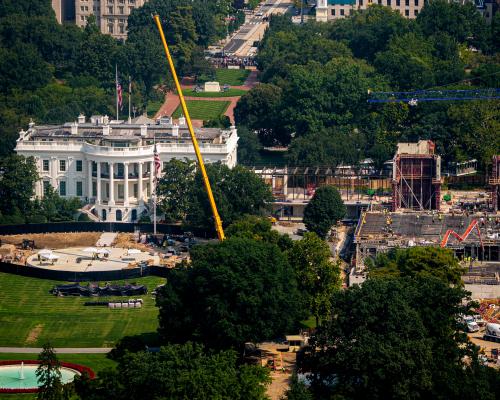
History has shown us how much dictators and aspiring(有抱负的;渴望成为的) dictators love building monuments to themselves. They enjoy reminding the world that they can do anything, no matter who(无论谁) is responsible for the physical labor(体力劳动) or who will be paying the financial and human cost.
历史告诉我们,独裁者和野心勃勃的准独裁者多么热衷于为自己建造纪念碑。他们喜欢提醒世界,他们可以为所欲为,不管谁来承担体力劳动,也不管谁来付出经济和人命的代价。
They prefer outsized(超大型的,特大号的) structures, heroic arches(英雄拱门), towers and columns designed to prove that their signature and their esthetic(美学;审美观) will be with us forever, even after they’re dead, though dictators often seem to believe they are too powerful to die(强大到不会死).
他们偏爱超大型建筑、英雄拱门、高塔和巨柱,这些设计旨在证明他们的印记和审美将与我们同在,即使在他们死后也是如此——尽管独裁者往往似乎相信自己强大到不会死去。
There’s a chilling(令人不寒而栗的) photograph of Hitler in the bunker(地堡,掩体) beneath Berlin, not long before his suicide, contemplating(凝视,沉思) an architectural model of the Austrian city of Linz which he had intended (and perhaps still intended) to rebuild to his specifications(规格,规范).
有一张令人不寒而栗的照片:希特勒在柏林地堡中,自杀前不久,正凝视着奥地利城市林茨的建筑模型——他曾打算(或许仍打算)按照自己的规格重建这座城市。