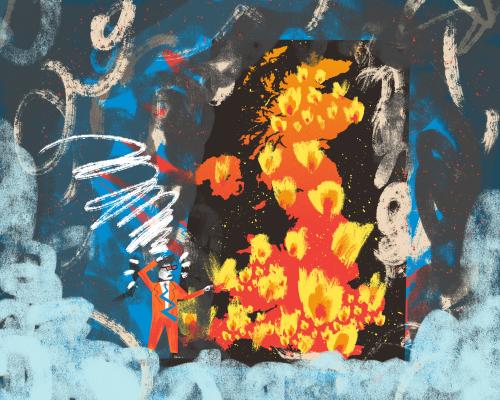
In this fragmented(分裂的,破碎的) but supposedly(据称,大概) mild country, watching and talking about the weather forecast is meant to be(本应是,旨在成为) a reassuring(令人安心的), unifying(统一的,促进团结的) activity. Collectively, we have created and maintained a national climate narrative(叙事,故事) of small disappointments and pleasures. The first weather forecaster to appear on British TV, George Cowling, made his debut on the BBC in January 1954, predicting that “tomorrow would be rather windy”, but “a good day to hang out the washing”. For most of the 72 years since, such brief, carefully calibrated broadcasts have provided people from Aberdeen to Penzance with practical information, small talk and minor grumbles about essentially the same situation: living in a country where the weather is constantly changing, in a paradoxically unchanging way.(此后72年的大部分时间里,这些简短而精心校准的播报为从阿伯丁到彭赞斯的人们提供了实用信息、闲聊话题和对基本相同状况的小小抱怨:生活在一个天气不断变化、却又以矛盾的方式一成不变的国家。)
在这个支离破碎但据称温和的国家,观看和谈论天气预报本应是一种令人安心、促进团结的活动。我们集体创造并维持了一种关于小失望与小乐趣的国家气候叙事。第一位出现在英国电视上的天气预报员乔治·考林,于1954年1月在BBC首次亮相,预测“明天风会很大”,但“是晾晒衣服的好日子”。此后72年的大部分时间里,这些简短而精心校准的播报为从阿伯丁到彭赞斯的人们提供了实用信息、闲聊话题和对基本相同状况的小小抱怨:生活在一个天气不断变化、却又以矛盾的方式一成不变的国家。
Yet like the traditional British climate, that common weather culture may now be evaporating(蒸发,消失). “Met Office considers issuing red ‘extreme heat warning’ across Britain while nation enjoys ‘incredible summer’,” said the headline above the forecast on the GB News website on Monday, caught between(夹在……之间,左右为难) terror and delight at the latest heatwave. As the climate crisis has affected this country in more and more unmistakable but uneven ways, TV weather forecasters have increasingly struggled to find the right language to describe this transformation’s daily consequences.(随着气候危机以越来越明显但不均衡的方式影响这个国家,电视天气预报员越来越难以找到恰当的语言来描述这种转变的日常后果。) Their struggle influences and exemplifies that of many Britons to understand, and work out what we think about, the apparent end of the weather patterns we expected to shape our whole lives.(他们的挣扎影响并体现了许多英国人试图理解并弄清我们如何看待那些曾预期塑造我们整个生活的天气模式显然终结的困境。)
然而,就像传统的英国气候一样,这种共同的天气文化可能正在消失。“英国气象局考虑发布红色‘极端高温警告’,而全国正享受‘难以置信的夏天’,”周一GB新闻网站天气预报上方的标题写道,标题在最新热浪面前既恐惧又欣喜。随着气候危机以越来越明显但不均衡的方式影响这个国家,电视天气预报员越来越难以找到恰当的语言来描述这种转变的日常后果。他们的挣扎影响并体现了许多英国人试图理解并弄清我们如何看待那些曾预期塑造我们整个生活的天气模式显然终结的困境。
Across all the British TV broadcasters, sometimes within the same bulletin, or even the same sentence, weather forecasters now present sunshine as welcome and oppressive(压抑的,令人窒息的); high temperatures as miraculous(奇迹般的,不可思议的) and unbearable(难以忍受的); rain as an inconvenience and desperately needed(急需的); cloud cover as depressing and a relief. Tanned forecasters in sundresses, emphasising the positives for domestic holidaymakers of another record-breaking summer, alternate(交替,轮流) with grim-faced(面色严峻的) forecasters suggesting we are experiencing a weather apocalypse(末日,大灾难).
在英国所有电视广播公司中,有时在同一份新闻简报中,甚至在同一句话里,天气预报员现在把阳光描述为受欢迎又令人压抑;高温描述为神奇又难以忍受;降雨描述为不便又急需;云层描述为令人沮丧又是一种解脱。穿着太阳裙、晒得黝黑的预报员强调又一个破纪录夏天对国内度假者的积极意义,而面色严峻的预报员则暗示我们正在经历一场天气末日,两者交替出现。