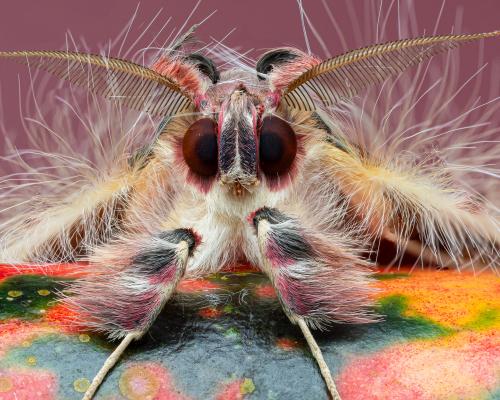
“I always just pray ‘please don’t fly away’,” says Dara Ojo. As a wildlife photographer, he can handle spending minutes, hours and sometimes days waiting for the shot(等待拍摄时机), but insects are not always very cooperative(配合的,合作的).
“我总是祈祷‘请别飞走’,”达拉·奥乔说。作为一名野生动物摄影师,他能忍受花上几分钟、几小时甚至几天等待拍摄时机,但昆虫并不总是那么配合。
Ojo is one of an increasing number of photographers turning their lenses towards(将镜头转向) something smaller: macro photography. This refers to photographing the natural world at an extremely close range, close enough to see the facets(小眼面,刻面) of a fly’s eye, or the geometry(几何结构,几何形状) of a spider’s face.
奥乔是越来越多将镜头转向更微小事物的摄影师之一:微距摄影。这种摄影方式是指在极近距离拍摄自然世界,近到能看清苍蝇眼睛的各个小眼面,或蜘蛛脸部的几何结构。
This discipline has quietly evolved in popularity over the past few years, driven by a wave of macro influencers, more affordable lenses and the coronavirus pandemic, which left a lot of photographers with nowhere to go but their own back gardens.(这一领域在过去几年中悄然流行,由网红、镜头降价和疫情推动,疫情让摄影师只能待在后花园。)
这一领域在过去几年中悄然流行起来,其推动因素包括一波微距摄影网红、更实惠的镜头以及新冠疫情——疫情让许多摄影师无处可去,只能待在自己的后花园里。