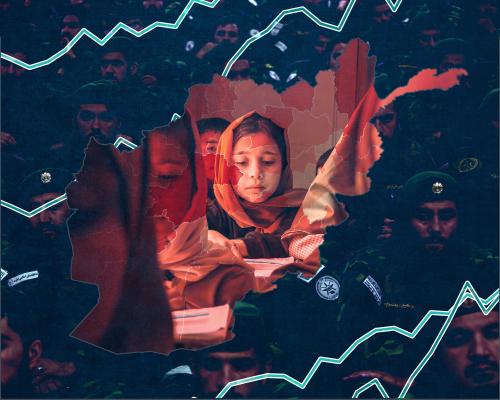
‘I married off(嫁出(女儿)) my daughter so that none of us would die of hunger.” Malika hesitated(犹豫) before saying the words aloud. The 46-year-old lives with her husband and four youngest children (three girls and a boy) in Chihil Dukhtarān, one of Kabul’s poorest(最贫穷的) neighbourhoods.
“我嫁掉了我的女儿,这样我们谁都不会饿死。”马利卡在说出这些话之前犹豫了一下。这位46岁的妇女与丈夫和四个最小的孩子(三个女孩和一个男孩)住在喀布尔最贫困的街区之一奇希尔杜赫塔兰。
Poverty pushed the family to the brink before Malika and her husband made what they describe as the hardest decision of their lives: marrying off their eldest daughter, Maryam, for 200,000 afghanis (£2,270).(贫困将家庭逼到绝境,马利卡和丈夫做出了他们一生中最艰难的决定:以20万阿富汗尼嫁出大女儿。) She was still a teenager(青少年(13-19岁)).
贫困将这个家庭逼到了绝境,之后马利卡和丈夫做出了他们一生中最艰难的决定:以20万阿富汗尼(约合2270英镑)的彩礼嫁出他们的大女儿玛丽亚姆。她当时还未成年。
“God is my witness(上帝作证) that during that winter, our food was almost nothing but(只有,仅仅) dry bread and boiled water. Even that was often unavailable(不可获得的), and many nights we went to bed hungry,” she says.
“上帝作证,那个冬天,我们的食物几乎只有干面包和开水。有时连这些也没有,许多个夜晚我们饿着肚子上床睡觉,”她说。
An economy collapsing
崩溃的经济
The annihilation of women’s rights
女性权利的湮灭
Geopolitical tensions rise
地缘政治紧张加剧