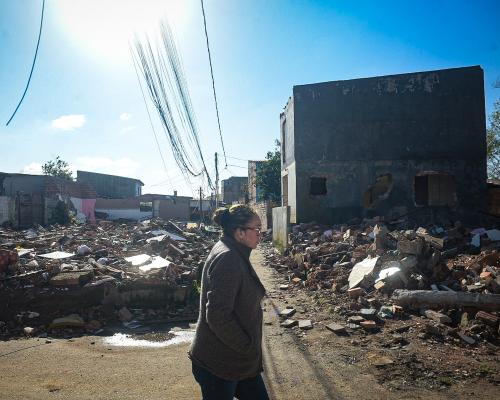
In the backstreets of Porto Alegre, a state capital in southern Brazil, you can still see signs of the devastating(毁灭性的) flood that swept through(席卷、横扫) the city two years ago: scattered debris, waterlogged(浸透水的) homes and destroyed businesses.
在巴西南部州首府阿雷格里港的后街,你仍然可以看到两年前席卷全城的毁灭性洪水的痕迹:散落的废墟、被水浸泡的房屋和被摧毁的商铺。
In May 2024, flooding killed 183 people in the state of Rio Grande do Sul and displaced(使流离失所) more than 600,000. The neighbourhood of Sarandi was one of the hardest-hit(受灾最严重的) parts of Porto Alegre, with water levels reaching up to 5 metres above normal, completely submerging(淹没) many of its streets.
2024年5月,南里奥格兰德州洪水造成183人死亡,超过60万人流离失所。萨兰迪社区是阿雷格里港受灾最严重的地区之一,水位一度高出正常水平达5米,许多街道被完全淹没。
“Most people are still suffering the mental health consequences(后果) of the flood,” says Luís Rogério “Jamaika” Machado, a community leader in Sarandi.
“大多数人仍在承受洪水带来的心理健康后果,”萨兰迪社区领袖路易斯·罗热里奥·“牙买加”·马查多说。