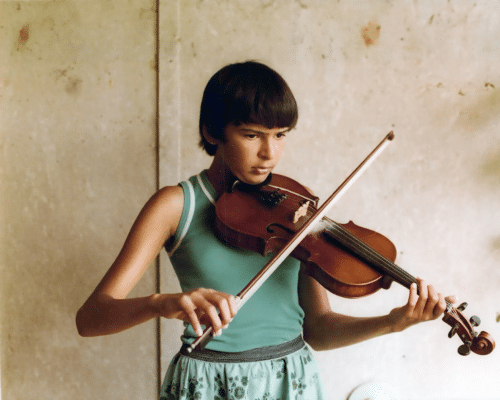
At first, I failed to recognise(未能认识到) the significance of the deterioration(恶化,退化) in my violin technique.
起初,我没有意识到我的小提琴技巧退化的严重性。
I was preoccupied(全神贯注的,心事重重的) by other concerns – the crushing(压倒性的,令人崩溃的) exhaustion that I would describe to my doctors as “not normal tiredness”, the unexplained(无法解释的,原因不明的) falls from my bike. I did not draw any connection between these issues and my out-of-tune(走调的,音不准的) violin playing. Only when the right side of my body detached itself from my central nervous system to the point where I could no longer pick up a pen or walk without a stick to support myself did the words this feels neurological cross my mind.(只有当我的右侧身体脱离中枢神经系统,以至于我无法拿起笔或行走时,“这感觉像是神经系统问题”这句话才掠过我的脑海。)
我被其他问题所困扰——那种我会向医生描述为“不正常的疲倦”的压垮人的疲惫,以及无缘无故从自行车上摔下来。我没有把这些问题和我的小提琴走音联系起来。只有当我的右侧身体脱离了我的中枢神经系统,以至于我无法拿起笔,也无法在没有拐杖支撑的情况下行走时,“这感觉像是神经系统的问题”这句话才掠过我的脑海。
By the time the neurologist told me the MRI results, I had self-diagnosed with everything from a brain tumour to stress.(当神经科医生告诉我核磁共振结果时,我已经自我诊断出从脑瘤到压力等各种疾病。) The official diagnosis of remitting-relapsing(复发缓解型的) multiple sclerosis was almost a relief. My then eight-year-old daughter was not about to(不打算,不会) be orphaned(成为孤儿). There were disease modifying therapies(疾病修饰疗法) which would hopefully reduce the number and severity of the attacks.
当神经科医生告诉我核磁共振结果时,我已经自我诊断出从脑瘤到压力等各种疾病。复发缓解型多发性硬化症的正式诊断几乎是一种解脱。我那时八岁的女儿不会成为孤儿。有一些疾病修饰疗法,有望减少发作的次数和严重程度。