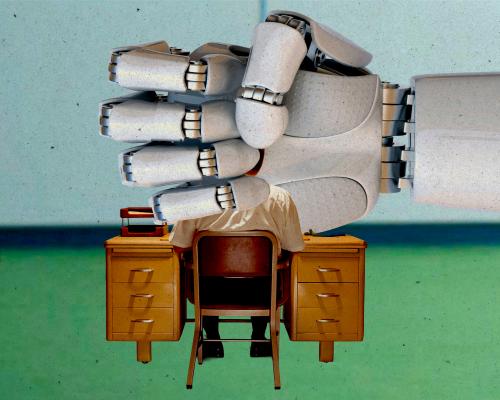
The prediction was stark(严峻的,令人震惊的): artificial intelligence advancements would wipe out(彻底消灭,摧毁) jobs en masse(全体地,大规模地). “Half” of all entry-level(入门级的,初级的) white collar(白领的,脑力劳动的) jobs would vanish(消失,突然不见), Anthropic’s CEO, Dario Amodei, said in May 2025. A month later, OpenAI’s CEO, Sam Altman, went further, foresee(预见,预知)ing the end of “certain job categories”. Companies began citing AI in their layoff(裁员,解雇)s. Workers organized. And students reconsidered their future careers.
这一预测令人震惊:人工智能的进步将大规模消灭就业岗位。Anthropic 的首席执行官达里奥·阿莫迪在 2025 年 5 月表示,所有入门级白领工作中有“一半”将会消失。一个月后,OpenAI 的首席执行官山姆·奥特曼更进一步,预言“某些职业类别”的终结。公司开始将 AI 作为裁员的理由。工人们组织起来。学生们重新考虑自己未来的职业。
But a year later, the mass carnage(大屠杀,残杀) hasn’t shown up.
但一年后,大规模的大屠杀并未出现。
Even as AI capabilities have rapidly advanced and AI companies have hurtle(猛冲,飞速移动)d towards trillion-dollar stock market debut(首次亮相,初次上市)s, economic transformation hasn’t kept pace, similar to previous tech revolutions, economists say. As a result, CEOs are reframing and softening their stance(立场,态度)s, suggesting AI augment(增强,提高)s workers rather than(而不是) replaces them.
经济学家表示,即使人工智能能力迅速进步,AI 公司也飞速迈向万亿美元市值的首次公开募股,但经济转型的步伐并未跟上,这与以往的技术革命类似。因此,CEO 们正在重新调整并软化他们的立场,暗示 AI 是增强工人而非取代他们。
Jobs are changing, not disappearing
工作正在改变,而非消失
Workers may become more disposable
工人可能变得更容易被替代