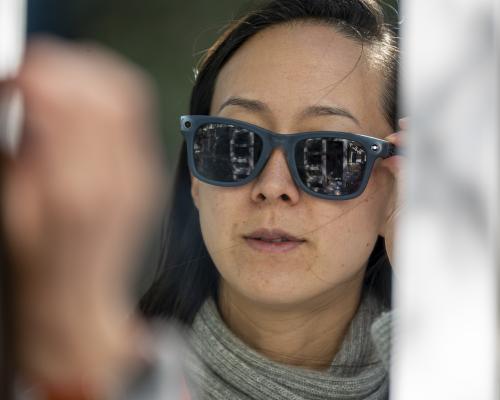
Your editorial(社论) on Meta’s smart glasses acknowledges their value to blind and visually impaired people, then asks that this “not be allowed to distract” from the harms (The Guardian view on Meta’s smart glasses: regulators must get on the front foot(占据主动,先发制人), 10 August). As an optometrist who owns a small independent practice, I’d suggest that it is visually impaired people who are being treated as the distraction.(作为一名拥有小型独立诊所的验光师,我想说,被当作“干扰”的恰恰是视障人士。)
贵报关于Meta智能眼镜的社论承认它们对盲人和视障人士的价值,随后又要求这“不能被允许分散”对危害的注意力(《卫报》观点:Meta智能眼镜,监管者必须抢占先机,8月10日)。作为一名拥有小型独立诊所的验光师,我想说,被当作“干扰”的恰恰是视障人士。
I was reluctant(不情愿的,勉强的) to stock(进货,库存) Ray‑Ban Meta, having no fondness for Meta or Luxottica, but colleagues persuaded me of the benefits for people with sight impairment. The reality has surpassed(超过,超越) that. The majority of our buyers have a visual impairment or learning difficulty. One man, practically illiterate(不识字的,文盲的), now has the world read to him.
我原本不愿进货雷朋Meta眼镜,因为对Meta和陆逊梯卡并无好感,但同事们说服了我,让我相信它对视力障碍人士的益处。而现实超出了预期。我们大多数买家都有视力障碍或学习困难。有一位几乎不识字的男士,如今能让世界为他朗读。
For many of these patients, leaving the house is already an act of courage. Unfamiliar streets, unreadable signs, the constant low-level anxiety of navigating(导航,找到正确路线) a world built for the fully sighted. These glasses have quietly made that easier. A week of coverage branding them “pervert glasses” has now added a new anxiety: not whether they can manage the journey, but whether strangers will assume the worst of them for wearing the thing that makes it possible.(一周以来称它们为“变态眼镜”的报道,又增添了一种新的焦虑:不是他们能否应对行程,而是陌生人是否会因为他们戴着这件让出行成为可能的东西而对他们抱以最坏的猜测。)
对许多这样的患者来说,出门本身就是一种勇气的表现。陌生的街道、无法辨认的标牌,以及在一个为视力健全者而建的世界中导航所带来的持续低度焦虑。这些眼镜悄悄地让这一切变得容易了些。而一周以来称它们为“变态眼镜”的报道,又增添了一种新的焦虑:不是他们能否应对行程,而是陌生人是否会因为他们戴着这件让出行成为可能的东西而对他们抱以最坏的猜测。