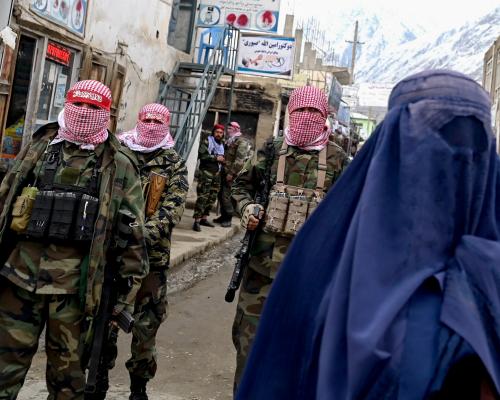
The Taliban in Afghanistan have launched a diplomatic effort to end their isolation as major regional and international powers show a readiness to(表现出做某事的意愿) engage more closely with the repressive(镇压的,专制的) regime despite its systematic human rights abuses(系统性人权侵犯).
阿富汗塔利班已发起外交努力以结束孤立状态,与此同时,主要地区和国际大国表现出更紧密接触这一专制政权的意愿,尽管其存在系统性人权侵犯。
Five years after the Taliban took power, an increasing number of countries are renewing ties(恢复关系) or scaling up(扩大,增加) diplomatic contacts with the hardline(强硬路线的) Islamists, who seized power in Kabul in 2021 after 20 years of brutal insurgent(叛乱的,起义的) warfare.
塔利班掌权五年后,越来越多的国家正在恢复关系或扩大与这些强硬伊斯兰主义者的外交接触。塔利班在经历20年残酷叛乱战争后,于2021年在喀布尔夺取政权。
Campaigners fear that the individual contacts by different countries risk undermining(有破坏…的风险) “coherent, consistent” demands for an improvement in human rights in return for(作为…的交换) any diplomatic concession(让步,妥协)s.
活动人士担心,不同国家的个别接触可能会破坏以改善人权换取任何外交让步的“连贯、一致”要求。