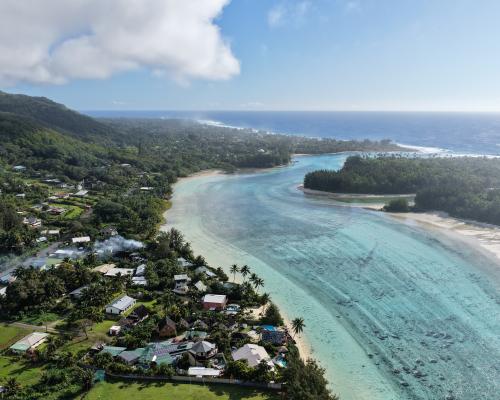
As voters in the Cook Islands prepare to head to the polls(前往投票站) in a high-stakes(高风险的,赌注大的) general election, they will have much to reflect on. Over recent years, politics in this small island nation has been defined by fierce debates about deep-sea mining, diplomatic rift(裂痕,严重分歧)s with ally New Zealand and a major reshaping(重塑,重新塑造) of the country’s foreign partnerships.
当库克群岛选民准备在一场高风险的大选中前往投票站时,他们有很多事情需要反思。近年来,这个小小岛国的政治一直以围绕深海采矿的激烈辩论、与盟友新西兰的外交裂痕以及国家对外伙伴关系的重大重塑为特征。
In an exclusive(独家的) interview with the Guardian, days before Wednesday’s poll, Cook Islands prime minister Mark Brown defended his four-year term and the decisions he made that have seen this South Pacific nation of 17,000 people pushed into the international limelight(公众关注的焦点), turning it into a battleground(战场,争斗领域) for influence between Beijing and western powers.
在周三投票前几天接受《卫报》独家采访时,库克群岛总理马克·布朗为其四年任期以及他所做的决定进行了辩护,这些决定使这个拥有1.7万人口的南太平洋国家被推入国际聚光灯下,成为北京与西方大国之间影响力争夺的战场。
In 2025, Cook Islands struck(达成(协议)) strategic partnership deals with Beijing, sparking severe alarm(警觉,恐慌) in Wellington. The rift was formally patched(修补,弥合) after the signing of a new bilateral(双边的) agreement with New Zealand in April.
2025年,库克群岛与北京达成战略伙伴关系协议,在惠灵顿引发严重警觉。在4月与新西兰签署新的双边协议后,裂痕才正式弥合。
The deep-sea mining question
深海采矿问题