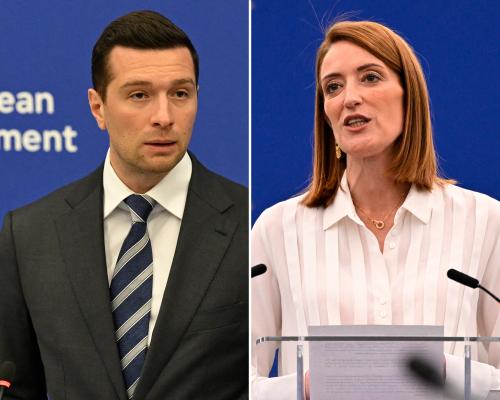
The EU exists because its nations swore never to repeat the past. European integration is the insurance policy against the oldest temptation of power: that a majority, however large, decides who does not belong.(欧洲一体化是抵御权力最古老诱惑的保障:即多数人决定谁不属于这里。) So countries across the continent agreed to share power across borders, and to answer to laws that none of them individually controlled.
欧盟的存在,是因为其成员国发誓永不重蹈覆辙。欧洲一体化是一份保险单,用以抵御权力最古老的诱惑:即由多数人——无论这个多数有多大——来决定谁不属于这里。因此,欧洲大陆各国同意跨越国界分享权力,并服从于没有任何一国能单独控制的法律。
The European parliament is where that promise is meant to be kept. Directly elected by nearly 360 million citizens, it co-writes the EU’s laws, elects the president of the European Commission and can dismiss(解雇;解散;驳回) the closest thing Europe has to a government – the commission itself. For decades, a grand coalition of centre-right parties and socialists, later joined by liberals and greens, governed it on that premise(前提;假定). They were committed to closer cooperation, the rule of law and maintaining a firewall(防火墙;隔离墙) against the far right.
欧洲议会正是履行这一承诺的地方。它由近3.6亿公民直接选举产生,共同制定欧盟法律,选举欧盟委员会主席,并可以罢免欧洲最接近政府的机构——欧盟委员会本身。几十年来,由中右翼政党和社会党组成的大联盟,后来又有自由党和绿党加入,在这一前提下管理着议会。他们致力于更紧密的合作、法治,并维持一道抵御极右翼的防火墙。
In June, in Strasbourg(斯特拉斯堡(法国城市)), that promise was broken by the parliament itself.
六月,在斯特拉斯堡,这一承诺被议会自己打破了。