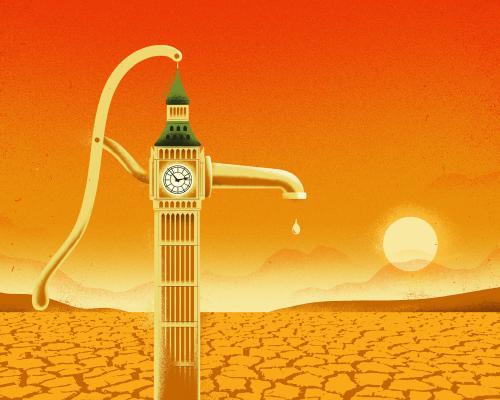
This summer could be the hottest, driest and deadliest in English history. Successive heatwaves have so far claimed(夺走(生命)) almost 3,000 lives. Nearly three-quarters of England and all of Wales is in drought, while key reservoirs are parched(干涸的,焦干的). Across this brown and stickily unpleasant land, from Grimsby down to St Ives, hosepipe bans are in force(生效,在实施中), while music festivals are staged not on green fields but in giant dust bowls(尘土飞扬的干旱地区).
今年夏天可能是英格兰历史上最热、最干、最致命的夏天。接连不断的热浪迄今已夺走近3000人的生命。英格兰近四分之三的地区以及威尔士全境处于干旱之中,主要水库干涸。在这片褐色而黏腻难耐的土地上,从格里姆斯比到圣艾夫斯,各地纷纷实施水管禁令,音乐节不是在绿茵场上举办,而是在巨大的尘土盆地里举行。
Just how bad is it? I asked a leading(顶尖的,领先的) climate scientist.
情况到底有多糟?我问了一位顶尖气候科学家。
“This is as good as it’s going to get(已经是最好的情况了),” said Hayley Fowler, a professor(教授) at Newcastle University. “It will only get hotter.”
“这已经是最好的情况了,”纽卡斯尔大学教授海莉·福勒说,“只会变得更热。”