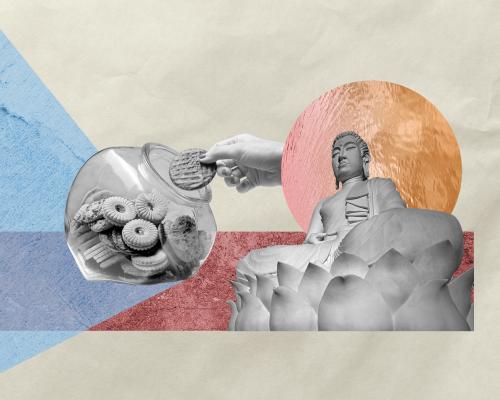
When I was a kid, I had a designated(指定的,专用的) “junk food drawer”. I remember a particular kind of joy in choosing what I felt like eating: chips, chocolate, biscuits. I would saunter into the kitchen, choose my poison(选择我的(有害)所爱) and kick back(放松,休息) on the couch.
小时候,我有一个专属的“垃圾食品抽屉”。我记得挑选想吃的东西时那种特别的快乐:薯片、巧克力、饼干。我会悠闲地走进厨房,选好我的“毒药”,然后瘫在沙发上享受。
These were simpler times.
那是更简单的时光。
Perhaps you are raising an eyebrow(表示怀疑或惊讶). Such parenting might seem laissez-faire(放任自由的(政策)), irresponsible even. But this small act shaped my relationship to my body and its needs. Hunger was to be listened to, not feared or repressed(压抑的,被抑制的). “When you are hungry, eat,” my mum would chime(插话,附和).
也许你会挑起眉毛。这样的养育方式可能显得放任自流,甚至不负责任。但这个小小的举动塑造了我与自己身体及其需求的关系。饥饿是要被倾听的,而不是被恐惧或压抑。“饿了就吃,”妈妈总会附和道。