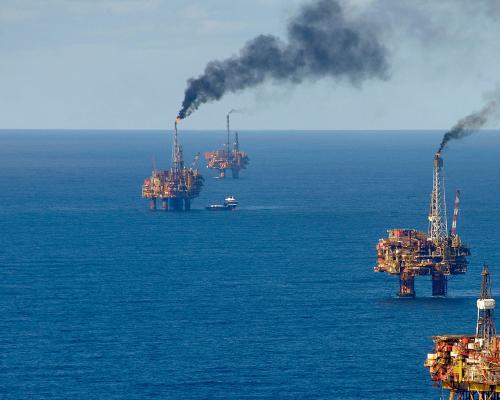
When oil was first discovered off the north-east coast of Scotland in September 1969, industry folklore(民间传说;传闻) has it that the duty superintendent on the rig carefully poured it into a pickle jar commandeered(征用,强占) from the canteen and took it back to Amoco’s Great Yarmouth office in Norfolk. There, it was emptied into an ash tray, sniffed and then set alight(点燃,使燃烧).
1969年9月,石油首次在苏格兰东北海岸附近被发现。据业内传闻,钻井平台上的值班主管小心翼翼地将石油倒入一个从食堂征用的泡菜罐中,带回位于诺福克的阿莫科大雅茅斯办公室。在那里,石油被倒进烟灰缸,闻了闻,然后点燃。
From that modest(不大的, modest start 不起眼的开端) start, North Sea oil – as the huge basin of oil and gas reserves quickly became known – emerged(出现,兴起) as a driving force of the British economy and a symbol of national power and renewal as the UK emerged from the Opec oil crisis(欧佩克石油危机(1973年)).
从那个不起眼的开端起,北海石油——这个巨大的油气储备盆地很快以此闻名——成为英国经济的驱动力,也是英国摆脱欧佩克石油危机后国家实力与复兴的象征。
By 1977, the then Labour prime minister, Jim Callaghan, declared: “God has given Britain her best opportunity for 100 years in the shape of North Sea oil.” A subsequent white paper said it offered “a unique opportunity for Britain to improve her economic performance, raise her living standards, move forward to full employment, and develop a socially just society”.(随后的一份白皮书称,石油为英国提供了独特的机会,以改善经济表现、提高生活水平、迈向充分就业,并建设一个社会公正的社会。)
到1977年,时任工党首相詹姆斯·卡拉汉宣称:“上帝以北海石油的形式,赐予英国百年来最好的机遇。”随后的一份白皮书称,石油为“英国提供了独特的机会,以改善经济表现、提高生活水平、迈向充分就业,并建设一个社会公正的社会”。
Culture wars
文化战争
Green jobs
绿色就业