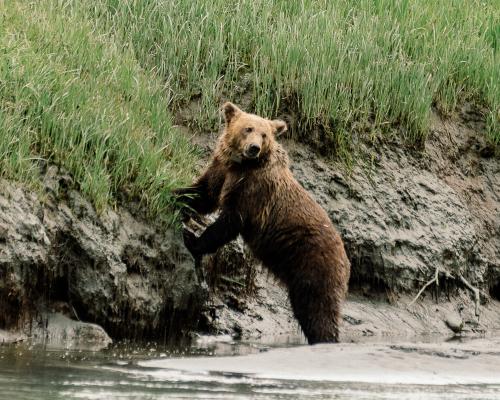
The orphaned grizzly bear cubs were bulked up(使变大、增重) with a generous diet of roadkill(被车辆撞死的动物), watermelon, dog food and snacks donated by the public. Their contact with carers was limited to two people. Then, after up to a year in rehabilitation(康复、恢复), they returned home to the wilds of British Columbia.
这些孤儿灰熊幼崽靠公众捐赠的充足饮食——包括道路上的动物尸体、西瓜、狗粮和零食——被养得膘肥体壮。它们与饲养员的接触仅限于两个人。在康复中心待了长达一年后,它们被放归不列颠哥伦比亚省的野外家园。
“It’s a feelgood(令人愉悦的、感觉良好的) thing – people feel good when the cage opens,” says Dr Lana M Ciarniello, a bear specialist who tracked the Canadian yearlings in a recent study. There is a perception that bears will thrive in their natural habitat, she says.(她说,人们有一种观念,认为熊会在自然栖息地茁壮成长。) “The reality is they’re not followed up on(对…采取后续行动).”
“这是一种‘感觉良好’的事——当笼子打开时,人们感觉很好,”熊类专家拉娜·M·恰尔涅洛博士说,她在最近的一项研究中追踪了这些加拿大的一岁熊。她说,人们有一种观念,认为熊会在自然栖息地茁壮成长。“现实是,它们没有被后续追踪。”
When Ciarniello studied their fate, she was surprised by her bleak(惨淡的、无望的) findings. All but two of 12 bears that could be monitored died within a year. Most were killed before their first winter hibernation. The young bears may have unintentionally been set up for failure(注定失败), she concluded.
当恰尔涅洛研究它们的命运时,她对这一惨淡的发现感到惊讶。在可监测的12只熊中,除两只外,其余都在一年内死亡。大多数在第一次冬眠前就被杀死。她总结道,这些幼熊可能无意中被注定了失败的命运。