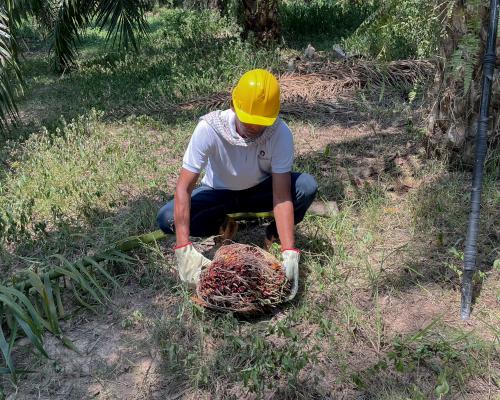
Surrounded by towering(高耸的,高大的) oil palm trees on his farm in the small village of Caño Barbú, near San Pablo in northern Colombia, Yoger Payares uses a malayo(一种带钩长杆工具) – a pole-mounted iron tool with a hook – to hack at(猛砍,乱砍) the fronds((棕榈等植物的)叶) of one, freeing a bunch of its vibrant(鲜艳的,充满活力的) reddish-orange fruit so it falls to the ground.
在哥伦比亚北部圣巴勃罗附近的小村庄卡尼奥巴尔布,约赫·帕亚雷斯的农场四周环绕着高大的油棕树。他使用一种名为“malayo”的工具——一种装有钩子的长杆铁器——砍向一棵油棕的叶片,使一串鲜艳的橙红色果实脱落,掉到地上。
Today, Payares proudly works in the oil palm industry. But for more than a decade, just yards away, he grew coca leaves, becoming embroiled in(卷入,牵连) the illicit(非法的,违禁的) industry in 1990 after leaving his job as a cattle farmer.
如今,帕亚雷斯自豪地从事油棕产业。但在十多年里,就在几码之外,他种植古柯叶,1990年辞去养牛场工作后,便卷入了这一非法行业。
“It was difficult to be living here and not be involved in coca, because it’s what you grew up to know,” says Payares. He regularly wipes his brow in the 36C heat against a backdrop of the drone-like(像嗡嗡声的) sound of cicadas(蝉). “It was an easy way to make money. Coca was booming(繁荣的,迅速发展的) … it was like, if I’m not doing that, what am I going to do? It solved my money problems.”
“住在这里却不去碰古柯很难,因为那是你从小就知道的东西,”帕亚雷斯说。在36摄氏度的高温下,他时不时擦擦额头,背景是蝉鸣般的嗡嗡声。“那是一种容易赚钱的方式。古柯当时很兴旺……就像,如果我不做那个,我还能做什么?它解决了我的金钱问题。”