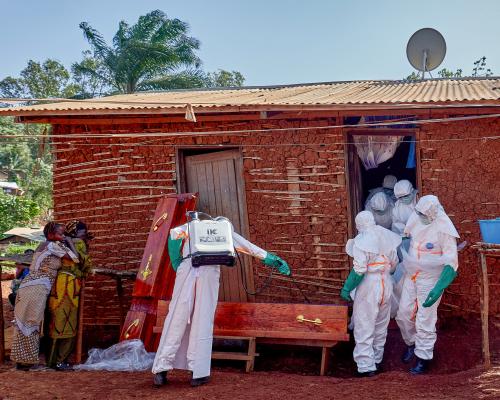
Almost 100 days ago, Africa’s public health watchdog(监督机构;监察人) reported an outbreak of(……的爆发(尤指疾病)) Ebola in the Democratic Republic of the Congo(刚果民主共和国(简称刚果(金))).
大约100天前,非洲公共卫生监督机构报告了刚果民主共和国爆发埃博拉疫情。
There have now been almost 5,000 cases and more than 2,000 deaths since 15 May, making this Ebola outbreak the biggest and most deadly(致命的;致死的) in the DRC’s history.
自5月15日以来,目前已累计近5000例病例和2000多人死亡,使这次埃博拉疫情成为刚果民主共和国历史上规模最大、最致命的一次。
It is on course to(很有可能;在……的轨道上) be “the largest one in the world”, according to Dr Jean Kaseya, the director general of the Africa Centres for Disease Control and Prevention (Africa CDC), speaking at a press briefing(新闻发布会;记者会) in mid August.
非洲疾病控制与预防中心(非洲CDC)总干事让·卡塞亚博士在8月中旬的一次新闻发布会上表示,此次疫情“将成为全球最大规模的一次”。
Why are case and death figures still increasing?
为什么病例和死亡人数仍在增加?
Where are the 850 people who tested positive but are unaccounted for?
检测呈阳性但下落不明的850人在哪里?
Is money that has been promised reaching the frontline?
承诺的资金是否到达前线?
Do we have any treatments or vaccines available?
我们有可用的治疗方法或疫苗吗?
What will things look like in another 100 days?
再过100天,情况会是什么样?