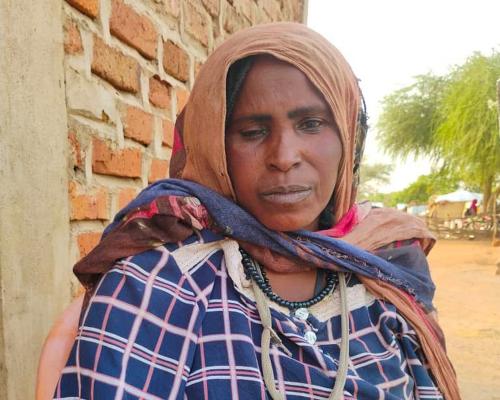
Every morning, she spreads small piles of rice and spices on an aluminium tray in the market of Korsi refugee camp. Some of it comes from her monthly food ration(配给量,定量), already meagre(微薄的,不足的), distributed by the UN’s World Food Programme; some she buys when she can and resells for a small profit(为了微薄的利润).
每天清晨,她都会在科尔西难民营的市场上,把一小堆一小堆的大米和香料摊在铝制托盘上。其中一部分来自联合国世界粮食计划署发放的每月口粮——本就少得可怜;另一部分则是她力所能及时买来转售、赚取微薄利润的。
Samira crouch(蹲下,蹲伏)es quietly behind her modest(简陋的,朴素的) display, greeting customers as they pass. Her loose red toub(苏丹妇女的传统裹身布) cloth frame(框住,衬托)s her thin face and falls across one side of it, hiding her injured right eye. Every so often(不时,偶尔) she adjusts the long cloth to cover the empty sleeve where her right arm would have been. It is a habit the 33-year-old has developed since the war, but her injuries are only part of the terrible damage it has inflicted.(这是这位33岁女性在战后养成的习惯,但她的伤势只是战争造成的可怕伤害的一部分。)
萨米拉安静地蹲在她简陋的摊位后面,向路过的顾客打招呼。她宽松的红色托布(toub)裹着她瘦削的脸庞,垂在一侧,遮住了受伤的右眼。她不时整理那块长长的布料,以盖住本应有右臂的空荡荡的袖管。这是这位33岁女性在战争后养成的习惯,但她的伤势仅仅是这场战争所造成的可怕伤害的一部分。
Samira has been displaced(使流离失所,迫使离开家园) seven times since war first reached her village in 2003, when she was 10 years old. She has fled one conflict after another(一个接一个的冲突) across Sudan and now beyond its borders. The journey eventually brought her, by minibus, motorbike, taxi and on foot, to Central African Republic, where she now lives among thousands of refugees who have escaped Sudan’s latest civil war, which erupted in 2023.(这段旅程最终通过小巴、摩托车、出租车和步行,将她带到了中非共和国,在那里她与数千名逃离2023年爆发的最新内战的难民生活在一起。)
自2003年战争首次波及她的村庄(当时她10岁)以来,萨米拉已七次流离失所。她在苏丹境内一次又一次地逃离冲突,如今已逃到境外。这段旅程最终通过小巴、摩托车、出租车和步行,将她带到了中非共和国。在那里,她与数千名逃离苏丹2023年爆发的最新内战的难民生活在一起。