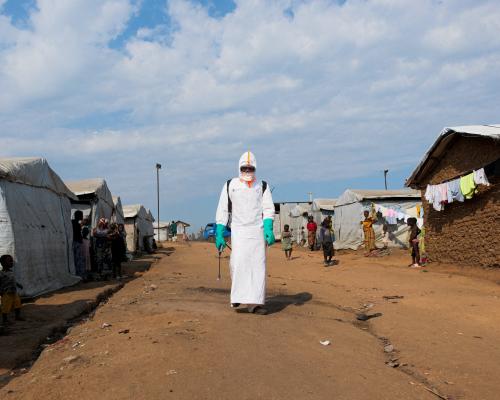
Every day, Sophie Mwadawa Kabundo goes to her job as a nurse at an Ebola treatment centre in the north-east of the Democratic Republic of the Congo, afraid she will contract(感染(疾病)) the virus and pass it to(传给(他人)) her family and friends.
每天,索菲·姆瓦达瓦·卡本多都会前往刚果民主共和国东北部的一家埃博拉治疗中心,履行她作为护士的职责,她害怕自己会感染病毒,并传染给家人和朋友。
“More and more confirmed cases are being admitted here … Some of our colleagues have died,” said Kabundo. “We fear that, despite our vigilance, workplace accidents may occur and put us in ever greater danger …(我们担心,尽管保持警惕,工作场所仍可能发生意外,使我们陷入更大危险。) We go to sleep already worrying about the days ahead, as patients continue to pour in(大量涌入).”
“越来越多的确诊病例被送到这里……我们的一些同事已经去世,”卡本多说。“我们担心,尽管我们保持警惕,工作场所仍可能发生意外,使我们陷入更大的危险……我们入睡时已经在为未来的日子担忧,因为病人不断涌入。”
Martin Bolombi, her colleague at the Elikya treatment centre in Bunia, the capital of the hardest-hit(受灾最严重的) province, Ituri, holds similar fears. “Personally, this outbreak is causing me a lot of stress,” he said. “But I have no choice but to(别无选择只能) pluck up my courage and ensure that the situation is brought under control first, before it can stabilise.”
她的同事马丁·博隆比在受灾最严重的伊图里省首府布尼亚的埃利基亚治疗中心工作,也有类似的担忧。“就我个人而言,这次疫情给我带来了很大压力,”他说。“但我别无选择,只能鼓起勇气,确保局势首先得到控制,然后才能稳定下来。”